Why the U.S. Military Needs to Learn from Partisans: Ditching Top-Down for Bottom-Up Survival
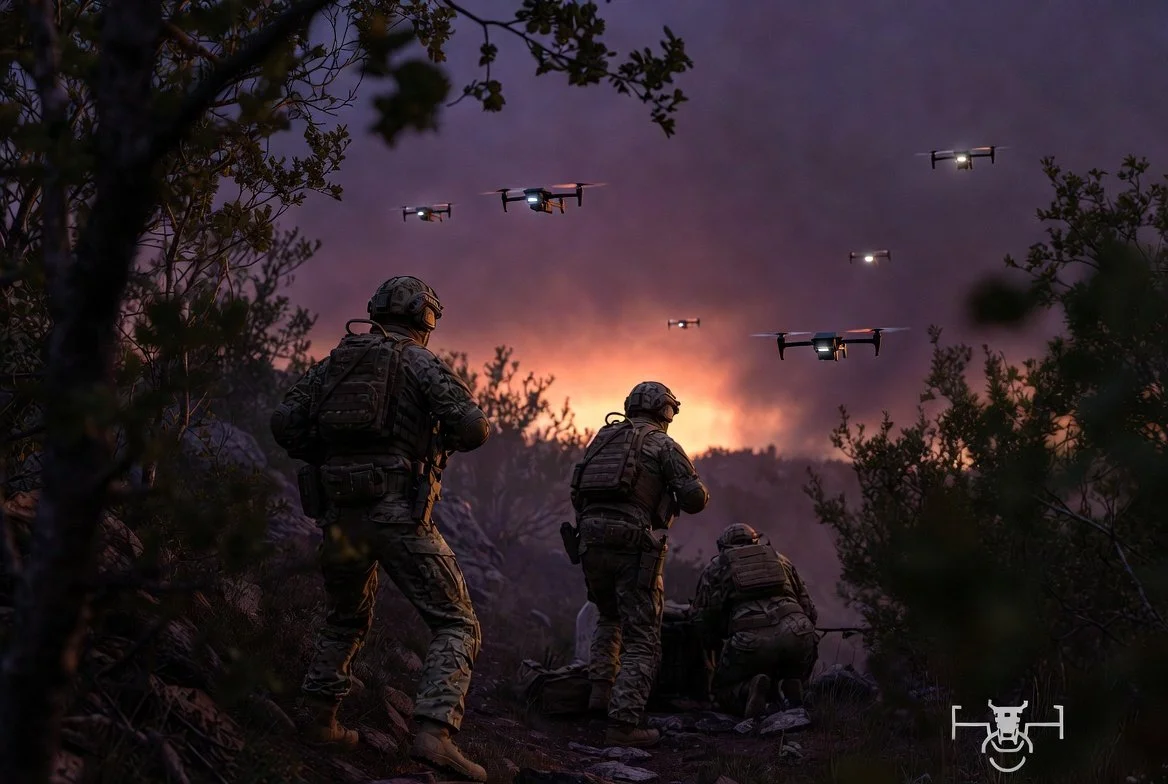
The U.S. military—especially its infantry—still fights like it's 1944. Platoon assaults, buddy rushes, suppress-then-maneuver, company raids: all scripted, all top-down, all built on the assumption that orders from above are sacred and that massed firepower wins wars. But modern battlefields don't care about doctrine. Drones loiter for pennies, FPV strikes kill dozens in seconds, and ISR sees through trees. Against that, the old playbook is suicide. Clinging to it isn't just outdated—it's immoral. It racks up unnecessary casualties, wastes lives for optics, and turns soldiers into robots instead of thinkers. If we don't flip to a bottom-up, adaptive model—where squads and individuals invent tactics on the fly—we'll bleed out in the next fight. And we'll deserve it.
The Top-Down Trap: Rank Over Reason
The Marine Corps, Army, and every branch preaches maneuver warfare and mission-type orders. MCDP 1 *Warfighting* says it loud: decentralized execution, subordinate initiative, commander's intent. Sounds great. In reality? A lance corporal can't sneeze without a sergeant signing off. Patrols get micromanaged via radio. A lieutenant overrides a fire-team leader because "I'm the officer." Rank pulls trump experience every time. In boot camp, the Crucible rotates leadership—but it's supervised, scripted, top-down theater. No real brainstorming. Just "follow the new guy because he's in charge now."
This isn't leadership—it's obedience porn. It builds followers who wait for permission, not hunters who act. In Ukraine, bundled infantry gets shredded by $500 drones. Why? Because doctrine says "advance as a platoon." The enemy doesn't care. They probe, infiltrate, seal off, attrit. We still train like we're storming Normandy—big lines, big fire support, big casualties. If we keep this up, we'll lose thousands for every inch, then blame "fog of war" instead of our own rigidity.
Modern Warfare's Brutal Truth: Adapt or Die
Drones punish concentration. ISR spots anything bigger than a fire-team. The only winners are the quiet, the fast, the improvisers. That's partisan thinking—not militia cosplay, but real partisan: formal units like Lurps or MACV-SOG. They had missions, but no manual. A private ran point because he knew the jungle better than the colonel. No rank meant anything once the patrol stepped off. If you got compromised? Fight it out—maneuver, hide, suppress—while CAS scrambled. If extraction couldn't reach you, you ghosted deeper, cached supplies, waited for dark. Lurps didn't call for help like a movie; they survived until it came. They hot-washed over beers: "What worked? What got Billy killed?" Then they tried something new. No FM 7-8. Just "this keeps us alive."
We need that. Not watered-down versions. Not "add a drone operator to the squad." Real throw-out-the-book stuff. Because doctrine is a fossil. The enemy doesn't read it. If we stick to WWII tactics—linear advances, fires dependence—we'll get sealed off, starved out, and bled dry. And we'll do it for "looks": parades, promotion boards, congressional briefings. That's not strategy. That's vanity.
The Moral Cost of Clinging to the Past
Top-down kills more than drones. It kills initiative. Soldiers hesitate, wait for orders, get caught flat-footed. In a dispersed fight, that hesitation means dead buddies. We train for certainty—ranges, checklists, safety nets—because we fear failure. But war isn't safe. Lurps lost people. They accepted it. We pretend we can save everyone, then send platoons into kill zones because "that's how we do it."
That's unethical. Not because losses happen—war does that—but because we force them. We could train adaptability: force-on-force, no-rules scenarios, squads inventing their own way. One week at 29 Palms: One platoon defends a mock radar. The other has seven days, no support, no playbook. Come up with it. You'd see infiltration, ghost teams, caching, decoys. Some squads fail hard. Some lose "men." But survivors learn. That's real training. Not buddy rushes under overhead cover.
We'd sacrifice a few in drills to save hundreds later. But we won't—because optics. "Too risky." "Bad for morale." Meanwhile, real wars don't pause for safety briefs. We lose more lives clinging to Civil War lines and WWII mass than any drone ever could. And the families get the same letter: "Killed in action." No mention of "because we refused to adapt."
The Ego Farm: Why Nothing Changes
The real enemy isn't drones—it's ego. The U.S. military is an ego farm: promotions, parades, PowerPoints, and the myth that we're "the best." Admitting we're wrong means admitting we've been wrong for nearly a century—treating volunteers like draftees, yelling basics, pushing quotas, ignoring failure. We've trained this way since WWI: massed bodies, scripted drills, false reports. Why? Because admitting flaws means admitting we're not invincible.
Look at body counts. Vietnam: Khe Sanh "tens of thousands" NVA killed—real tally? A fraction. We underreported our own losses for morale. Desert Storm, GWOT, even WWII—fluffed numbers to keep Congress happy, keep funding flowing. Ukraine? U.S. advisors reportedly urged inflating Russian casualties for PR—same playbook. It works politically: "We're winning, just look at the stats." But it poisons reality. We dump billions in ordnance, claim victory, then wonder why the enemy keeps coming.
Change would require outsiders—civilian trainers, foreign models—to show us up. The British Royal Marine Commandos get it right: academy-style, high standards, no constant yelling unless earned. Innovative tactics, small-unit mastery—yet they still take 30+ weeks because ego creeps in too. But they listen. We don't. To copy them—or Max Velocity, or One Shepherd—means admitting America isn't the gold standard. That our last 80 years of "superior" training is mostly cosplay. Politicians, generals, brass—they'd rather die on the hill than admit it. So we stay stuck: obsolete doctrine, bloated costs, dead kids. Ego over evolution. That's the real battlefield loss.
The Partisan Mindset: Adaptation as Doctrine
Scrap the manuals. Treat doctrine as a starting point—pour fire, break contact, maybe assault—then ignore it. Train like Lurps: small teams, no comms, experience over rank. Run patrols where a private leads because he's sharp. A lieutenant? Just another rifle. Force-on-force all the time. No scripts. No "right" answer. Hot-wash every failure. Let squads figure out: How do you infil past drones? How do you cache without getting spotted? How do you extract when everyone's "dead"?
The sweet spot? Squads. Not platoons—they're too big, too loud. Not lone wolves—too fragile. Four to eight guys: firepower, cover, redundancy. But flexible—split into pairs if needed, regroup if possible. Sacrifice? Yeah. Some don't come back. Accept it. War isn't fair. But it's less bloody when you train thinkers, not robots.
Skills & Selection: Recondo-Style, Not Recondo Cosplay
Recondo School (Vietnam-era) wasn't Ranger—short, brutal, pass/fail. Crash-course basics: navigation, weapons, patrol bases, camouflage, calling fire, intel gathering. Then field test—real missions, real stakes. No doctrine; just concepts that work. Misfits who hated line infantry? They thrived in Lurps—because it was bottom-up. Experience trumped rank. Private led because he was sharp. Sergeant followed. No yelling—just "do it right or don't."
Modern infantry needs the same. SOI's eight weeks? Bloated. Teach basics fast—grenades (flashbang for disorientation, frag for suppression, satchel for wire), silent patrol, caching, water treatment (stream only, iodine tablets, wait the full 30 minutes—no shortcuts). Hygiene: dig cat holes, burn trash, no stink. Resupply: dead drops, runners—no radio. Every action demands security. Fill a canteen? Security out first—watch the trail, cover arcs, ambush risk real. Grab an MRE? Same deal—perimeter, eyes out, no cluster. Act like infantry every second, or it's cosplay.
That's how One Shepherd does it: civilians grab "water bowls" or jerry cans under threat—ambush at any second. Security first, comfort never. Ranger School gets this right: piss off the RI, get "indirect" called—break left 400 meters, incoming. No safety net. If SOI did that—always security, always under threat—it'd invalidate Ranger as "leadership school." Infantry isn't about leaders; it's about survivors who know combat's first rule: security before anything else. Train reps of real risk—fail fast, learn fast—not block training under ideal conditions.
Selection: Like Recondo—two weeks, pass/fail. Ruck under fatigue, navigate blind, adapt mid-drill ("drone overhead—improvise"). No rank—leader's whoever thinks fastest. Guy who sucked in line company? Here he shines. Fail physical or mental? Reclass. Volunteer force means we can be picky. No quotas—just quality.
Civilian Models: Proof It Doesn't Cost a Fortune
People think infantry training needs tens of thousands per head—ranges, instructors, medical, admin. Bullshit. Civilian outfits do it better, cheaper, faster.
**Max Velocity Tactical**: HEAT 1 ($950) + HEAT 2 ($950) + Texas Alumni ($1,450) = ~$3,300 tuition. Add 3,000 rounds (~$1,500 at bulk rates—pallet deals drop it to half retail). Total: under $5,000. Beginner shoots accurately, patrols as a team, plans on the fly. No marching, no uniforms—just reps.
**One Shepherd**: Two-day Warrior Basic (~$300–$600), plus land nav and FTX (~$600–$800). Total: $1,000–$1,500 + gear. MILES gear (laser sim + blanks) cheap to maintain—blanks cost pennies vs. live rounds. Civilians with zero experience raid camps, ambush, navigate—stealthier than many active-duty. Four weeks? Full competence.
Deals exist: Bulk ammo pallets via federal-style contracts (half price). MILES? Low upkeep. Shelters, food—covered by fees. Military overhead (barracks, parades, medical screens) is the real waste. Outsource basics to these models—save cash, get better troops. Train by failing in the field, not marching in formation.
How We Get There: A Bottom-Up Reset
Start small. One battalion. One exercise. No higher calls. No fires. Just "take the objective." Give them a week. Watch what emerges. You'll see infiltration, ghost teams, caching, decoys. Then scale it. Make adaptability the doctrine: "Survive. Win. Figure it out." No more "that's not how we do it." That's how we die.
The U.S. military isn't weak—we're just lazy. We love parades, promotions, and PowerPoints. But the next war won't care. It'll be drones, EW, isolation. If we stay top-down, we'll lose. Not because the enemy is smarter—because we refused to learn from partisans who survived without manuals. And when the coffins come home, we'll know: We chose looks over lives.
Time to flip it. Bottom-up isn't radical. It's necessary. And if we don't, the graves will prove it.