MODERN PISTOLS: BUILT FOR PROFIT, NOT FOR BATTLE
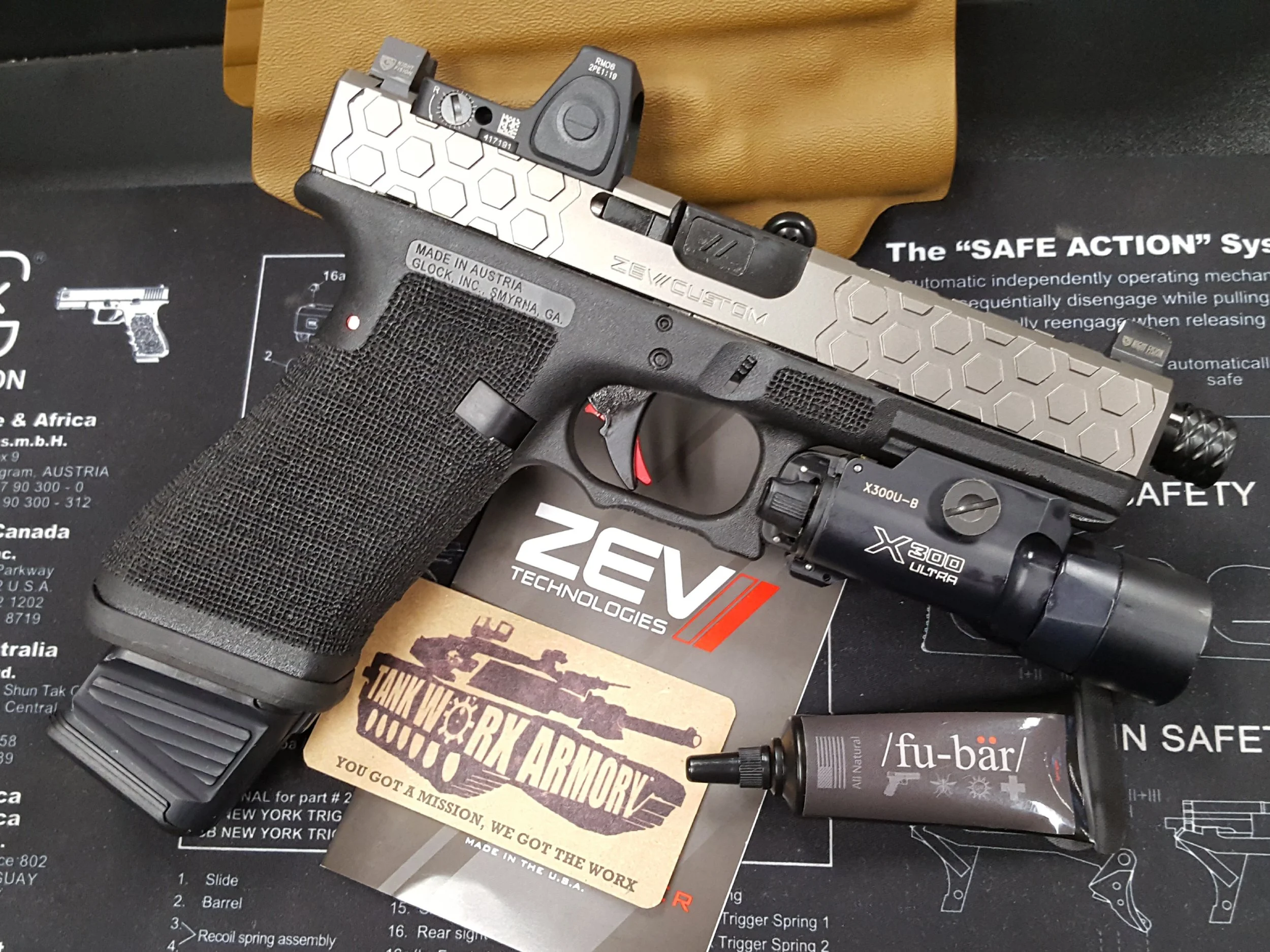
The trend of gun manufacturers cutting corners on civilian firearm designs has profoundly diminished my appreciation for modern firearms. Where once there was genuine pride in craftsmanship, intuitive ergonomics, and durable, thoughtfully chosen materials, many makers today prioritize cost savings—resulting in sloppy tolerances, increased use of MIM components, cheapened springs, and other compromises. Those shortcuts undermine reliability, accelerate wear, and foster a disposable mindset that erodes both safety and the reverence responsible shooters ought to feel and show toward their tools.
THE CONSUMERS
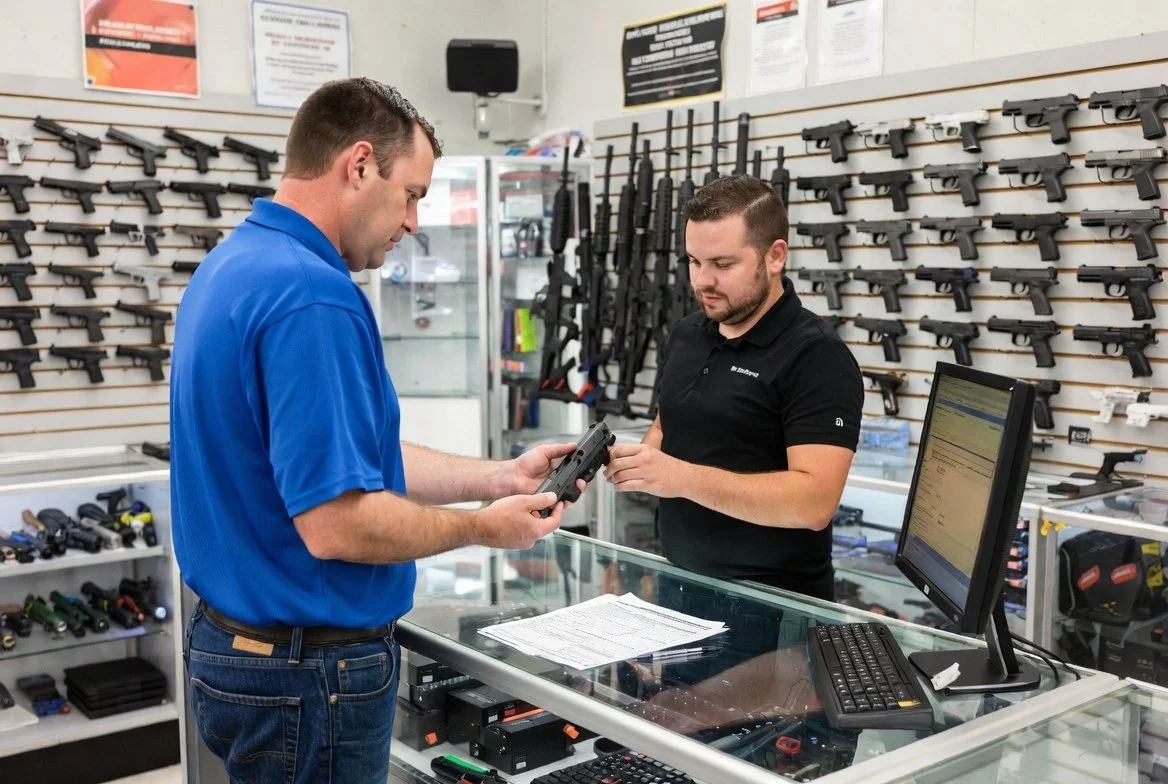
In an earlier article, I wrote about my misgivings on the double stack micro-9mm market and how I feel like it is not only overrated, but it is treading in territory that it has not quite secured. People have this idea that they need to “gadget-ize” their guns in order to be able to get any performance out of them. This is the type of consumer the manufacturers are dealing with.
So, where are these gadget-obsessed consumers getting their ideas? It is not out of thin air, but rather based on what they see, hear, and read.The consumer sees a SWAT officer with a Glock that has a compensator and a red dot with a Surefire X300 and that is enough to sell the gun and gadgets. The ironic thing is that we are in the age of information yet people have less common sense and independent thought than they ever did. People will adopt the idea that they ‘NEED’ a red dot or a light or their gun. The latest craze is the drive for compensated pistols.
In the past, people chased the newest iteration of a gun, wanted night sights out of the box, and a grip texture and form that would mold to the hand. “Yeah, but this gun is an improvement because they redesigned the slide to look cooler!” Instead of focusing on function, consumers in America have almost always judged form.
Maybe that is why divorce rates are so high; the idea is better than the reality of the long haul of personal responsibility.
The consumer of today is arguably more picky, more unskilled, and more irrational than at any time in history. The consumer makes demands like:
The pistol must have optics plates just provided out of thin air and the manufacturer should absorb the cost of production
Triggers have to just work to their unique tastes without any practice whatsoever
Grips have to feel perfectly crafted to their hands
1913-style rails are mandatory and must take their specific preferred micro gun light
The gun must come threaded or have a built in compensator because 9mm hurts their feelings
The gun must take Glock mags
The gun must be modular… Not because that modularity is useful, but because they think it sounds cool
The slide has to be easy to manipulate for a paraplegic
The recoil needs to be less than a .22LR, no matter the reality of physics
The magazine capacity better be equal to or better than a full sized pistol
The firearm the size of a pocket pistol must have the weight of a toy gun
The gun must be able to fire endlessly without ever being cleaned, lubed, or cared for
The whole package must never cost more than $500.
If this is not a list of irrational demands, I don’t know what is. But each one of these demands show a failure of basic sense and understanding for physics, the role of the shooter in controlling the firearm, and how manufacturing works. I would place a lot of the blame for the crappy designs we currently see on the end user for being so easily influenced.
THE INFLUENCERS

The modern influencer is not always even aware that they are an influencer. In the gun world, anyone in the military, law enforcement, or anyone who looks cool or makes it on a magazine cover is an influencer. Yes, especially individuals involved in self defense shootings such as Police or armed citizens and even gang bangers. People don’t look down on individuals buying a Draco-style AK for no reason.
For instance, after a self-defense shooting goes nationwide, your gun will be looked at as a piece for people to covet or make fun of. People will critique or support EEEEVERYTHING you do or don’t do. If the shooting you were involved in as an officer involved a Glock that took 2 rounds to take down the subject, Glock gets free advertising and sales on the specific generation of Glock you used. If the shooting goes poorly or you are arrested and the court of public opinion deems your actions outside the realm of self-defense, the gun you use will incur a stigma of being a criminals gun.
Competitive shooters are on of the best sellers of guns, gear, and shooting techniques in the industry. People see them run a gun they are paid to shoot and that gives the individual confidence in that platform; regardless of that individuals level of experience. The consumer generally looks at the capability to put rounds on target fast and mix it with the marketing talking points (ENHANCED GRIP, ENVIRONMENT-PROOF FINISH, LOW PROFILE CONTROLS, HIGH CAPACITY, BEST-IN-CLASS TRIGGER, ETC.) to make a pseudo informed decision. If a competition shooter is using a compensator and a red dot sight in a competition, and they look like they are shooting really fast, you can bet the civilian consumer will covet that.
THE HOLLYWOOD CONTRIBUTION
Movies have also sold a ton of guns over the years. Die Hard and Lethal Weapon sold thousands of Beretta 92 pistols. But how many times have you seen people doing hours and hours of dry fire practice and doing trial and error on a flat range just to be a bit mediocre in a real engagement? I doubt you have ever even imagined spending 5 minutes watching a protagonist doing dry fire in their living room instead of just using these impossible skillsets without any training or practice whatsoever.
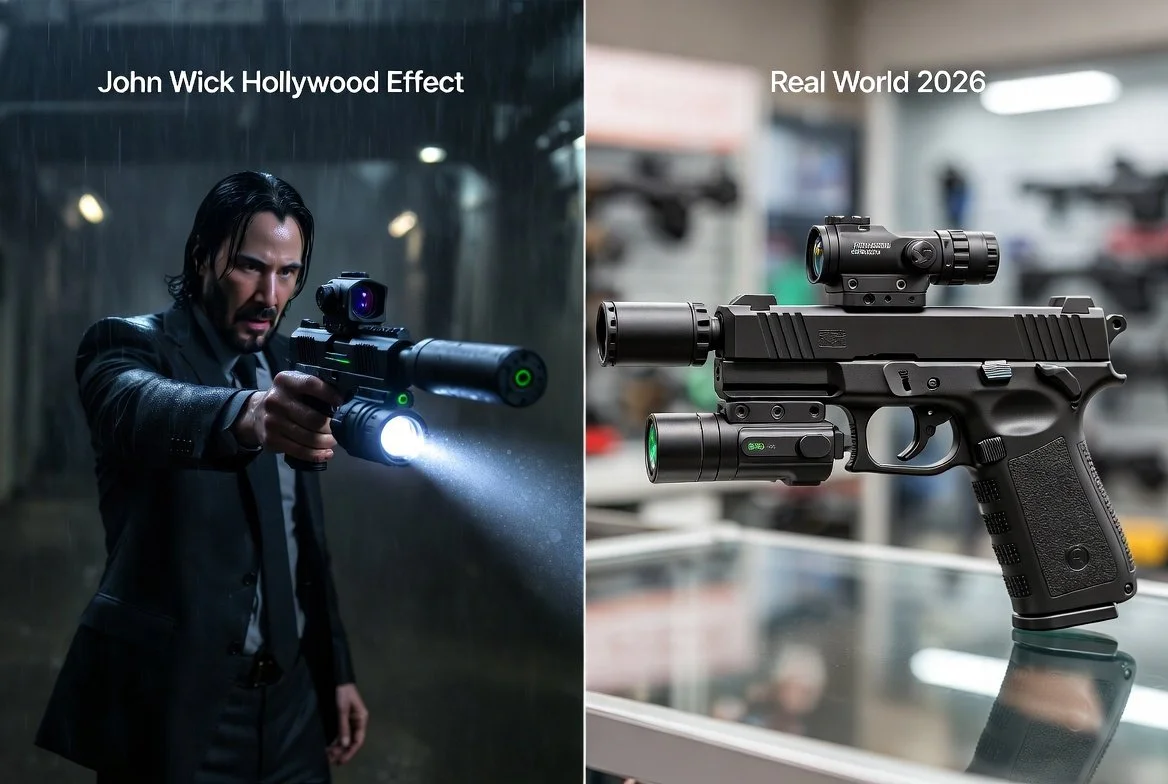
Since the 2014 release of John Wick, Hollywood action films have shifted dramatically from plain iron-sighted handguns and rifles to heavily accessorized “tacticool” builds. Directors and armorers now routinely equip heroes and operatives with real-world aftermarket gadgets (suppressors, pistol-mounted red dot sights, weapon lights, and lasers) to create visually dynamic “gun-fu” sequences. This aesthetic isn’t accidental; it mirrors (and amplifies) actual trends in military, law-enforcement, and competitive shooting, turning once-niche accessories into aspirational must-haves for civilian buyers.
Suppressors appear in nearly every stealth or indoor scene across franchises like John Wick (Chapters 1–4), Extraction, The Gray Man, and Mission: Impossible – Dead Reckoning. The on-screen result? A soft “pew” that makes suppressed firearms seem like perfect assassin tools. In reality, even the best suppressors only reduce noise to ~120–130 dB—still louder than a jackhammer. Hollywood’s whisper-quiet myth has been a running joke among armorers for decades. Yet the cultural impact is measurable: ATF data shows suppressor registrations more than doubled in just three years (May 2021–July 2024), with roughly 2.2 million new units added to reach a total exceeding 5 million registered by early 2026. While faster eForm approvals and the 2025–2026 elimination of the $200 tax stamp were the biggest procedural drivers, industry insiders and retailers explicitly credit the post-John Wick normalization for surging consumer interest—especially among new shooters who saw suppressors as “cool” rather than regulated NFA items.
Red dot sights on handguns exploded in cinema starting around 2018–2020. Taran Tactical Innovations (TTI) custom Glocks and other pistols in John Wick films—complete with micro red dots, compensators, and flared magwells—turned optics-ready slides into the default hero look. Real-world adoption followed almost in lockstep: pistol-mounted red dots went from niche competition gear to standard on new factory models (Glock MOS, SIG P320, etc.). The civilian optics market has grown steadily, with reflex/red-dot segments projected to expand at 5–6% CAGR through 2033 as more buyers copy the fast-target-acquisition style they see on screen.
Weapon lights and lasers round out the look for night raids and house-clearing scenes. Bright white lights (Streamlight TLR-1 or SureFire clones) are used correctly for illumination, while visible lasers deliver the dramatic “red dot on forehead” tension. These accessories now dominate low-light training content and retail shelves, with weapon-mounted light sales tracking broader tactical-gear growth.
Hollywood romanticizes these gadgets without showing the paperwork, $200+ tax stamps (until recently), or training requirements. Suppressors remain federally regulated; red dots demand zeroing and proper mounting; lights and lasers add weight and complexity. The “John Wick effect” undeniably boosted visibility and desire—TTI’s custom parts sold out repeatedly, and suppressor shops reported spikes after each new release—but it also spreads misconceptions. Buyers influenced purely by movies often discover the legal hurdles and real-world performance limits only after purchase.
THE VIDEO GAME INFLUENCE
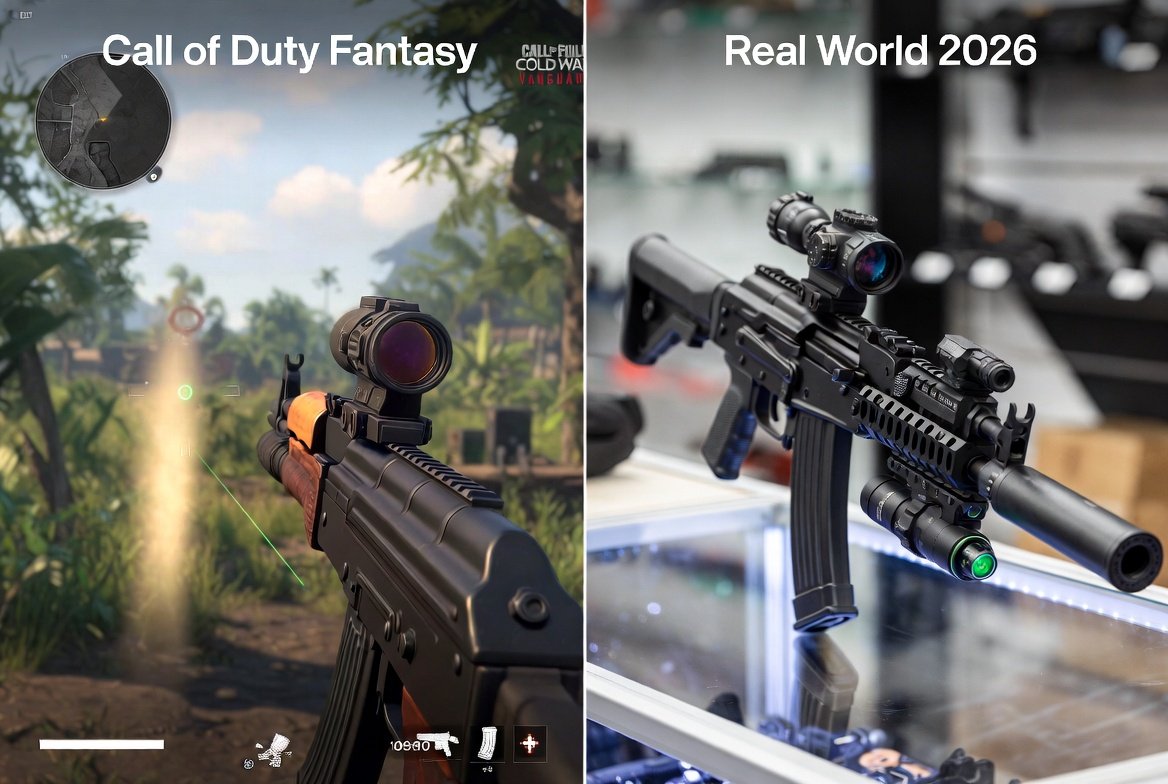
Modern first-person shooters (FPS) like the Call of Duty franchise don’t just feature guns — they slap modern gadgets on weapons from eras when those attachments literally didn’t exist. Red dot sights (reflex optics), suppressors, weapon lights, and lasers appear on 1950s–1970s rifles and pistols as standard loadouts, creating the false impression that every soldier or operative back then was running full “John Wick” builds with comps, lights, lasers, and custom engraving. This isn’t subtle historical inaccuracy; it’s deliberate game-design choice for faster target acquisition, better gameplay balance, and visual “cool factor” (often called “Rule of Cool” by critics).
Red dot sights are the clearest offender. In Call of Duty: Vanguard (WWII setting) and earlier WWII titles, players routinely equip reflex/red-dot optics on M1 Garands, Thompson SMGs, and STGs — decades before practical pistol/rifle red dots became common in the late 1970s–1980s (Aimpoint’s early military adoption). Black Ops series (Cold War/Vietnam/1980s) goes further: red dots, holographic sights, and modern rails on period weapons like the AK-47, M16, or MAC-10 variants that never had them in service. Devs have openly discussed the tension — one Call of Duty developer noted the challenge of adding illuminated reflex sights to Vanguard while trying to claim time-period accuracy. Battlefield titles get similar criticism, but CoD (with hundreds of millions of players across titles since 2003) dominates the effect.
Suppressors, lights, and lasers follow the same pattern. “Silenced” pistols and SMGs with whisper-quiet audio are defaults for stealth missions, even on 1960s hardware. Weapon lights and visible lasers turn night maps into tacticool showcases. Real-world physics? Suppressed shots are still loud (120–130 dB); red dots weren’t mounted on standard infantry rifles until the 1980s–1990s; lasers were experimental at best in the 1970s.
The sales impact is real and measurable, especially among younger buyers. Gamers who grew up on these titles (Gen Z and younger Millennials, now prime gun-buying age) expect red dots, threaded barrels for suppressors, and Picatinny rails as “normal.” Pistol-mounted red-dot adoption exploded post-2018 precisely as CoD: Modern Warfare and Black Ops remakes normalized them. Industry reports note the optics segment growing at 5–6% CAGR through 2033, with aftermarket red-dot sales spiking among first-time buyers who cite “what I use in Call of Duty.” Suppressor demand (already surging after the 2025–2026 tax-stamp elimination) gets an extra boost from the constant “quiet takedown” gameplay fantasy. Retailers and armorers report the exact same post-release spikes seen after John Wick movies.
The honest reality is that this is pure gameplay fantasy that rewrites history and spreads misconceptions. Red dots weren’t “on all guns in the 50s and 70s” — they were rare prototypes or aircraft-only until the 1980s. Games prioritize fun and accessibility over education, which is fine for entertainment but fuels the same gadget-buying wave as Hollywood. Younger players discover the real-world barriers (zeroing red dots, ATF paperwork for suppressors, added weight/complexity) only after purchase. It also romanticizes attachments without showing training needs or legal limits.
THE MANUFACTURERS

Major U.S. firearm manufacturers (Glock, SIG Sauer, Smith & Wesson, Springfield Armory, Ruger, etc.) have spent the last decade deliberately engineering guns around two hard truths they track internally:
Most civilian owners, especially the ~3.9 million new buyers added in 2024 alone, fire far fewer than 500 rounds per year (older NSSF handgun surveys showed averages of 625–1,590 rounds annually for established owners; post-2020 first-timers are even lower, often 100–300 total before the gun sits in a safe).
Those same buyers arrive at the counter with heavy media-shaped misconceptions from John Wick movies and Call of Duty: “red dots make everything point-and-shoot,” “suppressors are whisper-quiet,” “more rails and gadgets = better self-defense.”
So the industry gives customers exactly what they think they want — optics-ready slides as standard (Glock’s new Gen 6 in 2026 ships with three polymer plates; SIG, S&W, Springfield, and Taurus now default to MOS-style cuts), threaded barrels for suppressors, built-in compensators, and micro red-dot compatibility on nearly every new striker-fired pistol. By 2025–2026, roughly 38 % of first-time buyers specifically chose red-dot-ready platforms, and 28 % of all civilian handgun purchases came optics-ready from the factory.
The compromise is baked in. These guns are optimized for showroom appeal and social-media “tacticool” photos, not for the 10,000–20,000-round lifespan a duty pistol sees. Manufacturers use lighter recoil springs, cheaper MIM (metal-injection-molded) parts in non-critical areas, and ultra-light triggers because novices won’t shoot enough to notice the reliability trade-offs or the extra maintenance. They release minor “new model” refreshes every 12–18 months (new grip texture, different slide cut, color option) to drive repeat sales among the same low-volume owners who never wear out the old one. Entry-level to midrange handguns ($400–$600 range) now dominate volume because that’s what the post-2020 surge demographic can afford — and those guns are loaded with every trendy gadget the buyer saw on Instagram or in a video game.
This isn’t evil conspiracy — it’s smart capitalism responding to real consumer demand created by Hollywood and gaming. But it does mean buyers often get a gun that looks intimidatingly capable yet is over-featured for their actual use case. A simple, iron-sighted, proven-reliable design (like older-generation Glocks or a basic 1911) would outlast and outperform the gadget-laden version for 95 % of civilian owners who will never run a single defensive drill or put 2,000 rounds through it. Instead, the “new hotness” sells faster, margins are higher, and the cycle repeats.
THE FIX
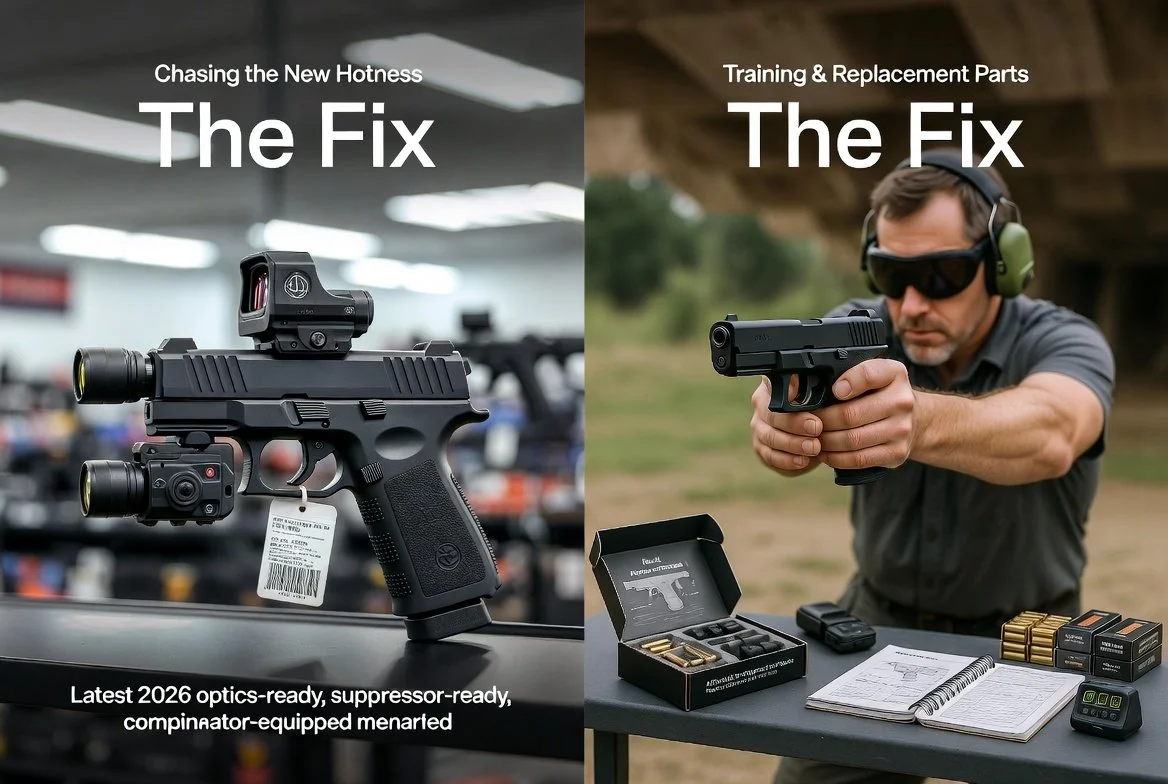
The antidote to the entire media-manufacturer gadget treadmill is simple, proven, and costs far less than the next “2026 hotness” model. Stop buying new guns and start investing in training plus targeted replacement parts on a proven platform.
Most civilian owners, will never exceed 500 rounds per year. For them, a $600–$800 optics-ready, suppressor-ready pistol with all the bells and whistles is mostly expensive jewelry. The highest return on investment is in professional training: one quality defensive handgun class (4–8 hours, $150–$300) plus regular range time will improve real-world performance more than any red dot, compensator, or threaded barrel ever could.
FBI and independent studies consistently show the average civilian defensive encounter happens at 0–7 yards, lasts 2–3 seconds, and requires fewer than 3 shots. Under that kind of stress, muscle memory in grip, stance, trigger control, reloads, and malfunction clearance matters, not whether your slide has three polymer optic plates or a factory compensator, or that overpriced weapon light you didn’t even use.
Instead of trading up every 18 months, treat your firearm like the durable tool it actually is. Pick one or two reliable, no-nonsense platforms (a Beretta APX/PX4, 1911, or M&P 1.0/2.0) and stick with them. Replace wear items on a schedule: recoil springs every 3,000–5,000 rounds, extractor and striker every 10,000–15,000, and upgraded sights or grips only after you’ve actually shot enough to know what you need. These targeted parts cost $20–$80 and keep the gun running reliably for decades. The result is a simpler, lighter, more trustworthy firearm than any gadget-laden new release — and you avoid the teething problems that often plague “new model year” refreshes.
MY CHALLENGE TO YOU

If you believe your micro compact 9mm is dead reliable, I challenge you to take it to the range weekly and fire at least 100 rounds through it under a timer. The goal is to draw and fire under time and make good hits on target each time. Do 100 presentations with a single shot from no closer than 10 yards, all in an afternoon. If you truly believe your pistol is capable of lasting and enduring real serious training, then prove it.
When you are not at the range, I challenge you to do draws from concealment with a laser trainer in the chamber. Use a laser target that tracks hits and dry fire from the furthest distance in your house. Do 100 hits from this distance under a strict time of 2 seconds and keep your hit at 90% or better.
If you stick to this type of training and practice, you will encounter exactly what all of us serious shooters find; broken firing pins, springs, and heavily worn weapons. This is the reality of serious training. I know some may consider this type of training extreme, but I think it is minimalist. I go to the range weekly and I shoot more than that.
It costs only $250 for a case (1,000 rounds) of 9mm, so there is no real excuse. People blow that kind of money on the new hotness just buying a tacticool flashlight. Or how about the red dot sights that cost that much or up to two times that much? RIDICULOUS! if you took a month of specific training on iron sights, you will realize that they are not “HARD” to figure out and shoot fast and accurate, even at range.
WRAPUP
I’m not against manufacturers or shooting gadgets like red dots and compensators — innovation drives capability — but I am adamantly opposed to buying into myths and marketing-driven misconceptions when virtually unlimited, reliable information exists that debunks them; gear should serve sound principles, not ego or trend, and choosing equipment must be rooted in honest assessments of needs, training, and proven performance rather than flashy claims, fear of missing out, or the idea that a gizmo alone will substitute for fundamentals.