SHOOTING ISN’T EVERYTHING
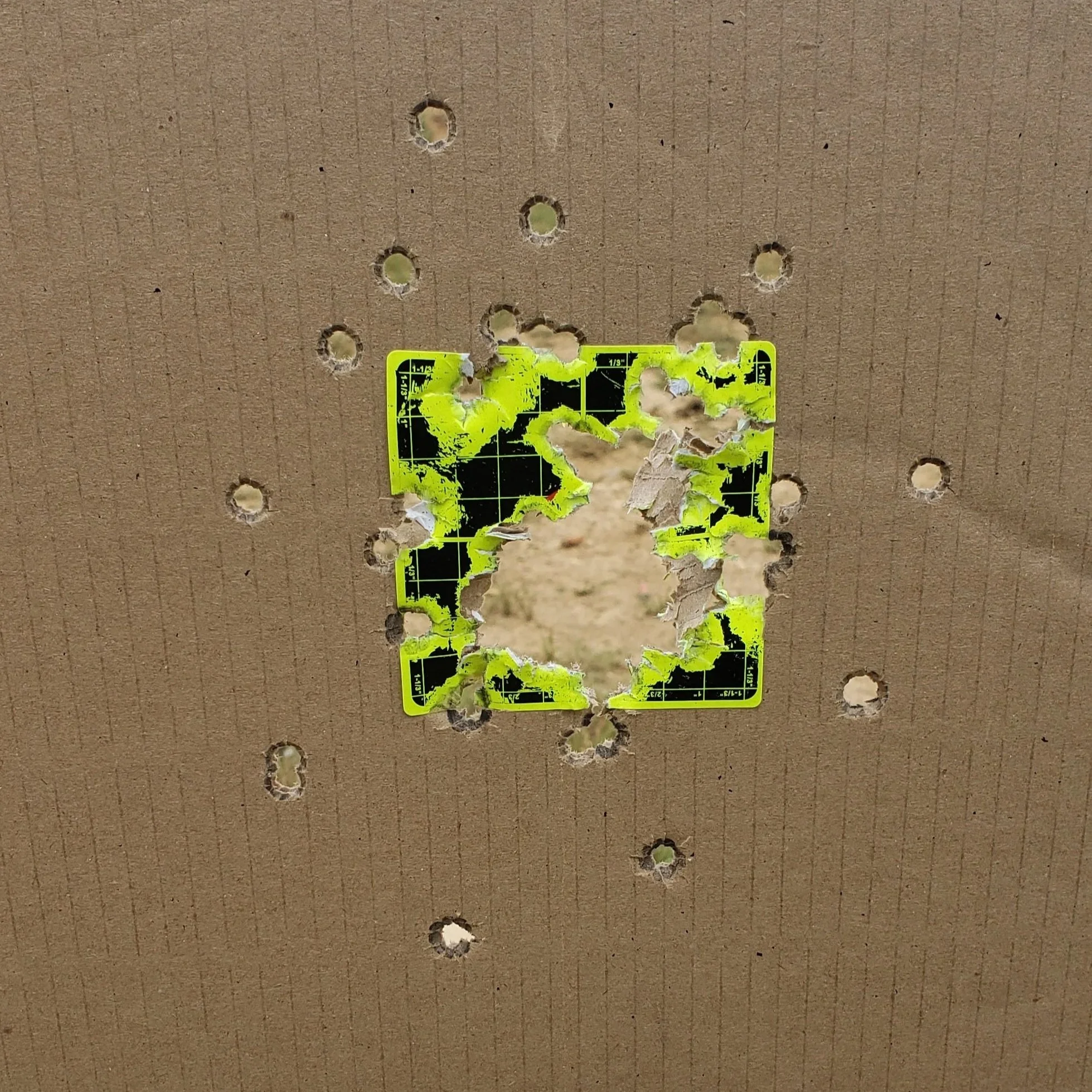
Too often, you watch an Instagram video and covet the performance of people on the range who get ridiculous splits and insanely short times on reloads. In reality, what you are seeing is the fruit of hours of immersion and obsession rolled up in a nice little package. Unfortunately this is where our brains pick up this idea that the performance we witness is easily obtainable due to a lack of evidence to the contrary. I’m here to tell you that nothing is free in this world. When you get really good at one thing, you become deficient in others. That is just nature.
THE DREAM VS THE REALITY
I would love nothing more than to be able to shoot like Ben Stoeger while also having all my other skills in light infantry patrolling, Krav Maga, offensive/defensive driving, executive protection, concealed carry, etc. Unfortunately, the time needed to acquire just the basics of each of these skillsets can take about a year or more per skillset. In that time, you are going to have to sacrifice something in order to fit in the skills you are wanting to develop.
I had to take a year to really get the basics of light infantry patrolling and team tactics before I had a rough idea of the mechanics. I have a bit of combat experience and served in the Marine Corps Infantry, and it still took me time to learn all that I needed to learn about operational patrolling. Small unit tactics is an art, and you could spend a lifetime trying to perfect all facets. But due to how diverse the skills are (Movement, observation, sketching, trauma medicine, communications, survival, demolitions, planning, navigation, camouflage, reconnaissance, raiding, ambush, etc.) you can’t truly master ALL of the skills needed and still be a grade A shooter.
Now let’s just look at Concealed Carry training. This is something that is also multi-faceted as well. You have a job to do every day in order to pay for rent and food, and that absorbs at least 60% to 80% of your time. Then on top of that, you need to add in a slight paranoia in order to fuel a drive to be prepared to fight for your safety. Perhaps you take classes on hand to hand fighting. This is a constant thing that requires consistent practice, and is not just something you can expect to perform well at without further sacrifice in time and energy. Often this training will happen after a long day at work. Then, somewhere between that and going to sleep, you need to find time to do dry fire practice and read about how to plan and secure your home and livelihood.
FEAR VS REALITY
The fear we generate for ourselves about the likelihood of a defensive encounter being imminent is almost absurd. But this is the type of thing that keeps the firearms companies in business and innovating. Your fear that you won’t be able to see in the dark drives the flashlight sales. Your fear of not being able to aim properly drives the optics sales. Your fear of not being able to access your firearm on your person drives holster sales. And finally, your fear that there is a better gun that will have an X-factor drives the firearms sales.
Imagine if people were more pragmatic and started asking the hard questions about training and scrutinizing the need for gear and mods and new things that promise a new experience but without informing you of the downsides. Imagine seeing past the marketting hype and scrutinizing pistols for trying to be so light that they hurt to shoot, or too small to be able to handle. Imagine if people focused more of realistic training rather than asking for guns and gadgets that don’t even solve the problem they had in the first place.
DEFINING WHAT A GOOD SHOOTER IS
The biggest comment I hear is people saying someone is or isn’t a good shooter. Let me tell you my definition of a good shooter.
A good shooter is an individual who possesses and can demonstrate the skill required for his/her given art with a firearm.
Like it or not, shooting is an art, not a science. It is visual, physical, but also involves luck and a bit of flare and style.
A competition shooter will be fast, agile, and able to run a rehearsed course of fire. However, this style of shooter will not have to spend any time worrying about concealment (concealed firearm not printing), shot discrimination (shooting as many rounds as needed to stop the threat), use of cover (to stop bullets), team communication, situational awareness (other shooters, bystanders), or the aftermath of their actions (police investigation, criminal charges, jail time).
A competition shooter has rules for the game and mostly has free reign to manipulate the course as much as needed to get fast shots on target. They will throw out shots in predictive shooting rather than assessing the effects of each shot in a split second. This is not to pick on them or imply they are not good at what they do, but it is a point that people observing a competition shooters performance needs to do so from a sober context.
A recreational shooter is a hobbyist in the simplest terms. They will shoot for fun rather than score, and may also carry a firearm for self defense. This style of shooting is about focusing on enjoying the art of marksmanship, and may delve into other facets of shooting like steel competitions and some defensive training. But the main drive of the hobbyist is to have fun and focus on the art of trigger pulling
Shooting guns as a hobbyist is not a crime, but yet again, we need to view things in context. If this person carries a gun for self defense and feels that their hobbyist range shooting experience serves as “good enough”, then they are utilizing their time in a delusion where association equals validation.
The tactical/defensive practitioner is the individual who utilizes their time chasing performance with a shot timer and uses every range session to train or validate their skills. This individual may or may not conduct ritualistic dry fire practice, but their live fire almost exclusively is centered around defensive shooting.
The practitioner is an individual who is centered around training and spending as much time as possible preparing for the fight, but I would argue a lot of that training is fluff and trumped up by the training industry. Splits under .25 of a second, reloads in one second, drawing and shooting in under 2 seconds. All these standards were developed a long time ago and most who train these standards have no idea where these numbers came from.
WHAT IT TAKES TO BE GOOD
To become proficient — not exceptional, but genuinely skilled — requires steady, consistent exposure and focused, deliberate practice. This means committing to at least five days per week of dry fire training, with each session lasting a minimum of twenty minutes and concentrating specifically on trigger pull and presentation or draw techniques. If you wish to develop proficiency with any platform beyond a pistol, the same level of disciplined, focused practice must be applied to that weapon as well. The key here is consistency, not intensity — there is no need to train to the point of fatigue, and doing so is actually counterproductive. Instead, focus on executing high-quality repetitions that complete the full sequence of events cleanly and without error, sustaining that deliberate practice over the course of several weeks. Following this approach will elevate you well beyond the level of the average gun owner.
THE DISCONNECT FROM REALITY
Practitioners often fall victim to the allure of institutional inbreeding. one instructor invents a drill like the scan to the left and right of the target, and then another instructor says that is not enough and adds you following an imaginary target to the ground before the scan. Then it gets ridiculous where people are turning all the way around and looking at nothing while no one knows why the first instructor taught a scan to the left and right.
Without context and rational justification, the drills a practitioner does is no better than the hobbyist taking a ten second shot or the competition shooter doing a 20-round mag dump in .5 seconds. In reality, shooting for defense is dynamic, but the clock is not the thing that makes you the victor in a fight.
Almost every individual who has used a firearm to defend their life has had one thing in common. Its not that they were world class shooters or great fighters with the latest Gucci gun. The thing that set them up to win is that they noticed the issue and had the will to act. This is not to say that their hit to miss ratio wasn’t terrifying, but they came out on top because they were the first to recognize the need for deadly force.
If we actually further dissect these deadly force encounters, we see that the total number of rounds fired, whether they hit or missed was 5 rounds or less on average. Sometimes you see 8 to 10 rounds fired, but these are emotional trigger pulls I like to call “shots of passion” rather than aimed shots. This is similar to when someone continues punching or stabbing someone even after they are down. It is sort of that dominant act of adding a few more licks “for good measure”.
WRAPUP
In conclusion, the best option as a shooter is to get formal training, practice that training often, and periodize your training with focused range sessions that verify skill development and/or expose skill atrophy or gaps. You don’t need to have a lifetime of trigger time to be good enough to handle yourself in a fight, but you need to be realistic. Shooting is not everything unless you make money on shooting. If you don’t, then see shooting as an augmentation of your broader scope of defense, or as another hobby. Don’t let the industry hype you up to think you have to be a world class shooter or that it is even possible just because you own a certain gun.