UNARMED FIGHTING: UNIVERSAL BASELINE SELF-DEFENSE
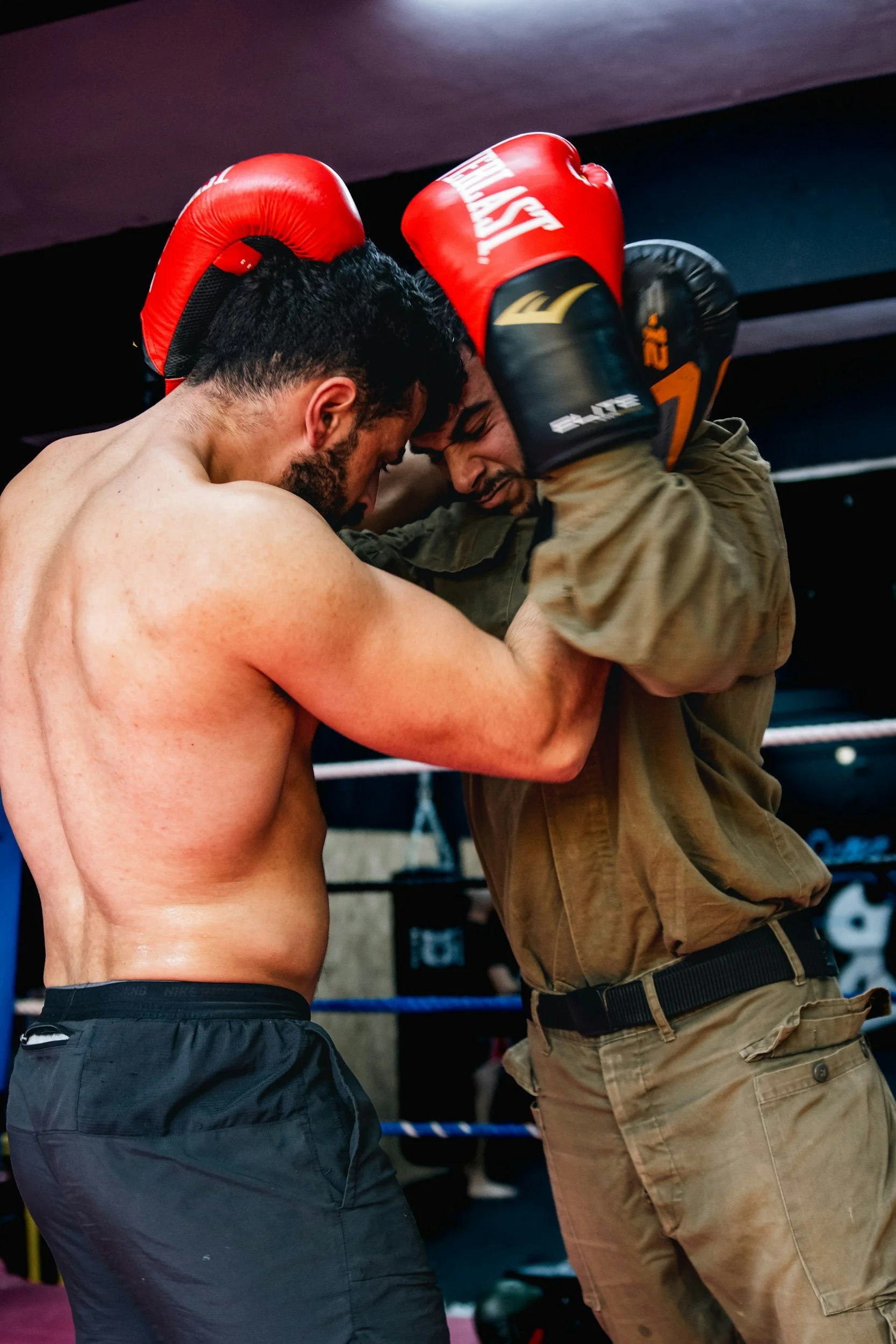
In my opinion, the true baseline for self-defense is your ability to fight without a weapon. It is interesting to me that many people are obsessed with carrying a firearm or some fancy defensive knife, but you rarely hear about unarmed combative tactics being bragged about. The truth is that there is no way that you can be armed ALL THE TIME, unless you severely restrict your life and work options. You cannot carry in most schools, any government building, theaters, and airports. When you are without a weapon, you need to be able to fight to defend yourself.
FIGHT ANALYSIS
When trying to figure out what to train for, you need to understand physical violence and fighting trends. You need to look at the threats and what you can expect to encounter on the street. What kind of strikes or attacks are common. Do people try to do hay-makers, or just try to tackle you? Are the aggressors your height or much bigger? What are pre-fight indicators? Do they make fists, blade off their body, or square up and get in your face? Do they throw a strike and retreat (I call this PECKING), or fully commit? Do they use short knives in slashes, or stabbing motions? These are all important things to consider.
DIFFERENT STYLES
There are a number of different martial arts that people like to promote for self-defense. In most cases, ANY training is going to give you an advantage to a thug. However, there are some guys that do have some training and fighting experience. There are a few different fighting arts that can be helpful as a baseline for self-defense training.
BOXING
Boxing is a great baseline to teach movement and timing. This is strictly fists and it teaches defense and offense in close fighting within arm range. The issue is that you are vulnerable to leg attacks and handheld weapons.
KARATE/TAEKWONDO
These arts are typically a forceful martial art that greatly rely on specific attacks to enact a technique. If you are skilled and highly trained in these arts, you should perform well in unarmed combat, but you will still be generally weak on weapons defense.
JIU-JITSU
When most people think of this, they imagine just the Brazilian version, which is strictly grappling. Yes, if you are on the ground, you need to be able to fight, but I am completely against turning a ground fight into a soft handed sport. I like the classic Jiu-Jitsu, known as Combative Jiu-Jitsu.
COMBAT SAMBO
Combat Sambo is basically a compilation of arts like wrestling and Judo with kick boxing strikes put into an aggressive single art. This comes with all the good aggressive combatives that you can use to put the hurt on someone. However, this system is still based on other martial arts and thus meant more for competition, though much of it can be transitioned to the street since it emphasizes aggression instead of stalling and playing in different positions.
KRAV MAGA
I am a Black Belt is Krav Maga, and I may be biased, but it is the only system that does not have a competitive wing. It is a street fighting art that emphasizes aggression and efficiency. There are no submissions, and the idea is to be capable of fighting against as many threats and get out alive. Krav Maga is the only style of fighting that spends more than half the time focusing on defense against an armed attacker. It also is huge in the concept of aggressive counter-attacking and overwhelming force to end the fight quickly. This means targeting the throat, eyes, groin, knees, etc.
The other part of Krav Maga that I love is that it is absolutely scalable. You can take techniques from certain martial arts and implement them into Krav Maga and enhance your fighting capability. You can also scale it down to less lethal options and use it for Law Enforcement and Security training. This is how I cut my teeth into this fighting system, and I have been in love with its versatility ever since.
PICK A SYSTEM & DEDICATE TO IT
Once you have found a system that you like, you will need to put in the mileage. I have had to start all over from the ground up after doing a Security/Law Enforcement modified version of Krav Maga. I went from training to handle armed attackers to learning all the basic strikes and such. This could have been a hit to my ego, or it could be a mastery opportunity. I took it as the latter, and decided to try to be the best at fast and powerful strikes and aggression. It got to the point that no one, even taller and stronger opponents didn’t want to spar with me because as soon as they threw a single strike, I would overrun them with strikes.
It took me the better part of 3 years to get my Black Belt in Krav Maga and become an instructor. It was a long and tedious process, but I dedicated to it daily, and I was absolutely committed to establishing a formidable baseline of self-defense. I knew that in many instances, I would not be able to carry a firearm for protection, and I would simply be at the mercy of whatever my hands were capable of. When working in uniformed security, you are primarily there just to observe and report, but sometimes any uniformed entity is targeted in California for the simple reason that they are wearing a uniform, and attacking an authority figure is the order of the day. In this case, you need to be able to fight for your life and be able to fend off attacks with vigor and aggression.
WRAPUP
Consider the fact that a gun may not always be available to you for use. Sometimes you may not be in an area where you are legally allowed to have ANY weapon to protect yourself. In this instance, I absolutely love the Marine Corps Martial Arts Program motto, which states: “one mind, any weapon”. This motto signifies that even if you are not armed, you are still capable of fighting and being combative. This is the baseline of any self-defense system, and the core of the concept of being ADAPTIVE, and COMBATIVE. This is fundamental to the ACT (ADAPTIVE COMBATIVES and TACTICS) concept.