SHOOTING STEEL VS SHOOTING PAPER
If you have to choose, you might wonder whether to focus on shooting steel targets or paper targets for training. If you live in the city, indoor ranges will likely be your only option, so you'll mostly shoot paper from a fixed position. Unless you’re ready to travel outside the city to set up steel targets, your choices are limited. The important thing is to consider how effective steel and paper targets are for your training.
SHOOTING STEEL
Shooting steel can be appealing for a variety of reason. First of all, it is fun and encouraging for beginners who do not have much time behind the gun. Shooting at a large or small target can be very empowering when they hear that ring. It is always entertaining and obnoxiously telling people you hit it. Empowering new shooters encourages them to return to the range and hopefully seek out training to enhance and expand their training.
Another good thing about steel is the fact that is saves your berm a lot of trouble from erosion. It typically shatters the bullets on impact, though some bullets do not reach velocities great enough to cause them to do more than just deform slightly and deflect off the steel. Also, because of splash and deflection, you must give the steel a respectful standoff, unless you like a bit of lead shrapnel in the skin. Depending on the range and the caliber you are shooting, steel will last a long time and will merely need a paint job done to give you a hint at the hits. If you shoot a ton, it will pay dividends down the road. Lastly, I would say a peripheral advantage of steel is that it isn't going to be too harsh on judging your hits when practicing fast transitions or simple multiple shot engagements. In certain applications, a hit in a general area is still a good hit. The saying I have used on steel is “If it rings, it’s clean.”
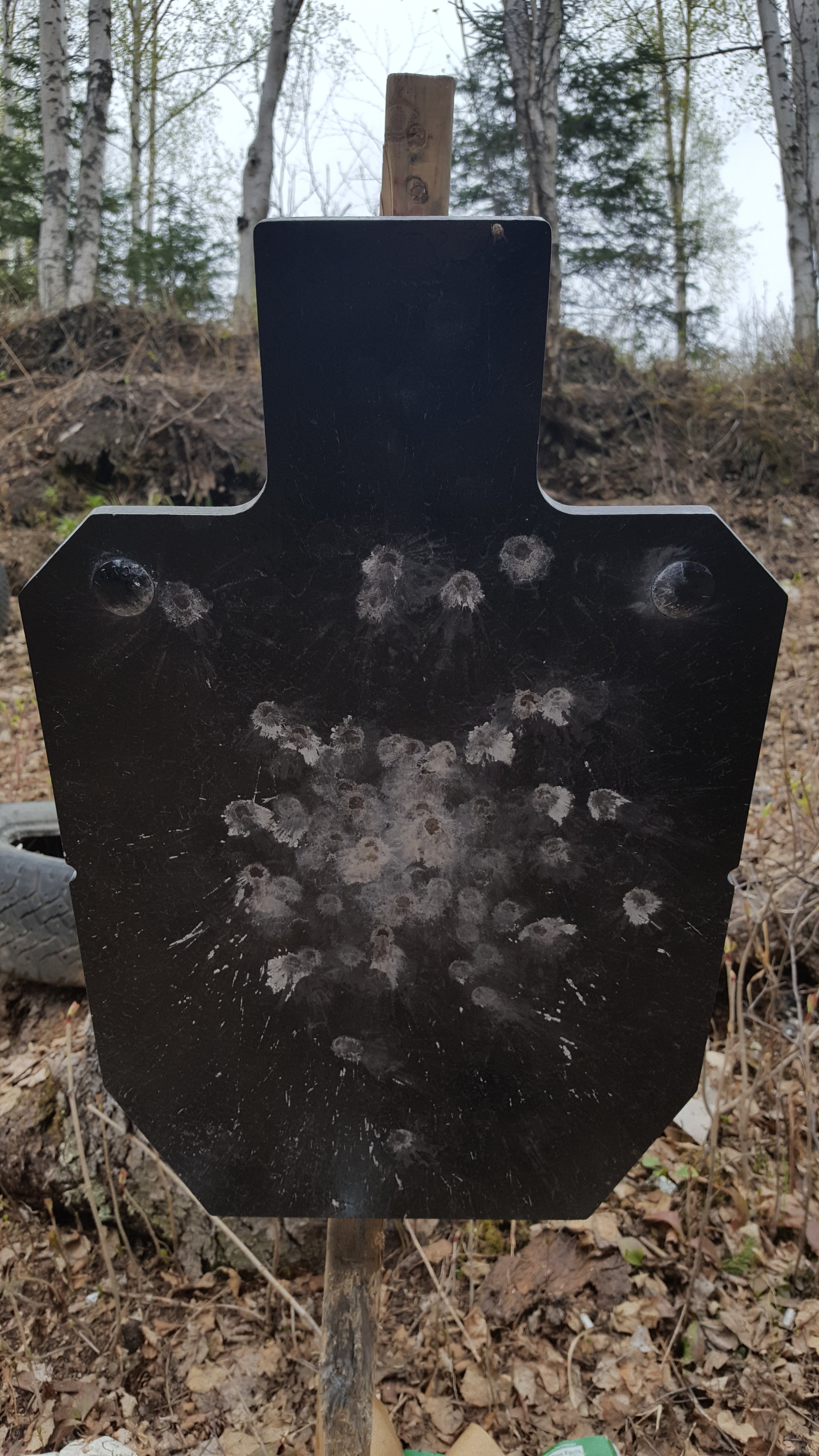
One downside to steel is what it can do to the mind over time. In the last paragraph, I mentioned how a hit to a certain area is fine and good in certain applications, I feel that the ring of steel is universally accepted as an acceptable hit. For example, I own a target that is the size of a C zone silhouette. Generally speaking, many people would consider this a good safe area for most hits. As long as most hits are centered in the vitals, such as in the C zone, all the hits are acceptable. I disagree with this because it causes sloppy performance and causes good shooters to turn into agents of mediocre performance.
I can graze the target in a headshot and get it to ring, which happened a lot. The hits were not always centered and it encouraged people to go faster and accept huge shot spreads, even outside of the vital zones. The most important thing to have on the range is a mission and goals you want to achieve. You should always start with precision and let proper repetitions cause speed through the inherent response the body has when you make a habit of doing things the right way every time. Be mindful of this danger and you should be golden.
SHOOTING PAPER
One thing I have found over the years is that paper is an unforgiving way of humbling a shooter. Shooting steel may give you a ping that will be accepted by other shooters, but paper will humble you really quick. At range, there is no feedback, and typically, you will not even see your hits until you close in. This is a huge factor that shooters should take advantage of when they are using discipline to remain accountable and accepting hard truths about their application of the fundamentals.
Let's be honest here...paper targets have the undeniable advantage of coming in so many different shapes, sizes, and designs. Sure, a stapler, glue, or some other method must be employed to keep the paper up. However, I think that paper targets can pay dividends when it comes to forcing accountability. If you have your hits printed and there is no reaction on the target, that can cause anxiety that the shooter will have to control for the duration of the course of fire. Especially if the shooter has become accustomed to the instant feedback and satisfying ring of steel targets. It is good to change it up now and then to make sure your skill doesn't become stale and dependent on certain things like instant feedback and lame flat range conditions.
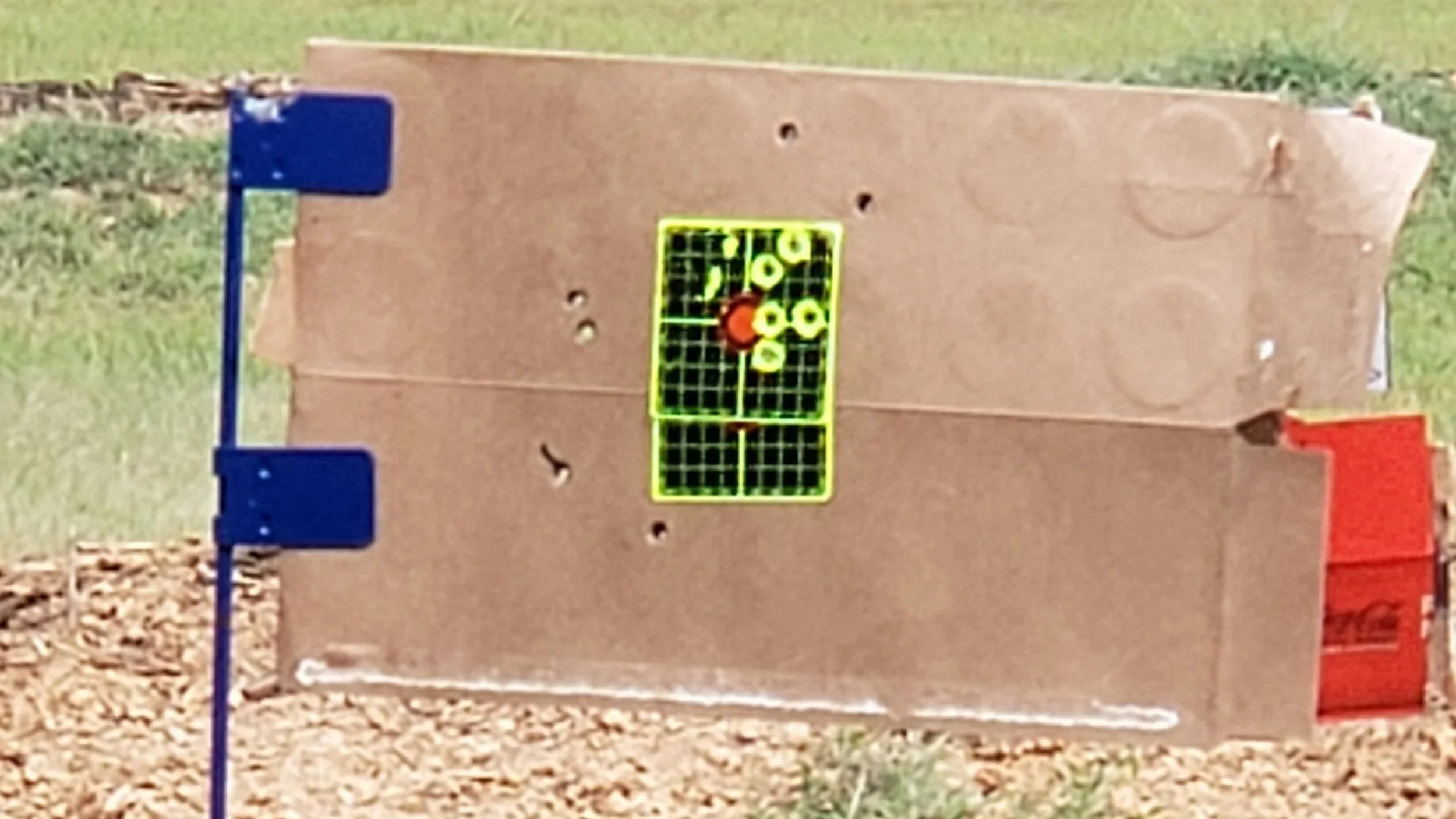
One thing to note about paper targets is that they are a great way to record your progress. You can shoot a paper target and keep it as a file. Just record the date, the course of fire/drill, times, etc. In some cases, it is advised that individuals record their range progress on paper and keep it around, just in case they have to defend themselves in court for using their firearm in self-defense*. It may be good evidence that you are not just reckless and unaware of the risk and responsibility associated with making hits on target.
*I AM NOT AN ATTORNEY, SO CONSULT YOUR OWN LOCAL LAW FIRMS
TACTICAL APPLICATION
In the book ‘TAPS’ (Tactical Application Pistol Shooting), the author Pat McNamara, was straight and to the point with suggestions about how to square yourself away on the range and ditch the slew of "institutional inbreeding" that has plagued the gun culture recently. In this book, Pat recommended getting back on the flat range now and again in order to shoot paper. He mentioned how even going back to practicing BRM or Basic Rifle Marksmanship can be very beneficial. I personally tried this and found that it had a profound impact on me mentally by forcing me to face the reality that my casual plinking was getting me in a rut that did not force me to account for every shot and grow incrementally. This was a flaw that took a week of intentional practice to correct. I am glad I found that book and was able to use it to further my skills by letting go of this pattern I put myself in without even realizing it.
WRAPUP
Both steel and paper targets are useful when used for the right purpose. Training with them is like taking medicine: a little helps you improve, but too much can harm your skills. Use steel targets for distance or speed drills where any hit counts. Use paper targets to accurately measure your skill and track progress.