BOOK REVIEW: THE COMMANDO POCKET MANUAL
Recently, people like myself are very interested in the declassified manuals of the military and special units like the OSS and British SOE. As these training and tradecraft secrets have been uncovered, we get a better understanding of how world war 2 operations took place. To my surprise, in other manuals, a lot of the techniques are still valid and effective to this day. Things like ciphers and disguises still have value today. This book is no different, in my opinion. Though it is dated, the information is not only valid, but worth using for yourself.
SMALL BUT LOTS OF INFORMATION
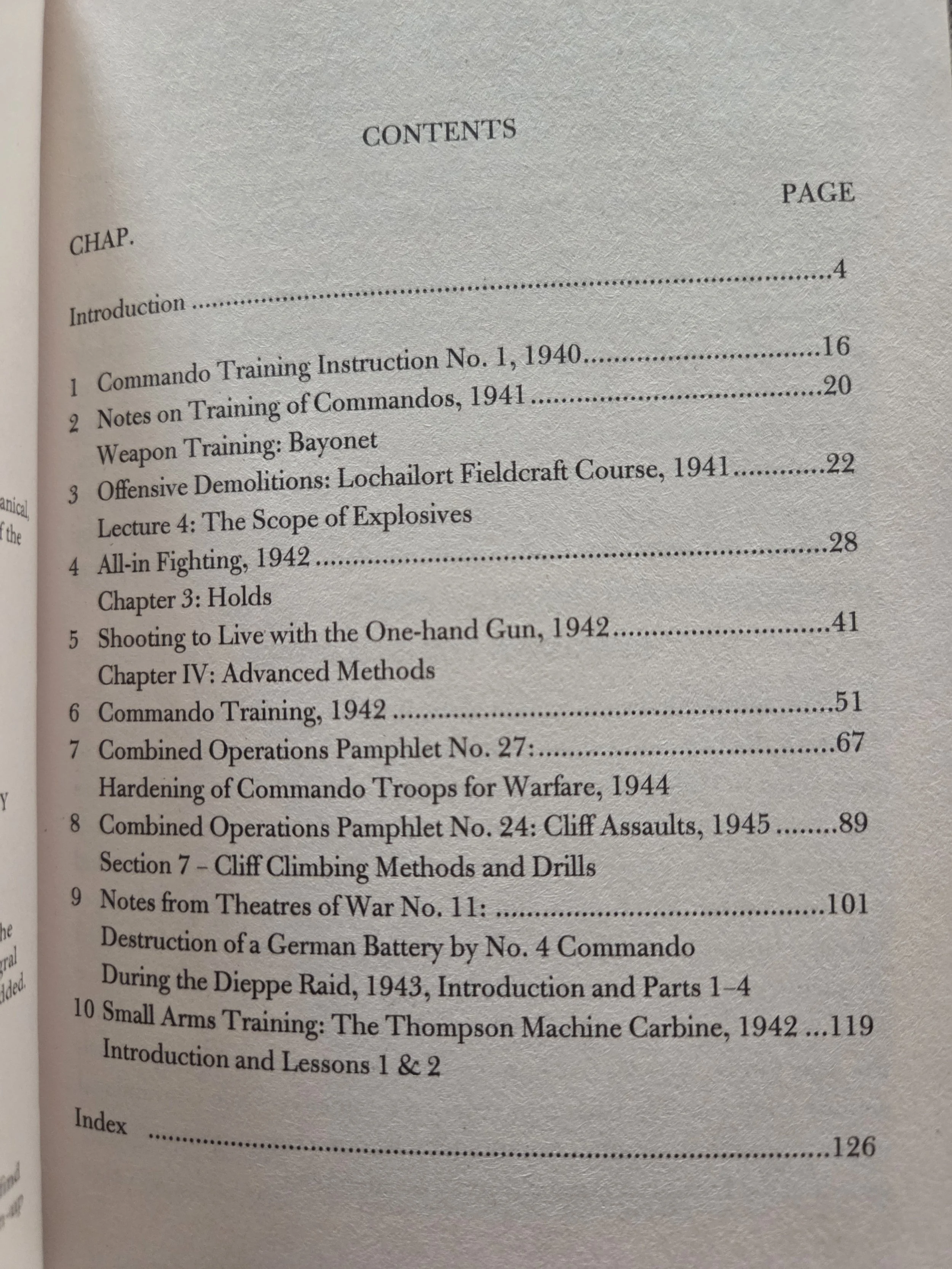
The Commando Pocket Manual is a book that is essentially a compilation of the training manuals taught to the SOE and British commandos. It is not an incredibly long book, but it has a decent length that will keep the reader occupied for a while. The information is a treasure trove for history buffs like myself. Being a tactical and firearms practitioner myself, I like to evaluate the efficacy of the tactics and techniques articulated in the manual.
LESSONS LEARNED
Much of the manual is instructional manuals and dictations for instructors who are teaching. It is laid out like a curriculum for instructors and students in the middle of WW2. There are a ton of references to success and failure in early WW2 operations by commandos and SOE operations. During many of the lectures, particularly on general training practices, there is mention of how performance on operations were associated to things like discipline and joint service cooperation; or lack thereof.
UNARMED COMBAT
One of the sections I particularly enjoyed was the unarmed self defense section. It is very much abbreviated and is all about focusing on the concepts of killing or capturing. it is very rudimentary but well illustrated and articulated. I am not sure these techniques worked in the real world, such as some of the holds and wrist locks they claim can instantly subdue someone. I particularly loved the emphasis on training these techniques at a slow pace but with proper technique and being careful not to damage each other too much.
ARMED DEFENSE
As a shooter, I found the firearms shooting training section to be very fascinating. You get a good idea on the concepts they are pushing through their training techniques. I would not say I disagree with the method of shooting they are promoting, but I am planning on spending time to try out some of the shooting techniques to see if they have a degree of effectiveness compared to our current methods of practice in firearms.
INTERSERVICE COOPERATION
Current and modern SF units do a good amount of interservice training to make sure they work well with allies and other branches. This book has a decent section all about the importance of understanding the role of every branch and how to work with them in order to build a mutual respect for each other and form methods of working together more efficiently. It cites instances where past operations did not work well due to interservice rivalry and dick measuring. This is a section that has modern validity for sure.
BODY HARDENING
This book has a manual all about how to acclimate troops to hardship through PT and exposure to things like poor sleep and food. This section has an amazing amount of validity, even today. It is not heady with scientific terms, but rather it is written in layman’s terms. This is very refreshing and uncommon today. They use general terms to describe things like how the body creates heat and how the muscles need prolonged periods of strain followed by sufficient rest. They do not add in scientific words and try to impress on the reader with chemistry, but rather have a forward way of using an analogy to illustrate the point.
The manual is set up as a rough guide and even calls out the importance to train in full gear and adapt the training guidelines to suit the training area you have to work with. It stresses easing the men into a habit of conditioning rather than plunging them in like they do in modern militaries. This is backed by a lot of science through the decades, and seems to be a lost art. This manual explicitly states that you cannot expect adaptation to happen in a short time, which flies in the face of modern ideology and bravado that they will just rise to the occasion, which is false.
NUTRITIONAL GUIDANCE
At the end of the book, there is a section on nutrition that is very basic but actionable. It discusses how vitamins and macronutrients balance together to create energy and it even calls out white bread as a nuisance in nutrition. If you are familiar with nutrition, especially as it pertains to balancing nutrition with an exercise routine, this part will blow your mind on it’s simplicity. Again, this is a manual for trainers to learn how to feed their troops and prevent them from losing energy, and how to get them conditioned. This isn’t a scientific manual boasting terms and nomenclature. This is all actionable and ready to use information for the layman.
HISTORICAL COMMANDO MISSION LESSONS
At the end of the book, there is a debrief and lesson based on a commando operation. You can tell from the language used that the lessons were fresh and it is called out that it was a unique example of what proper coordination and ‘infantry-style’ training can achieve. The victories are praised and further dissected to take lessons on how the training led to them. You can read the intense demand to be better and do better in the authors writing. It is a very thorough report that is very dry and detailed for all you history nerds out there that like a play by play of raids.
IS IT WORTH IT?
The book is roughly $15 and the Kindle version is $10. I bought the solid hardcover version because that is the kind of reader I am. If I do not care for it, I trade it in a bookstore for another book. With that said, this is an incomplete book, but has manuals and training guides you will not see elsewhere. It draws from training from books like "‘All In Fighting’ and' ‘shooting to live’ but it is abbreviated and the techniques are given as an example of the type of techniques the commandos should be drilled on. The book is a collage of pamphlets that were declassified and they all have one thing in common; they are meant as a training guide for the trainers and course designers. That is what makes this unique, in my eyes. Usually you get the manuals written for the enlisted and the little guy, but this is written for the trainers themselves on how to use the different skills to design and build a curriculum to raise battle-ready commandos.