REVIVE 1944 DOCTRINE OR KEEP LOSING WARS
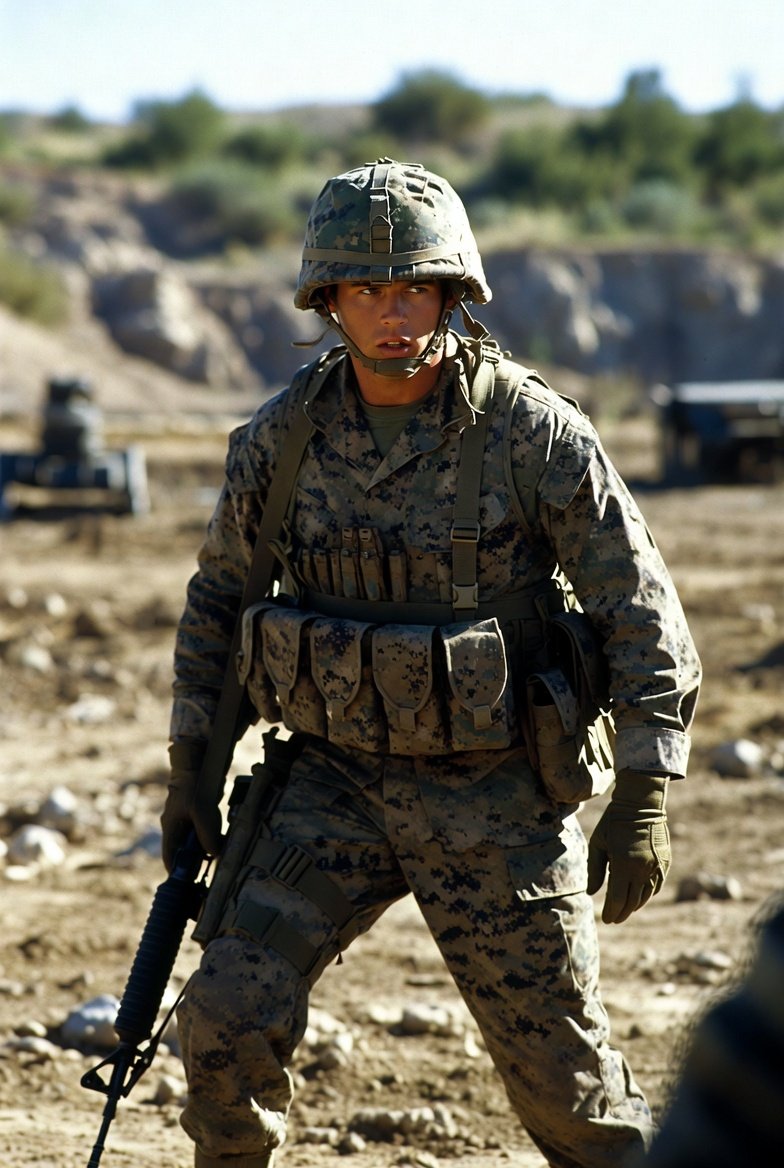
Let me take you back to something I lived every single day as a Marine Assaultman, MOS 0351. I hauled that SMAW rocket tube, extra rounds, full plates, helmet, and all the rest through patrols that felt like they would never end. The weight crushed your shoulders, the plates dug in, and every step reminded you that modern combat asks for more speed, more decisions, and more endurance than most civilians can imagine. Yet here is the uncomfortable truth I kept bumping into: the last time America fought and decisively won a major conventional war, we did it with a training system that was simpler, smarter, and far more effective at turning average guys into killers than anything we run today. That system came straight out of the 1944 War Department Pamphlet No. 21-9, the one that laid out the Daily 13 calisthenics circuit and the Physical Efficiency Test. You can still read the original PDF online if you want the raw source. It was not some nostalgic throwback. It was the exact blueprint that helped build the Greatest Generation, the one that actually finished the job in World War II.
SIMPLICITY BUILT WARRIORS, NOT GYM BROS
Think about what that pamphlet really said. It did not waste time on fancy equipment or endless metrics. It started every single day with a platoon-sized circle of unloaded, reps-based bodyweight work that hit every plane of motion—sagittal squats and jumps, frontal side bends, transverse twists for bayonet work and shouldering heavy weapons. The progression was deliberate: twelve weeks of steady ramp-up, starting light and building real capacity without burning anyone out. By week six you were already flowing through the full circuit in continuous motion, and the numbers were no joke. Here is exactly how the pamphlet laid out the thirteen exercises and the rep ranges that built the Toughest Generation.
The Daily 13 circuit consists of these exercises with the following rep progression over the twelve weeks:
High Jumper: starts at 6 reps in week 1 and builds steadily to 16 reps by week 12
Burpee: starts at 6 reps in week 1 and builds steadily to 16 reps by week 12
Squat Bender: starts at 6 reps in week 1 and builds steadily to 16 reps by week 12
Rowing Exercise (two-count): starts at 12 reps in week 1 and builds steadily to 32 reps by week 12
Push-ups (two-count): starts at 12 reps in week 1 and builds steadily to 32 reps by week 12
Sit-ups: starts at 6 reps in week 1 and builds steadily to 16 reps by week 12
Side Bender: starts at 6 reps in week 1 and builds steadily to 16 reps by week 12
Bank Twist: starts at 6 reps in week 1 and builds steadily to 16 reps by week 12
Squat Jumps: starts at 12 reps in week 1 and builds steadily to 32 reps by week 12
Trunk Twister: starts at 6 reps in week 1 and builds steadily to 16 reps by week 12
Stationary Run: starts at 20 seconds in week 1 and builds steadily to 1 full minute by week 12
Eight-Count Push-up: starts at 6 reps in week 1 and builds steadily to 10 reps by week 12
Straddle Pull-up (two-count): starts at 12 reps in week 1 and builds steadily to 20 reps by week 12
I knock the whole thing out in about seven and a half minutes at week-six reps, and even slower guys finish in under fifteen. That is the beauty of it. No gym, no excuses, just pure functional work that builds the Zone 3-4 cardio backbone you actually need in combat, with short Zone 5 bursts thrown in for good measure. The pamphlet understood something we have forgotten: combat is mostly grinding movement under load interrupted by sudden violence, not endless linear push-ups and two-mile runs. The Daily 13 trained exactly that mix—twisting while shouldering a weapon, bending low to take cover, exploding up out of a prone position—while the Physical Efficiency Test added the pick-a-back carry and timed runs that mirrored casualty drags and assaults.
DEATH BY BUREAUCRACY
Now fast-forward to today and you start to see the disconnect that has me writing this. Our tactics have changed completely. We are no longer a balanced force of light infantry who could move fast and light when they needed to, heavy infantry who could absorb punishment in a stand-up fight, and mechanized units that provided the ride. Somewhere after 9/11 we turned every dismounted infantryman into heavy infantry, all the time, everywhere. Body armor that did not exist in 1944 added twenty to forty pounds of rigid plates and helmet. Add weapons, ammo, batteries, water, medical gear, and you are looking at fighting loads of eighty to one hundred twenty pounds on average and march loads pushing one hundred forty or more. I carried that every day as an Assaultman, and I can tell you firsthand that it changes everything. You move slower, you tire faster, and your back pays the price in ways the Greatest Generation never experienced because they simply did not have that extra hardware.
The data backs this up without any spin. Studies from RAND and the Center for a New American Security show that the added weight reduces sprint speed, balance, and shooting response time. Injury rates tell the rest of the story. In Iraq and Afghanistan musculoskeletal problems became one-third of all medical evacuations, outpacing combat wounds in many units. Spinal and lower-back issues spiked precisely because the rigid plates channel force straight down the spine instead of letting soft web gear absorb it the way World War II troops did. We survived at higher rates thanks to that armor, but survivability came at the cost of agility and long-term readiness. We are asking infantry to do more—clear buildings, sweep for IEDs, patrol for hours in any terrain—while carrying more than their grandfathers ever did, yet our training has grown more linear and less combat-specific. The Combat Fitness Test is a decent CrossFit session in utilities and boots, but it is not run under plates. The Army’s new fitness test adds some loaded drags and lifts, but the daily PT in most units stays stuck on push-ups, planks, and runs. Meanwhile the old 1944 system built real multi-plane strength and endurance that translated straight to the battlefield.
WEAPONS TRAINING DOCTRINE
That brings us to the second half of the equation, and this is where the frustration really boils over for me. Weapons training, especially dry fire, sits right there in the doctrine. Marine Corps Order 3574.2M calls it critical for speed and accuracy. The 2024 Marksmanship Campaign Plan admits the old annual-qualification tables no longer cut it against modern threats and pushes the new Infantry Marksmanship Training Program to fix sustainment. Yet in the fleet, especially in regular infantry battalions, dry fire is treated like an optional warm-up you squeeze in once a month or two weeks before a range qual. I watched it happen time after time. Morning formation ends, and half the Marines disappear into barracks rooms to play video games while the armory stays locked. Administrative briefings on everything from sexual harassment to UCMJ refresher get priority, and suddenly the day is gone. That is not training. That is checking boxes.
Here is the part that should embarrass every commander: civilian shooters are smoking us on skill development. Guys who train with prior-SF instructors or competitive programs like USPSA log dry-fire sessions three to five times a week, one hundred to two hundred clean reps at a time, because they have the firearm at home and no permission slip required. A 2024 study in the American Journal of Psychology proved the gap is real. Civilian self-reported dry-fire volume actually predicts real-world marksmanship scores. Military shooters overestimate their ability because they do not get the volume. The aura of “the military trains harder” is still out there, but the numbers do not lie. We have the doctrine. We have the armories. We just refuse to use them every single day like the job demands.
DOCTRINAL RECOMMENDATION
So let me lay out the fix I believe we need, the one that brings the 1944 pamphlet back to life while fixing the gaps that have crept in over the last eighty years. First, make the Daily 13 the universal daily baseline for every Marine, combat arms or not. Platoon-size circle right after morning formation, ten to fifteen minutes, reps progressing exactly as the pamphlet laid out. It builds camaraderie, guarantees nobody skips PT, and gives you the unloaded foundation that lets you handle real loads later without breaking your back. From there break down the morning the way the pamphlet already recommended: squad-level competition on the football field with blind high-crawl and low-crawl races (feet touching at center line, facing away so nobody can see the other team, timed evolutions with burpee penalties for last place and easy jogs for winners). Then drop to fire-team level for silent patrolling, combatives, or role-specific work. Finally, finish with individual skills inside the buddy pair—dry fire, movement techniques, radio protocols, whatever your MOS actually needs.
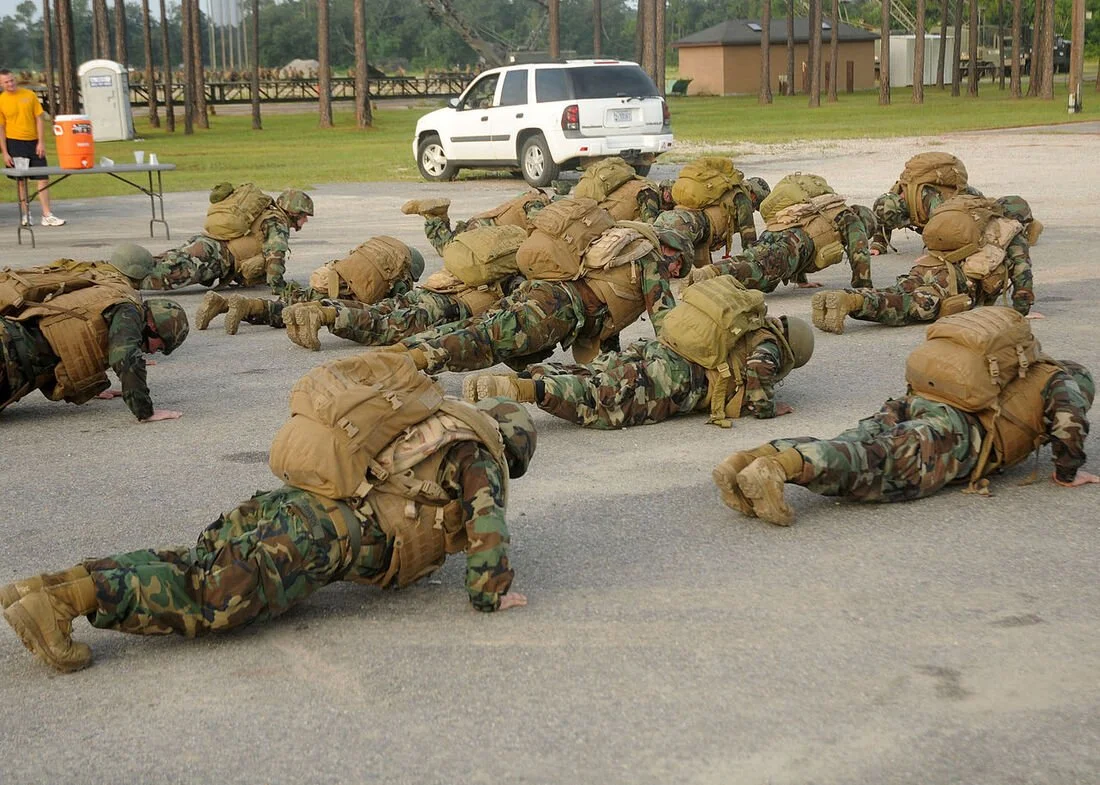
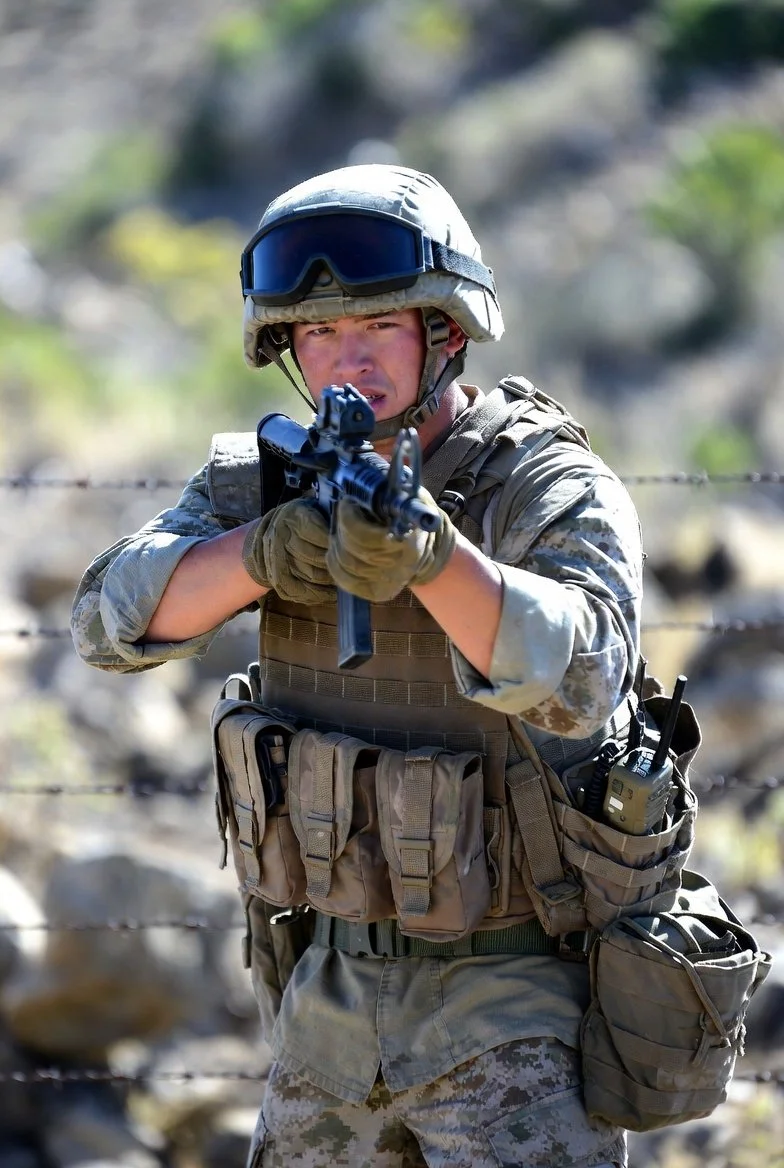
Now layer on the weapons side, and this is where the doctrine shift has to be non-negotiable. For combat arms MOS and any security forces whose mission set puts them in the fight, dry fire becomes compulsory every single day, minimum thirty minutes after the Daily 13. Weapons come out of the armory Monday through Friday. Dummy rounds, laser trainers, cleared barracks bays—use whatever you have. Fire teams drill presentations, blind reloads, low-light transitions, nighttime close-quarters movement. No excuses. For units attached to combat arms—radio operators on a MEU, logistics Marines working side-by-side with infantry, artillery forward observers, Navy corpsmen embedded with grunts—the entire element trains exactly the same way. The whole MEU adopts the unified schedule. Everyone does Daily 13 daily. Everyone gets at least thirty minutes of dry fire three times a week minimum. You work proximal to infantry, you train like infantry. For pure non-combat arms Marines who stay in the rear, keep the Daily 13 every day and give them rifle work once a week so the “Every Marine a Rifleman” idea stays real without over-tasking.
BUREAUCRATIC/ADMINISTRATIVE WORK
The administrative stuff that people always throw up as an excuse is pure horseshit. Commanders own the training calendar. Consolidate the briefings, schedule them after 0800, or knock them out quarterly. The armory is not a storage locker. It is the tool locker for the most important job on the planet. The 1944 pamphlet never tolerated downtime because its authors understood that the soldier’s job is fighting. We have the data from the Marksmanship Campaign Plan telling us the old way is broken. We have injury statistics screaming that heavy infantry all the time is not sustainable. And we have the lived experience of every combat vet who knows that sustained Zone 3-4 movement with sudden bursts is what actually wins fights.
WRAPUP
This is not about going backward. It is about going forward with the one system that already proved it could take soft civilians and turn them into the toughest, most cohesive force America ever fielded. Bring back the Daily 13 as the daily heartbeat of every unit. Make dry fire compulsory at the volume civilians already treat as normal. Unify training for every Marine who might have to fight, regardless of MOS or attachment. Do that and we stop pretending metrics and check-the-box events equal readiness. We start building warfighters again—the kind that finish wars instead of just surviving them.
That is the shift I am proposing. It is simple, it is cheap, and it is exactly what the 1944 pamphlet already proved works. The only question left is whether we have the guts to make it doctrine and enforce it every single garrison day. I know what side of history the Greatest Generation would stand on. The rest is up to us.