LIGHT INFANTRY FITNESS
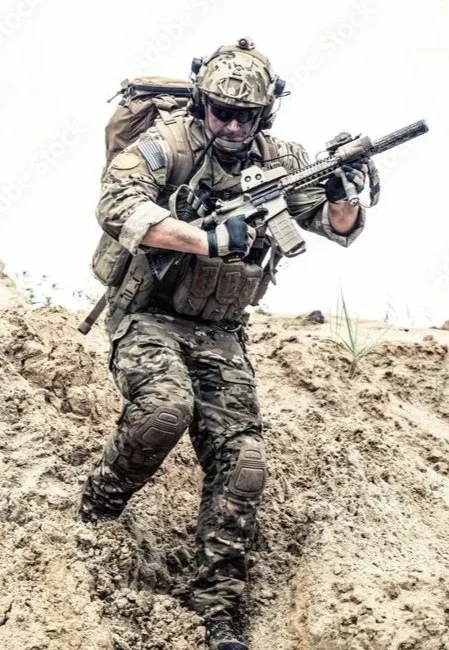
I recently discussed how I maintain fitness to carry out light infantry training. People were curious about how I am able to carry 30+ pounds up and down hills with very little recovery time. When people ask me how I’ve managed to reach this level of endurance and strength, my answer is always the same: avoid the gym. The real key lies in consistently practicing the activity and supporting exercises. I frequently practice movements under load and pushing through with minimal food and rest. It sounds straightforward because it truly is. In fact, many people find it hard to believe it could be so easy and effective.
People often attempt to combine their unproven, experimental methods with well-established, proven practices and almost always end up failing. In my experience, I’ve observed bodybuilders, CrossFit enthusiasts, and office workers alike struggle to achieve good results simply because they don’t train correctly or consistently within the framework of their chosen fitness discipline. These various styles—whether it’s CrossFit, Powerlifting, or long-distance running—tend to take on almost religious significance when individuals become overly attached or dogmatic about their particular approach.
MISUSE OF THE WORD “FITNESS”
How many times have you heard people yack on about “getting fit”? I hear it all the time. Also, people will attempt to compliment me on “being fit” and then get slightly insulted when I tell them that I am unfit per my area of training at the time. Why do I say I am unfit? Because for what I am trying to be fit to do, I fall short of my performance goals. I chase physical performance, not physical appearance. Most of the compliments come from a combination of my appearance and my performance.
Fitness is often used to describe a physical look and less for a physical capability. People think fitness is a six pack with bulging arms. However, do those characteristics automatically mean that person is capable of punching hard, running fast, doing handstands, rucking all day with little food and next to zero water? Can you look at someone and know when they will quit an activity as in military selection courses? No!!! Unfortunately, you have been dealt a bucket of bad goods. Being fit is supposed to describe someone’s physical performance, not their physical appearance.
Looks and performance can sometimes go hand in hand with each other. For instance, most Olympic long-distance runners are going to be skinny whereas people who do a lot of advanced gymnastics-style work (rings) will have a more muscular appearance. It comes down to the muscles used and your level of performance. In cases like these, you can judge a book by its’ cover, to a point. You can have a fat linebacker, but rarely will you see a chunky wide receiver. Its simple physics, and the ‘iron marshmallow’ concept is a lie and you can freely judge any fat person to be ‘unfit’ and incapable of performing any strenuous task for long durations without risking injury. In the case of being a fatty, the human body tells the story of someones’ ability. Also, just remember that skinny does not equal fit, but muscular does not equal strength endurance. Looks can be deceiving in the skinny versus muscular world, but only to a point. Bottom line, looks are useless; focus on ability and performance. Too many people talk about wanting to lose weight when instead they should be wanting to GAIN a physical ability or reach a performance goal.
DISCOVERING YOUR “FITNESS”
First step in fitness is to define what fit is for your specific needs. For this article, the example will be dismounted light infantry work since light infantry conditioning is what people ask about the most. Arguably, light infantry is the hardest job out there and definitely requires a unique level of conditioning to perform at a high level of competence. It also requires an incredibly unique conditioning plan.
For light infantry work, you will need to be capable of operating indefinitely with a full combat load (15-20lb) on your body at all times, and with periodic increases of up to a third of your bodyweight (55lb) during fast operational movements lasting up to 5 hours. You can expect to only be able to eat once or twice a day, and sleep may be as little as two hours a day with periodic power naps. Expect to operate with little to no protection from the elements during tactical situations. During combat, movements will have to be quick and precise, even after spending hours or days moving tactically with little rest. All skills will be expected to be performed perfectly, regardless of how tired, sore, injured, or inconvenienced you are.
Strength endurance
Power (sprints)
Stability
Agility
Coordination
Quick Recovery
GET OUT OF THE GYM AND GET AFTER IT
The above example is what a lot of people talk about being ‘fit’ for. They will talk about their ability to deadlift or do heavy bench-press, but rarely will they be talking about their ability to go days with little food or water and still be able to carry a combat load and conduct fast agile movements for hundreds of meters and still be able to continue rucking a third of their bodyweight for hours without rest at the end of it. None of the above qualities I put above are going to be able to be worked on at a gym. No machine or set of weights is going to help you more than just putting on a heavy pack and doing light infantry stuff.
If your goal is to attain the fitness required to perform at a high level as a light infantryman, you will have to get rid of the gym membership and prioritize doing light infantry stuff. With the number of skills you need to be good at (Shooting, communications, stealth, camouflage, battle drills, medical, planning, navigation, survival, etc.), on top of being fit for the job, the gym is just a waste of time and money with no reward. Keep in mind that this is also not something you can do for one hour a day. Light infantry work is an all-day thing. Light infantrymen are out all day and up all-night planning, plotting, fighting, or preparing for a fight. If you are going to condition yourself to be a light infantryman, you have to conduct physical exercises for hours on end in what I call Macro-circuits. I’m sorry, but that is the only way. There is no shortcut since your body only adapts to the stimulus given. If the stimulus is always short, you will only ever be capable of short work. The choice is yours, but you can’t supplement, replace, or find a shortcut for this type of thing.
THE RECIPE
The way I go about preparing and conditioning my body is so simple that it should make you cry and tear up your gym membership. I put on a pack and go for a jog in my neighborhood. The pack weighs 35lb, which is roughly 1.5x what my belt kit weighs. I go for only a mile or two at a time on jogs, but I do it at least twice a day. Other times I will do a 4 mile quick march where I will take the same load and walk as fast as humanly possible, but without trotting or jogging. Below is a general idea of things I will do in a week for conditioning. This is just a small part of my conditioning schedule, and not a comprehensive how-to guide.
Pack jog 1-2 miles (morning, mid-day, evening/night) 2-3x per day, 2-3x per week
Pack walk 4 miles (65min time limit) 2x per week
Combat load burpees (10-20 reps/5-10 sets) daily
Combat load high crawl 25 meters (1 minute time limit/ 3-5x) daily
Combat load stealth high crawl 25 meters (3-5x) 2-3x per week
40-50lb Ruck march 5 miles (80min time limit) once a week
Timed Position Agility in combat load (standing, kneeing, prone, kneeling, standing/3-5x) daily
This is just a brief introduction to the type of things I will do, minus the drills like reacting to contact in full gear, staying up for two days in full gear while fasting, and doing various calisthenics in gear between weapon training drills. My conditioning cycle involves continuous movement, strict dieting with regular periods of reduced food and water during high activity, along with purposeful exposure to excessive heat and cold without aid of appropriate clothing. My point is that if my intent is to train my body to function as a light infantryman, I will condition it to be capable of doing what light infantry does and in all conditions. Of course, it helps to have served as light infantry so you have experience in light infantry work.
THERE IS NO ALTERNATIVE/INDIRECT WAY
You cannot get this kind of performance out of doing muscle isolation lifts at a gym. And no, CrossFit is not an acceptable alternative. I don’t care what the claims are, the strength endurance and activities you have to be good at cannot be indirectly trained. Having endurance as a jogger doesn’t spill over to endurance in high crawling with belt kit. Doing pullups, squats, etc. with shitty form at breakneck speed in CrossFit doesn’t spill over to you conducting contact drills with a ruck on for hundreds of meters after not sleeping or eating.
COMBAT AGILITY
In order to be best prepared to perform as an asset in combat, you must first master the conventional positions and movement techniques on an individual level. Failure to change positions rapidly or cover ground quickly can result in you becoming a casualty, and thus becoming a liability to your team. For this reason, the individual is obligated to master their IMT or Individual Movement Techniques. Quick position changes and controlled movement is ideal. This demands a level of fitness that you cannot attain by going to the gym. The best way to reach IMT mastery is to practice these techniques through a sensible progression.
EQUIPMENT NEEDED
If you think you can deadlift your way to IMT mastery, you are sorely mistaken. This is only accomplished through practice. Pick your combat uniform, combat gear/belt kit (I use the French uniform and a loaded JayJays Commanders Webbing system) and have your unloaded rifle ready with an empty magazine loaded. Then you will need some room. Your backyard, garage, living room, etc. That is all. Trust me when I say that a gym will have zero use for you, even when doing supporting exercises. Stay home and practice at home. Also, forget about needing to do this at the range. You can master this without shooting, but then test yourself by doing a class with Max Velocity Tactical.
POSITIONS
The positions you will need to master are the kneeling and prone. When I say positions, I am not necessarily talking about the static position and holding it, but rather the act of acquiring that kneeling or prone position quickly and efficiently while fully geared for combat. Also, we must remember that these positions exist for us to take advantage of cover/concealment. You must learn to ID your cover, put that cover between yourself and the enemy, acquire a firing position without over-exposing yourself, and fire at the enemy without striking cover or being knocked out of position.
The next part of positional training is the transitions into and out of the positions. You need to be able to acquire the position fast, but also get out of it just as fast, repeatedly. Take fire and movement for example. You are conducting short rushes from cover to cover and acquiring quick positions momentarily. You will be needing to get into position fast, and out of position fast in order to limit exposure time. You will do this over and over again, so the real test is doing it for several minutes without a break. The way you transition from standing to kneeling to prone is going to be instrumental in the next segment.
POSITIONAL MOVEMENT
Positional movement is simply moving while in a lowered position. For instance, I advocate mastering the high crawl, low crawl, kneeling shuffle, and ghost walk. All these movements have served me well, and I rarely see people fit enough to do them. These movements are mostly used when trying to move with stealth, which is just as hard as trying to do these movements at speed. Trying to be quiet demands balance, static strength, and patience. This is why these movements are on here.
For the two prone positions, your money is going to be made by practicing forearm planks in full gear. I had great success when practicing the lizard walk in full gear. Also, don’t forget to practice shifting left and right with full gear. You may find that moving in the plank position is easier than scraping and dragging your belly. My advice is to first develop your skills by practicing in line 1 gear with your rifle, and trying to be dead silent while moving 30ft or more with zero breaks. When that becomes easy, do it with your line 2 gear added for 50ft or more. Again, the goal is to do it absolutely silent while maintaining the perfect form and with no breaks whatsoever. This will take quite a while to get good at, so don’t B.S. yourself.
Kneeling shuffles is basically where you just hold your rifle in your firing hand and use your support hand on the ground to support you while you shuffle forward or to the side. In this position, your support side knee would be on the ground and your firing side foot would be used to push or pull you, depending on what kind of movement you are conducting. Again, this can be done slowly to build strength and done fast to help you move to another piece of cover while under fire.
Lastly, the ghost walk is a foundational movement technique that is utilized on patrol. The idea is to balance on one foot while silently lowering the other one on the ground to minimize noise. Even if walking on dry leaves, you can put your foot down so slow that you make only the faintest noise. It is all about balance and control. We have become spoiled and accustomed to moving rapidly, but the ghost walk is all about moving super slow. You should be putting your foot down so slow that you look and feel like you aren’t moving. The saying I have used when teaching others is “If YOU can hear the leaves crunching under your feet, you are going too fast.” If you think that it is too hard to walk quiet, I don’t need to know you to judge that you are unfit and would be a tactical liability. The ghost walk is only hard for the unfit tactical amateurs, if I am being honest.
MACRO-CIRCUITS
Macro circuit is a made-up name, as far as I know. I could not think of a better way to describe what I am talking about. Macro circuit training is a way of running through different training subjects throughout the day in a continuous loop for 12 hours at a minimum. In my opinion, it is the best way to get the most bang for your buck and develop physical adaptations and/or learn, especially when time is limited. Keep in mind that this is a very extreme method of conditioning, and it has a very niche purpose to it. The focus is mainly for conditioning people for the rigors of combat. Getting them used to hard work, having to focus and perform, then getting a slight rest before doing it all over again. This is just like combat in the worst-case scenario.
MICRO VS MACRO CIRCUITS
A micro circuit is just regular circuit training. I was inspired by it and had to have a way to describe regular circuit training and my day long circuit training. Where you have specific workouts or stations in micro circuits, the same is true for the macro circuits, but with each station applying to a broader training category. These categories could be physical training, weapons training, learning/reading, administrative/organizational work, etc. And yes, you can absolutely have a micro circuit inside your macro circuit. And just like micro circuit training, you can expect to repeat the circuit until the day is over. This is going to be the biggest shocker for most people. Task switching and doing it over and over through the day. Each of my stations through the day last only an hour each. If you have four stations, it is possible to have 3-4 hours of training on that one category through the day. If it is running, calisthenics, or weapons training, this can be a good way to get a broad range of training packed into your day.
PURPOSE OF MACRO CIRCUITS
For the normal Joe just wanting to get a burn and feel good, this is a bit aggressive, and frankly overdoing it. By the end of the day, if you are putting in the work at each station, you will be gassed. This is the type of training you would want to do if you were whipping people into shape for fighting and you had a lot of teaching to do and relatively short time to do it. Like I said, this is extreme, not only in the amount of time spent on the tasks, but the amount of commitment needed. Your whole day is revolving around the circuit. If you want to eat, you will have to push hard on one of the stations and finish it faster in order to make time to stuff your face. Personally, I fast on my circuits so I don’t have to share the time. I think this kind of schedule works best with organizations like military units that have nothing but time from dawn to dusk.
SELECTING SKILLS
Bear in mind that macro circuits last all day and the stations are repetitive. This means you will want to use exercises or tasks that need a lot of time in order to learn or develop an adaptation. For instance, one of the things you will want to do often is cardio/running. I like to conduct runs with a 30lb pack as my physical training. I usually like to follow up my run with some kind of mobility training, which may come in the form of pushup/pullup variations. You can also concentrate on gymnastics training on certain days.
For weapons training, I found that shooting positions, individual movement techniques, malfunctions, reloads, and even disassembly/reassembly practice are very important, but often never get enough time in the day due to burning out on the subject. On a side note: disassembly/reassembly drills are necessary to develop intimate knowledge and confidence in a weapon system that you will struggle to develop otherwise. Learning to swiftly transition from one position to another and be ready to fire is an important skill that should be drilled in full gear. To add complexity, you can setup and clear malfunctions at different conventional and unconventional positions after you move from one position to the other, all while in full gear. The idea is that the weapons training is challenging and even may be a workout. IMT done properly in full gear can burn any man out, in my experience.
Lastly, I like to pick out a reading subject that is relevant to the Macro circuit. For me, it is mostly military history, memoirs, or tactics books. This is something everyone should be getting into as reading is a great way to build knowledge but also expose yourself to creative thinking. Highly recommended.
WORKING THROUGH IT
I typically like to start my macro circuit with the physical training station an hour after I wake up (5 AM). There is no better way to get the groggy feeling to go away than doing a small workout. I typically like to start with mobility training (3-5 sets of pushups, pullups, squats, etc.) and then some kind of full body movement like lizard walks or running a couple miles with a weighted pack/vest. It shouldn’t take longer than 45 minutes to complete this workout and stretch it out before the next station.
After a physical Training station comes the weapons training station. Here I am timed on getting in my fighting gear, whether that is my CCW clothing, camouflage combat gear, etc. I will work on some specific thing like presentations while pieing/clearing doorways. I will work on the technique no faster than I can competently conduct it. These repetitions are not mindless and just to have something to do. These drills or exercises are derived from a recognized personal weakness.
After a half hour or so of weapons training, I like to move right into weapons PT where I do an aimed isometric hold with a 2qt canteen hanging from the end of the muzzle. Basically, I’m just aiming at something tiny and distant and trying to keep a perfect sight picture on that object for the entire time. I will perform the hold for 30-45 seconds at a time for 3 sets. The rest between sets is the exact time I was just under tension, so if I aimed for 30 seconds, my rest between sets is only 30 seconds. This maximizes the gains from this type of hold. Then I like to proceed to good old fashion rifle PT if I am working with a rifle. I will do a couple of relevant variations like pushing straight out from my chest to arms locked. I will perform 50 reps of each variation for 3 sets.
After the PT and weapons training, I like to sit down and read for an hour. This is simply the time to recover, but also get some work in since the book I am reading is related to the macro circuit, in some way. I like to also use this time to put fluids and food into my body, a little at a time.
AND…THAT’S ONE
And there you have it. That is one of three complete 3-hour rotations that I usually perform in a day during a macro circuit. This can get pretty intense when I am running with a pack, then doing weapons training with burnt out legs. Then top it off with stiffening up after sitting and reading and having to do it all over again. When you are tired, it is really hard to absorb information, so even reading is a challenge. But this all is GOOD! Challenges encourage adaptation. In combat you have to do extreme things and still be able to fight. Heck, you may have to maneuver throughout the battlespace with 50lb of gear on continuously and still be able to perform with precision and focus. This is the point of the macro circuit. Try it out and see how you like or don’t like it.