Vortex Solo Monocular, 10 Years Later: Is It Still Worth It?
The Vortex Solo is a plain, small monocular that does its job. I've carried two of them, a 10x36 and a 10x25, for almost ten years. Neither one has broken. Neither one has had a lens issue. It was my primary optic in a reconnaissance course, and I chose it over a spotting scope because it was faster. If you want a small, weatherproof optic for getting a better ID at distance without hauling binoculars or a scope, it's worth looking at. If you want a ranging reticle, it's the wrong Solo. Look at the Solo R/T.
Two Monoculars, One Accident
I didn't plan on owning two of these. I bought one online and one in a store, and I didn't realize they were different models until I had both. One is the 10x36. The other is the more compact 10x25. Same name, same magnification, different size. I bought both of them at Sportsmans Warehouse in Alaska during Black Friday. That accident ended up being useful. Almost ten years later I can tell you how both sizes hold up, not just one.
Specs: Solo 10x36 vs 10x25, Side by Side
These are the current manufacturer specs from Vortex's product pages and the current Solo manual. Source keys are listed under the table. Anything Vortex doesn't publish on vortexoptics.com is marked UNVERIFIED, with the secondhand source named.
· Magnification: 10x (both sizes).
· Objective lens: 10x36: 36 mm. 10x25: 25 mm.
· Length: 10x36: 4.9 in. 10x25: 4.4 in.
· Width: 10x36: UNVERIFIED: 2.6 in (retailer spec sheet). 10x25: UNVERIFIED: 2.2 in (Vortex Canada distributor page).
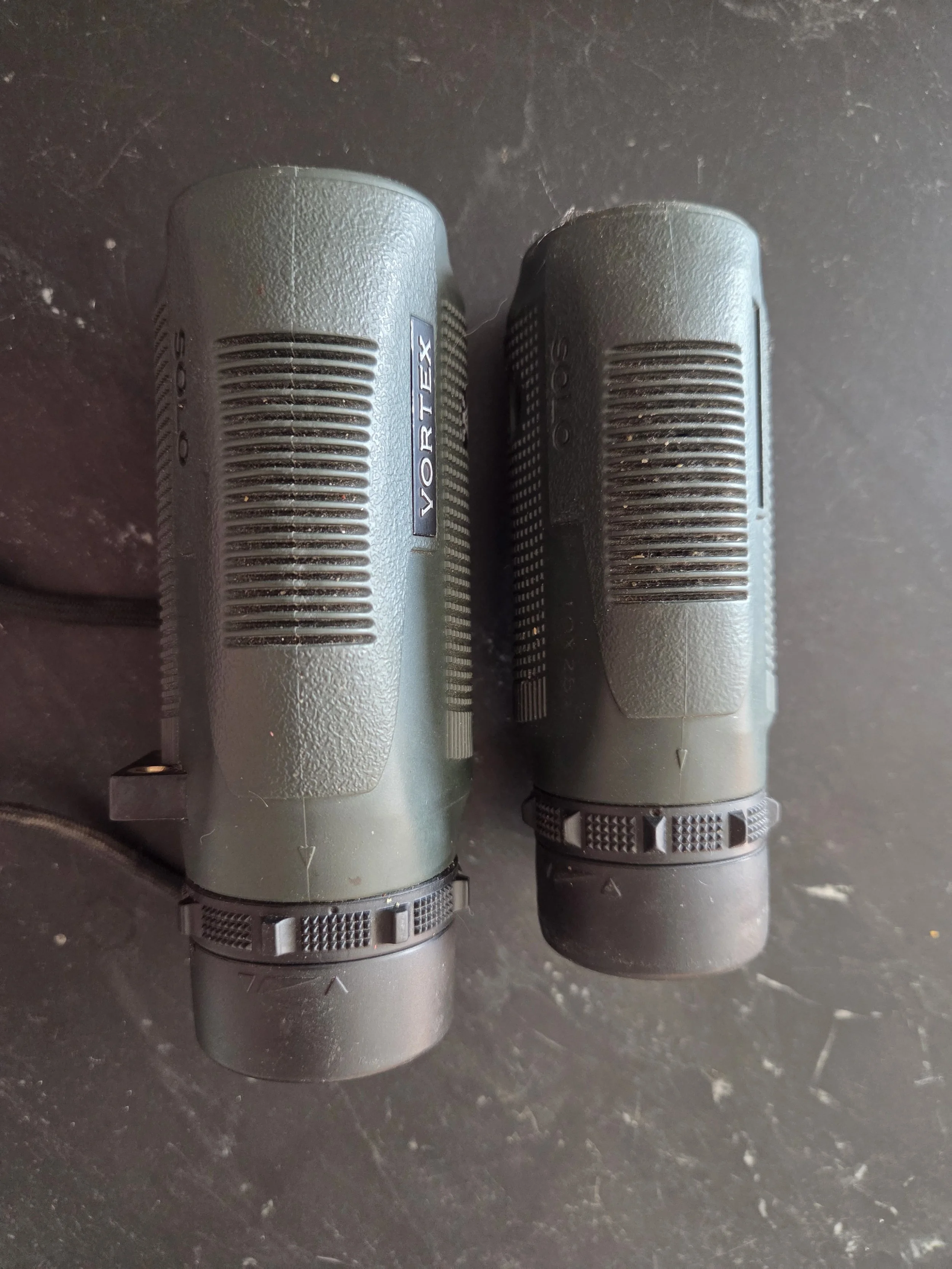
· Weight: 10x36: 9.3 oz (older listings say 9.7 oz; see the next section). 10x25: 5.6 oz.
· Eye relief: 10x36: 15.0 mm. 10x25: 14.5 mm.
· Exit pupil: 10x36: UNVERIFIED (not published on vortexoptics.com): 3.6 mm per AllOutdoor and retailer listings. It's also the arithmetic result: objective ÷ magnification = 36 ÷ 10. 10x25: UNVERIFIED (not published on vortexoptics.com): 2.5 mm per Vortex Canada and Adorama. Arithmetic: 25 ÷ 10.
· Linear field of view: 10x36: 325 ft @ 1,000 yd. 10x25: 315 ft @ 1,000 yd.
· Angular field of view: 10x36: 6.2°. 10x25: 6.0°.
· Close focus: 16.4 ft (both sizes).
· Waterproof / fogproof: Yes. Nitrogen gas purged, O-ring sealed. Also listed as shockproof (both sizes).
· Coatings / optics: Fully multi-coated lenses, "SD Optical System" (both sizes).
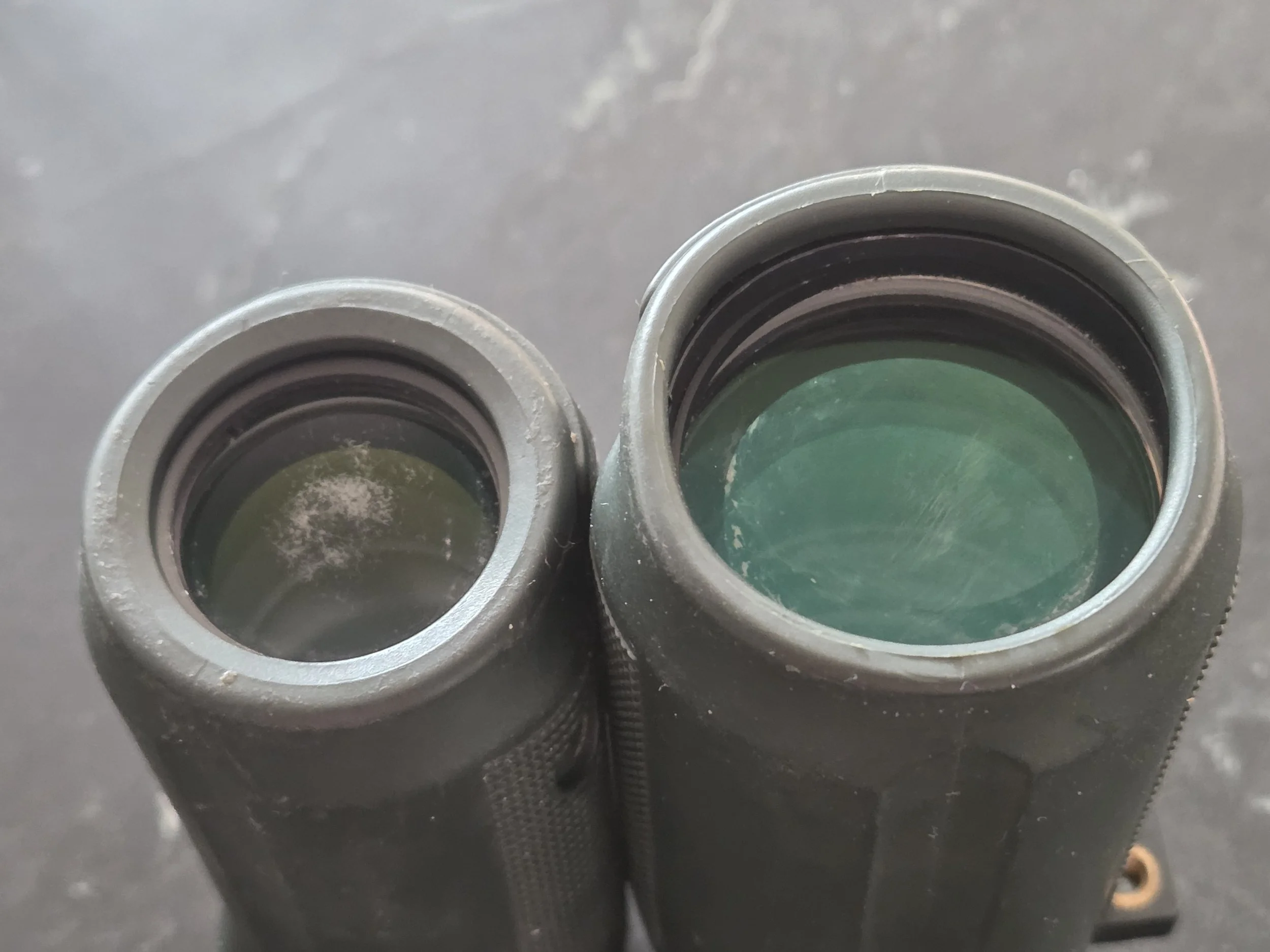
· Prism type: 10x36: UNVERIFIED: roof prism (retailer copy; Vortex Canada). Not stated on the current vortexoptics.com page. 10x25: UNVERIFIED: roof prism (Vortex Canada).
· Eyecup: Adjustable (both sizes).
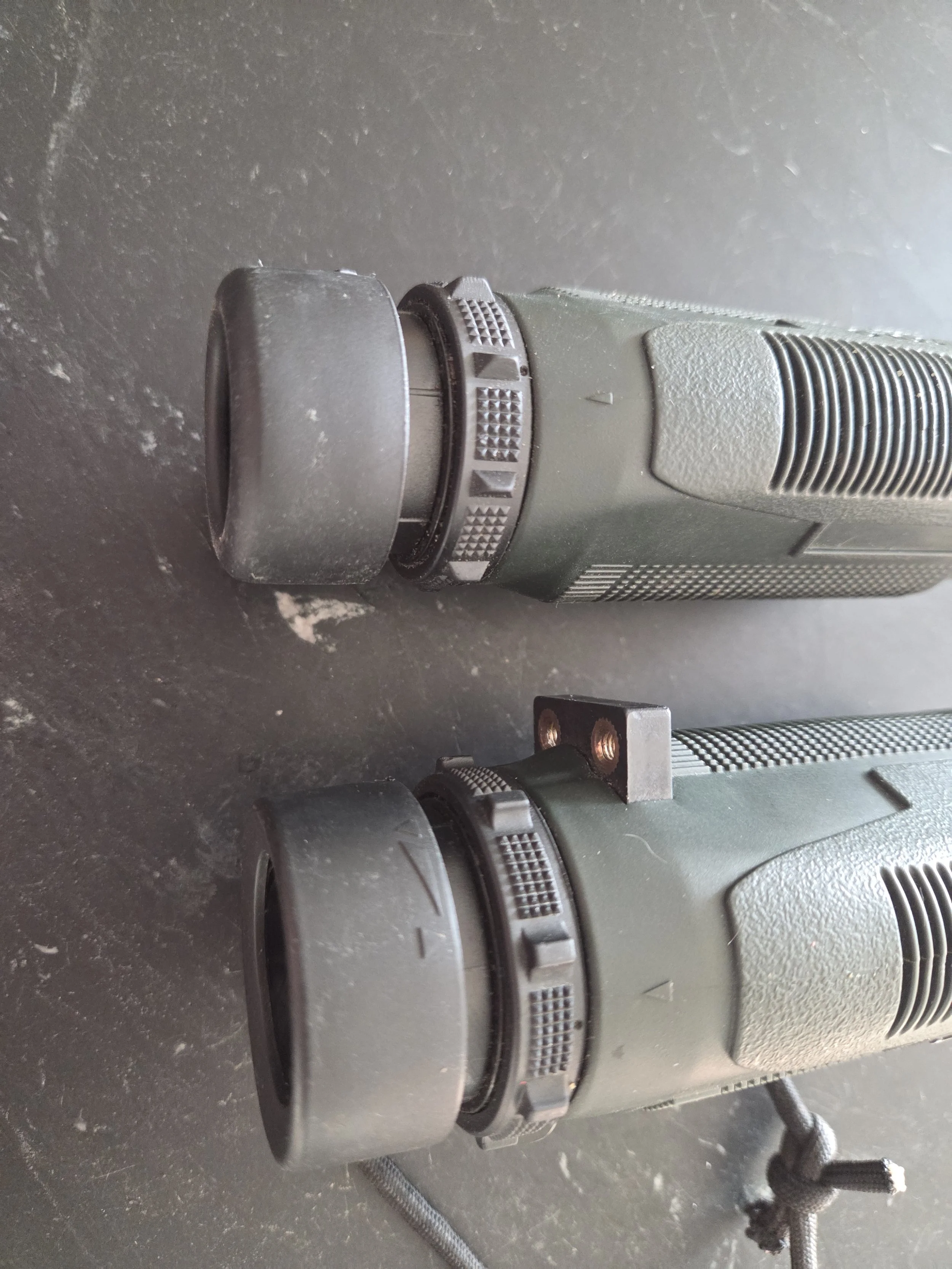
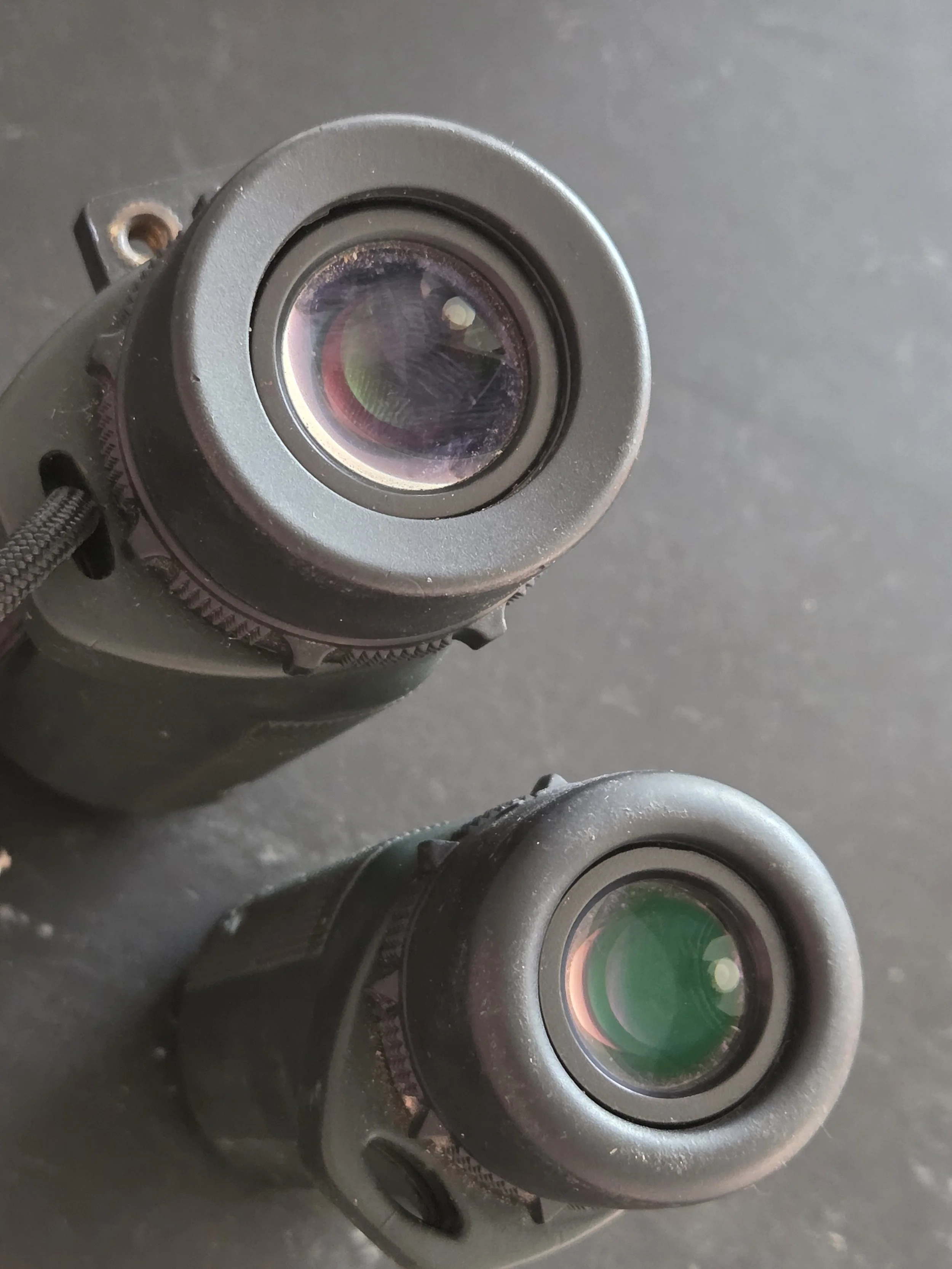
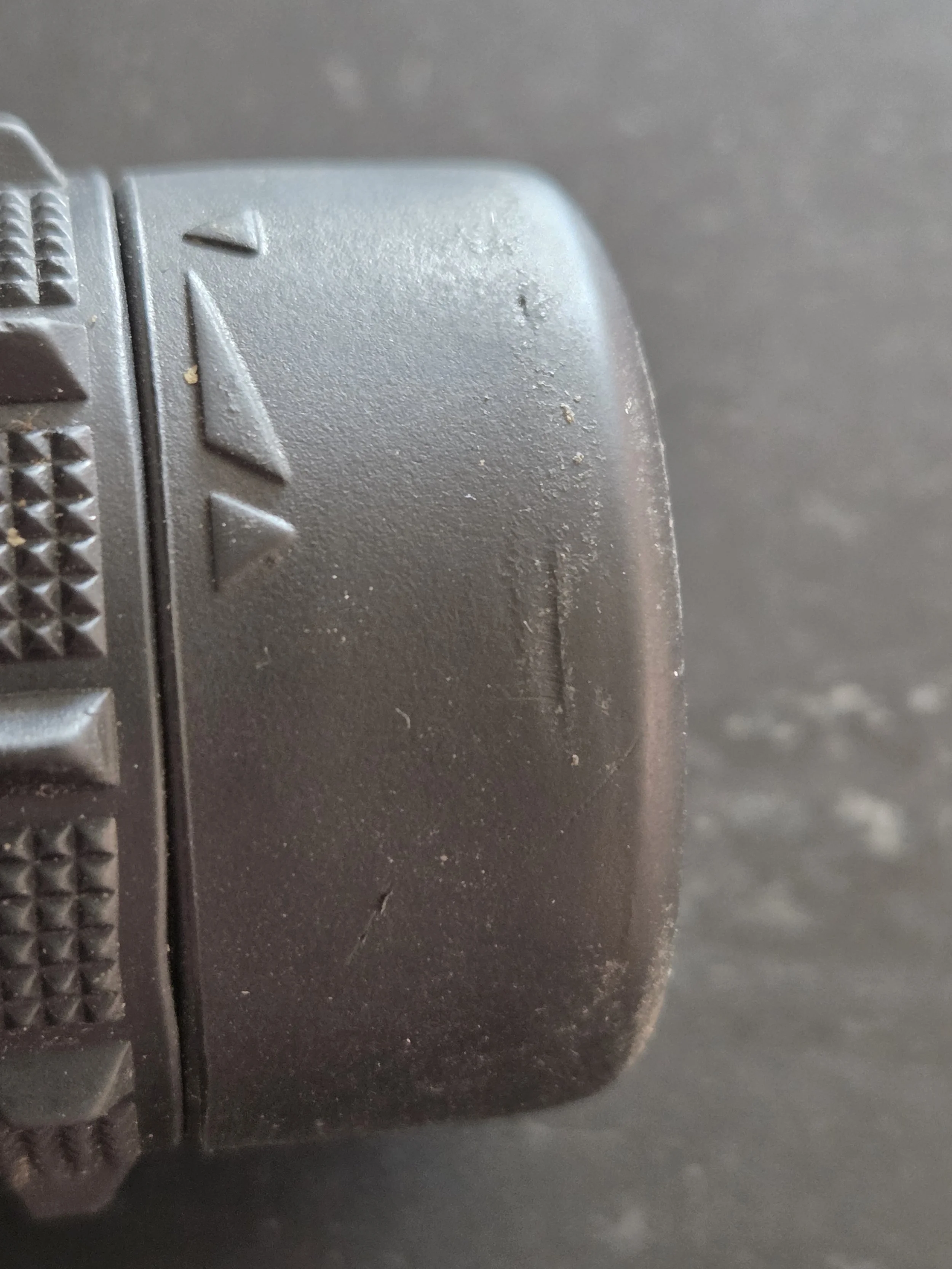
· Armor: Rubber armor (both sizes).
· Utility clip: 10x36: Included. The manual notes the clip is "36mm only". 10x25: Not included. I personally took mine off, as you could see. It just didn’t serve a purpose for me.
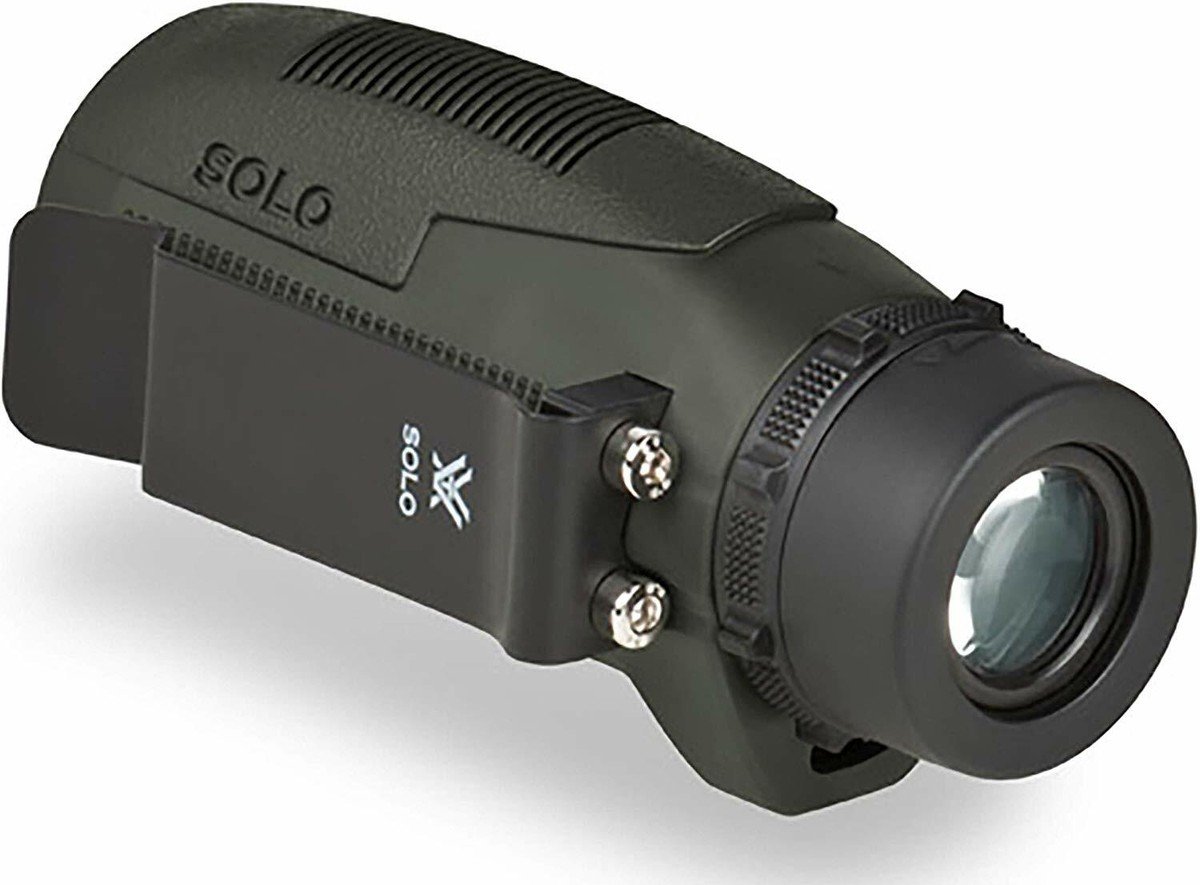
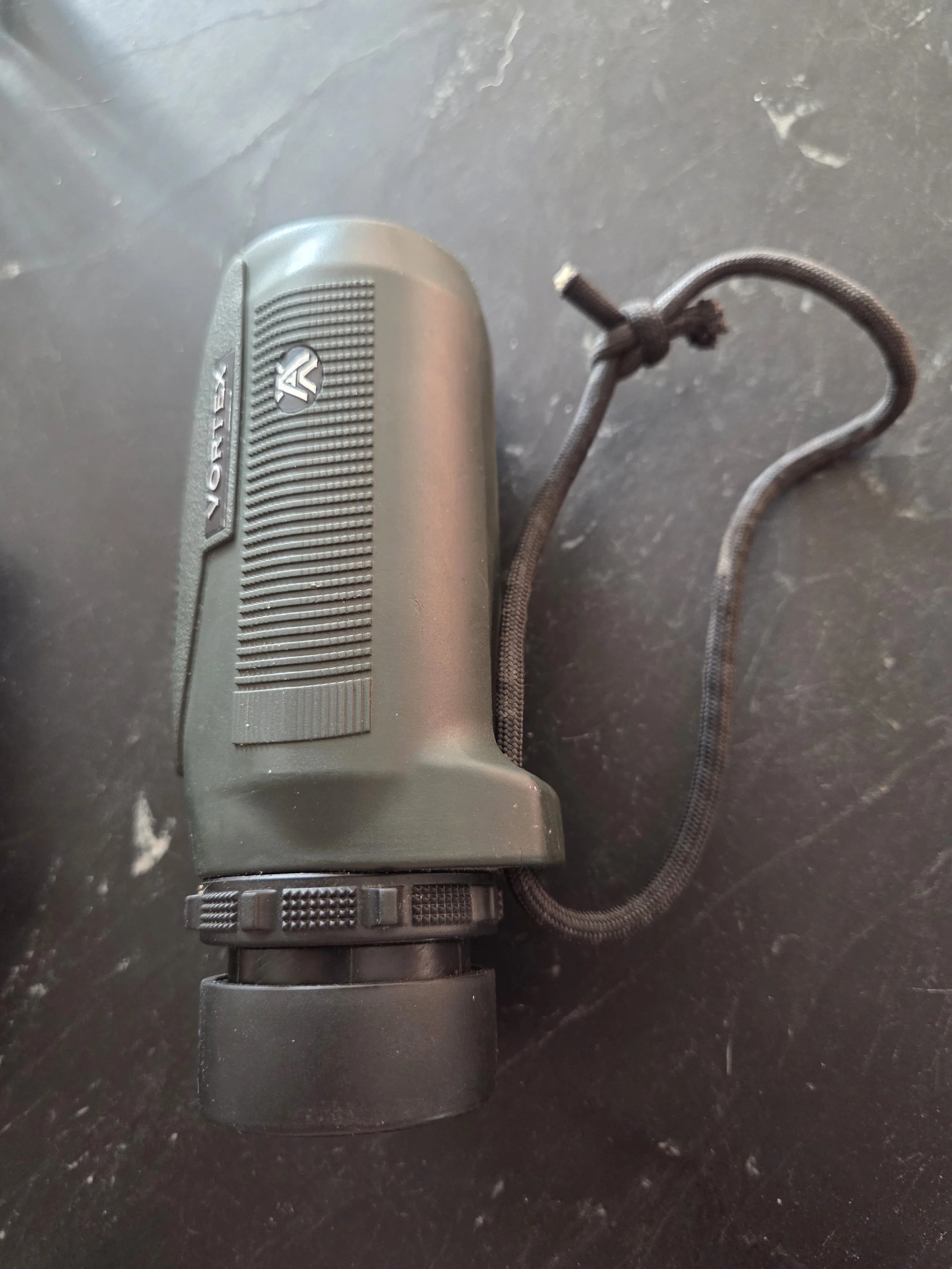
· In the box: 10x36: Neck lanyard, utility clip, carry case. 10x25: Neck lanyard, soft carry case. The lanyards were pretty flimsy, so I opted just to use some 550 cord.
· Warranty: 10x36: VIP® Warranty: unlimited, unconditional, lifetime. No registration, box, or receipt required. Excludes loss, theft, deliberate damage, and cosmetic damage that doesn't affect performance. 10x25: Same VIP® Warranty.
· MSRP (Oct 11, 2026): 10x36: $189.99. 10x25: $109.99.
Spec discrepancies in third-party sources (for the record, not for the table): Field & Stream lists the 10x25's eye relief as 16 mm, while Vortex says 14.5 mm. AllOutdoor lists the 10x36's field of view as 315 ft @ 1,000 yd, while Vortex says 325 ft (315 ft is the 10x25's number). Binoculars Canada lists 15 mm eye relief for the 10x25. Go with Vortex's numbers.
What the specs actually mean in the field: the 10x36 gives you a bigger exit pupil (about 3.6 mm vs 2.5 mm), so it should be the brighter image when the light goes bad. The 10x25 gives up about 3.7 oz and half an inch of length. Field of view and close focus are close to identical. But I have honestly not noticed this effect to be so dramatically different in my two optics.
Old Solo vs New Solo: What Changed
If you bought a Solo around 2016 like I did, here's what I could and couldn't confirm.
· Model numbers: the current SKUs are S136 (10x36) and S105 (10x25) [V1][V2]. Retailers have sold them under those numbers for years (one example: the 10x25's UPC 875874002081 is listed as S105 [gun.deals](https://gun.deals/search/apachesolr_search/875874002081)).
· Weight: the current 10x36 page and the 2025 manual say 9.3 oz [V1][V3]. Older retail spec sheets and older reviews say 9.7 oz [R1][R2], and HuntingOptics.net reads that figure as including the utility clip. The 2025 manual also lists the 8x36 at 9.7 oz. From official sources alone, I can't tell whether the 10x36 actually got lighter, was re-weighed (for example, without the clip), or had its spec sheet corrected.
· "SD Optical System": current Vortex pages for every Solo now advertise an "SD Optical System" that "reduces chromatic aberration" [V1][V2]. Older retail copy doesn't mention it [R1][R2]. Vortex doesn't say when, or whether, the glass actually changed.
· Unchanged on paper: magnification, objective, field of view, close focus, eye relief, length, and the VIP Warranty.
Solo R/T (ranging reticle): a separate model, the Solo R/T 8x36 (SKU SOL-3608-RT), adds an MRAD ranging reticle with silhouettes for quick range estimation. It's 5.4 in long, weighs 10.7 oz, has 18.0 mm eye relief, a 393 ft @ 1,000 yd field of view, and an MSRP of $219.99 ([Vortex Solo R/T page](https://vortexoptics.com/vortex-solo-tactical-rt-8x36-monocular.html)). Mine are not R/Ts. They're plain glass, with no reticle. If you want to range off the optic, that's the Solo to look at, or the Recce Pro HD.
Where the Solo Stands in 2026
CURRENT PRICES
Solo 10x36 (S136): MSRP $189.99 [V1]. Street price is about $125 to $130.
· OpticsPlanet: $125.49
(https://www.opticsplanet.com/vortex-solo-10x36-monocular-s136.html)
· EuroOptic: $129.00
(https://www.eurooptic.com/s136-vortex-solo-10x36-monocular-mpn-s136)
· Amazon: $129
(https://www.amazon.com/Vortex-Optics-Solo-Monocular-10x36/dp/B00161ZI4A)
· Best Buy: $129.99
Solo 10x25 (S105): MSRP $109.99 [V2]. Street price is about $68 to $80.
· Amazon: $79
(https://www.amazon.com/Vortex-Optics-Solo-Monocular-10x25/dp/B002UQ71HC)
· Adorama: $79.99
(https://www.adorama.com/vortex-optics-10x25-waterproof-monocular/p/vorsm1025)
· The gun.deals price aggregator lists Brownells at $67.99, EuroOptic at $79.00, and MidwayUSA, Bass Pro Shops and Sportsman's Warehouse at $79.99
(https://gun.deals/search/apachesolr_search/875874002081).
Main competitors
· Vortex Solo R/T 8x36 (SOL-3608-RT). What it is: Solo with an MRAD ranging reticle. Price (date / source): $219.99 MSRP, Oct 11, 2026 (https://vortexoptics.com/vortex-solo-tactical-rt-8x36-monocular.html).
· Vortex Recce Pro HD 8x32 (RP-100). What it is: Vortex's premium tactical monocular, with an MRAD ranging reticle and HD glass. Price (date / source): $559.99 MSRP, Oct 11, 2026
(https://vortexoptics.com/vortex-recce-pro-hd-8x32-monocular.html).
· Vortex Solo 8x36 / 8x25. What it is: Same Solo body at 8x: wider field of view, steadier image. Price (date / source): 8x36: $169.99 MSRP (https://vortexoptics.com/vortex-solo-8x36-monocular.html).
· Bushnell Legend 10x42 Ultra HD Monocular. What it is: Larger 42 mm objective, ED glass. Price (date / source): $149.95 regular price on bushnell.com; $199.95 at some retailers
(https://www.bushnell.com/products/legend-10x42-ultra-hd-monocular).
· Gosky 12x55 HD Monocular. What it is: Budget Amazon monocular with a phone adapter. Price (date / source): $109.55; about 4.4/5 from about 9,300 ratings
(https://www.amazon.com/Gosky-Definition-Monocular-Telescope-Smartphone/dp/B07B8XTS3Z).
· Roxant Falcon 10x42. What it is: Budget monocular with a phone adapter and mini tripod. Price (date / source): $38.60
· Celestron Nature 10x25. What it is: Direct size rival to the Solo 10x25. Price (date / source): $34.76 on Amazon; $47.99 at B&H
(https://www.bhphotovideo.com/c/product/761240-REG/Celestron_71210_Nature_10x25_Monocular.html)).
Honest read: at the budget end (Celestron, Roxant, Gosky), you can buy a monocular for a fraction of the cost. At the top end, the Recce Pro HD and the Solo R/T add reticles. The plain Solo sits in the middle. You're paying for a known brand, the VIP Warranty, and a track record. I can only speak to the Solo. I haven't run the others.
What Other Reviewers and Owners Say
All of the following are paraphrased unless quoted, and each is linked. A good place to start is [how I judge review sources](https://adaptivecomtac.com/fundamentals/4kfngnm4a7znhhb37hbtx2akatk3bl).
· Field & Stream, "Best Monoculars of 2026, Tested": picks the Vortex Solo (the 10x25) as "Best for Hunting." They praise its optical clarity, its pocketable size, and the waterproofing and fogproofing in rain or sleet. Their one con is that the smaller objective lens may not perform as well in low light as larger optics. Their "Best Overall" pick is a different Vortex monocular. ([link](https://fieldandstream.com/outdoor-gear/hunting-gear/optics/binoculars/best-monoculars))
· AllOutdoor (Sam S., Jan 26, 2026), Solo 10x36: the unit was provided by Vortex. Sharp center image with no color fringing noticed. The heft actually helps steady a 10x image. The focus wheel was smooth on their sample. The 16.4-ft close focus is a limit. It won't replace binoculars, but it's worth it at about $130 street. Their big complaint was the included pouch, which has open sides and a Velcro closure; they call Velcro the worst choice if you're trying to stay quiet. Testing was mostly in daylight. ([link](https://www.alloutdoor.com/2026/01/26/ao-review-vortex-solo-10x36-monocular/))
· HuntingOptics.net, Solo 10x36 (undated, older; weaker source): says clarity and resolution lead its price class. Cons are short eye relief for glasses wearers and an open-sided carry case. They found the 9.7 oz weight easier to hold steady with the clip attached. ([link](https://huntingoptics.net/monoculars-reviews/vortex-solo-10x36mm-monocular-review/))
· OpticsPlanet owner reviews (10x36): 4.6 out of 5 from 57 reviews as of Oct 11, 2026. Owners mention keeping it in a glovebox when there's no room for binoculars, using it for positive ID on targets at the range, and being surprised by the image quality for the price. ([reviews](https://www.opticsplanet.com/reviews/reviews-vortex-solo-10x36-monocular-s136.html))
· Amazon ratings (search-index snapshot, Oct 11, 2026; UNVERIFIED live): about 4.6/5 from about 1,350 ratings for the 10x36, and about 4.6/5 from about 5,650 ratings for the 10x25. ([10x36](https://www.amazon.com/Vortex-Optics-Solo-Monocular-10x36/dp/B00161ZI4A), [10x25](https://www.amazon.com/Vortex-Optics-Solo-Monocular-10x25/dp/B002UQ71HC))
· BirdForum user, Solo 10x25 (forum post; weak source; the date reported by search, 2018, is UNVERIFIED): good build and a wide field of view, but poor eye relief for glasses and soft edges. ([link](https://www.birdforum.net/threads/vortex-solo-10x25-just-arrived-this-evening.357852/))
YouTube reviews:
· Palmetto Prepared, "Honest Review: Vortex 10x25 Solo Monocular": about 122K views, about 6 years old (https://www.youtube.com/watch?v=BzJr7evjL3s))
· Brass Facts, "Pocket Recon: A Monocular for the Prepared Citizen": about 106K views, about 3 years old ([link](https://www.youtube.com/watch?v=TxpMb6PO1Qs))
· Welna Reviews, "Vortex Solo 8x25 vs Vortex Solo 10x36 monocular comparison": about 75K views, about 3 years old ([link](https://www.youtube.com/watch?v=62tT--EAINA))
· Marc Belciug, "Vortex SOLO 10x36": about 73K views, about 6 years old ([link](https://www.youtube.com/watch?v=Iv8XA9hyNJM))
· Midwest Marksman, "I'm DONE with Binoculars - Vortex Solo RT 8x36": about 68K views, about 5 years old ([link](https://www.youtube.com/watch?v=mKXskiYH2HQ))
· Optics Force, "Vortex Solo 10x36 Monocular": about 43K views, about 3 years old ([link](https://www.youtube.com/watch?v=XAnW3Qt_FRY))
Common themes: good glass for the money, tough build, and the warranty. The repeated gripes are short eye relief for eyeglass wearers, a cheap open-sided pouch, and (on the 10x36) more weight than people expect.
My Experience: 10 Years in the Field
I've had these two Solos for almost ten years. Here's what that time has taught me.
Where I use it. Mostly in two places. The first is where there's some open land. The second is urban settings, where I use it to see down the road or get a better ID on something before I commit to it. Out in the land I own, you do have open areas that you can use magnification to spot dear and other prey in an adjacent treeline where the naked eye would be challenged by seeing through and into photonic barriers. In an urban setting, optics are great if you are trying to see something up the road, like a reason for traffic issues, or if you live in a neighborhood with a long straight road. Getting a better ID is a situational-awareness problem first and an optics problem second. More on that in [the situational awareness guide](https://adaptivecomtac.com/ttps/wh3ka467elfwx65acmtlkn7ktsam5r) (Vault).
It's a strong low-profile surveillance tool. It's small, it's one-handed, and it doesn't advertise what you're doing the way a spotting scope on a tripod does. typically, when I use the monocular, it is one handed and I have it in a pouch or pocket on my support side where I can reach it prone. To prevent lens glint, I typically cup my last two fingers around the front end of the optic like a shade. Low profile is about more than the optic. Your individual camouflage, kit and position matter just as much. See [French CCE camouflage](https://adaptivecomtac.com/gear/yy8sywrfstf3cke58n5kwm8c9sn4f8) and the upcoming Camouflage: Individual, Kit, Position, Area Vault piece.
Recon courses: my primary optic. I took reconnaissance training where the Solo was my primary optic. The main one was the HEAT Reconnaissance course at Max Velocity Tactical in West Virginia ([MVT course page](https://maxvelocitytactical.com/tactical-classes/heat-reconnaissance/)), taught by Scott, a former long-range surveillance (LRS) operative. I wrote up the whole MVT experience in [Max Velocity Tactical: Tactical Training for the Layman](https://adaptivecomtac.com/fundamentals/nnpf5yhbjztw7pmdh8nfkdscfglyel). In that post I told readers they'd have role players and items to identify at a distance, so they should "bring a monocular or a small scope."
I attended several courses by Max Velocity Tactical in 2023, and one of them was the Reconnaissance course taught by Scott "First Sergeant," a former LRS soldier. This course was very time efficient and demanded you to conduct patrols and gather accurate information and manage infil/exfil through enemy territory where an OPFOR could engage you at any time.
I used the monocular instead of a spotting scope because it was faster for close target reconnaissance and information gathering. For instance, there were numerous cases where you shed your gear and had to crawl through low brush and gather visual intel. I often had to peak around trees or get just one eye on the target. This made the small profile of the monocular an obvious advantage over binoculars.
If you want the movement and fieldcraft side of that, start with [the patrolling disciplines](https://adaptivecomtac.com/ttps/3l3t24cgkxyl93yc56rblg6xwlpryn) and [basic fieldcraft](https://adaptivecomtac.com/ttps/basic-fieldcraft-for-the-modern-infantry) (both Vault).
It's very weatherproof. I've used these in Alaska and Arkansas, in winter and summer, with great effect. The lens has been subject to dirt and dropping numerous times in training and in general use and the lens is still crystal clear. I usually see pretty clear even with a pretty smudged lens on both ends. If you are very particular about your lens being clean, just wipe it down with a cloth or your shirt. The lens has never fogged up in the winter when coming into a warm environment, even after super cold temperatures like -40 in Alaska and extreme heat like 125 in Arkansas.
It hasn't broken. I've never had one break or had a lens issue. Not on either one, in almost ten years. I never had to do a warranty claim on it, and that surprises some people when they know how good the warranty system of Vortex is.
How I carry it. I personally carry my monocular in a pouch on my vest or in a cargo pocket. The rubberized skin can prevent you pounding the side of your knee, but if you are running, and that monocular is not in the pocket with something else, its gonna bounce around and cause problems for yuh. If I can, I like to carry it in a chest pocket or a pouch on my support hand side for easy access. Where your optic rides is part of your load plan, not an afterthought. See [Fighting Load Is a Patrol Decision](https://adaptivecomtac.com/gear/fighting-load-is-a-patrol-decision-not-a-pouch-preference) and [EDC System Development](https://adaptivecomtac.com/ttps/sf9fa86yg7x8mr4z8nmn6jckdynlpc) (Vault).
10x36 or 10x25?
On paper, the trade is simple. The 10x36 is about 3.7 oz heavier and half an inch longer, but gives you a bigger exit pupil (about 3.6 mm vs 2.5 mm) and comes with the utility clip. The 10x25 disappears in a pocket. Magnification, field of view (325 ft vs 315 ft) and close focus are close to identical.
I personally prefer the smaller one for on-the-body carry during recon, but I like the other to be in the pack along with my navigation gear. I find both to be useful, and I don’t notice much difference in function from each.
Verdict
It's a small, very efficient, very weatherproof optic that I've carried for almost ten years in Alaska and Arkansas. It has never broken or had a lens issue. It replaced a spotting scope for me in close target recon because it's faster. It isn't a ranging optic and it isn't a binocular replacement, and it doesn't pretend to be. If you're building kit from scratch, start with [Getting Started With Tactical Gear](https://adaptivecomtac.com/gear/tactical-gear-for-beginners).