MAX VELOCITY TACTICAL: TACTICAL TRAINING FOR THE LAYMAN

After participating in both HEAT 1 & 2 and the Reconnaissance course, I feel like I am qualified enough to give Max Velocity Tactical a semi-thorough look-through to inform you on the training opportunities they offer. They currently have 6 regularly scheduled class subjects, to include an Alumni get together in Texas each year, which I have attended as well.
WHAT IS MVT?
Max Velocity Tactical is a one-of-a-kind company that teaches small unit tactics to civilians. You get in your battle rattle, arrive at the MVT training site, and attend training for four days. You will be exposed to things that most people never get unless they serve in the military. Most of the training is done with live fire, which means that safety is a huge priority and is constantly harped on throughout every class. Aside from live fire, there are force on force courses that utilize airsoft and volunteer OPFOR to give the trainees a realistic…ish training environment to learn how to operate in a hostile environment using tactics that have kept people like myself and the instructors, Max and Scott, alive in combat.
HEAT 1
This class is an introduction to light infantry team tactics. In this class we learned the standards expected of us when working in a team. The first two days were spent on the flat range squaring away our weapons manipulations and marksmanship. We were out from 8-5 daily. Weapons manipulations were taught as something we should do instinctively. Our conscious mind was drilled to focus on our surroundings, not our guns. Apart from identifying the stoppage, we were encouraged to take stock of our surroundings. Here we also learned proper scanning techniques, target ID and discrimination, rates of fire, use of cover, basic movements, etc.
Days 3 was spent one of the many dynamic tactical ranges, squaring away our buddy movement and team movement drills. This is where the rubber meets the road in team tactics. Staying perfectly online with each other and moving forward, backward, left, right as a team. This requires communication and high levels of awareness from everyone involved. You can’t just get sucked into your sights and focus on your little situation. You are part of a team and in order to help your team survive, you getting out of your gun and visually glancing around at your team/squad can drastically increase/decrease the time it takes for them to get out of the line of fire or close with the line of hostiles.
Day 4 is the day when all the skills you learn is put into practice. You conduct a long assaults and a few long break contact drills. At the end of the class, you have a review where the instructors ask your input on what you thought of the course. By this time, students generally are either tired and getting ready to catch a plane ride, get on the road for a long drive (My situation), or just wanting to keep going and shoot more. This is a basic class and there isn’t much complexity to it, but it still presents some people with challenges because this is their first time working as a team with firearms.
HEAT 2
This class is all about the different types of patrols you may go on. Here you will get a more intimate understanding of the need to get out of your gun and pay attention to the team. Here you will be conducting small missions such as reconnaissance, ambushes, and Raids. This is where the basic maneuvers you were taught in HEAT 1 are going to be directly applied. If your group performs exceptionally well, the instructors may even throw in a curveball for your squad to fix.
For HEAT 2, expect to be given difficult tasks and pushed to the point of failure. The goal is to teach you the complexity of operating in a tactical and hostile environment as a team. You will see that even having trained people with you doesn’t guarantee you can solve problems as a team. Rehearse, rehearse, rehearse is the word of the course. Without constantly training and practicing movements with your team, your ability to adapt on the fly is merely a pipe-dream.
RECONNAISSANCE
The recon course is taught by Scott “First Sergeant”. Scott is a former LRS (Long Range Surveillance) soldier who has seen multiple deployments into hostile countries, and is skilled at teaching the fundamentals of reconnaissance. Do not be intimidated if you are not a former soldier, because the whole point of MVT is to teach the layman how to fight.
During the first two days, you learn all the academic subjects that go into reconnaissance and the drills that are going to make your snooping and pooping successful. The devil is in the details and you will get a thorough class on mission preparation and gear selection for the layman.
This is a force on force class, so you will be using airsoft rifles to defend yourself. I recommend an electric airsoft rifle because they just seem to be more reliable than the gas ones I was using for the first day of the FTX (Field Training Exercises). There will be volunteer role players and items you will need to identify at a distance, so bring a monocular or a small scope, and note taking gear. I recommend a 6X4 notebook by Rite in the Rain and one of their pencils. You will want to take notes and lots of them. Scott will ensure that you are aware of the packing list for the course.
I thoroughly enjoyed the scenarios that Scott and the role players presented. It will teach you about the dangers and the responsibilities of a reconnaissance unit behind enemy lines. If things go pear shaped, you will find yourself needing to do a ton of reconnaissance to ensure the safety of yourself and your family.
TEXAS ALUMNI TRAINING
The alumni training in Texas was something else. It was an abbreviated version of HEAT 1 and 2, but with much more speed and details like learning cover shooting (details in the Tactical Manual). I thoroughly enjoyed the squad Raid and Ambushes and the complex attacks we were able to orchestrate and play out. Also, one of the big points of the Texas class is the TCCC training. You will deal with simulated casualties and then graded on your performance in the AAR. Don’t be a jackass and get lazy during the TCCC training because you will most likely need to help or do the work on a casualty at some point.
When we were not training, you are staying at a stunning lodge that is well furnished and decorated. It has the feel of a hotel, but there are communal bathrooms, so mind your time with the porceline. Breakfast is hearty and American, and eggs and bacon are a standard part of the menu. The cook is rotated daily, so I hope you know what you are doing in the kitchen. If you don’t at least wake up early and help the cook by doing the cleanup. After the day is over, you may be invited to eat out in town with the rest of the Alumni. It is a bit of a drive off the ranch, but the BBQ is pretty good. I mostly find myself falling in the category of anti-social, but the crew I was with was pretty decent. They were the original Texas group that called Max out years ago to train there. Since then, it had become a tradition to train every year.
One of the fun ways we were able to wrap up the week of training was working on mobile drills such as ambush responses and dismounting under fire. You will shoot alot and get exposed to way more detail than in the West Virginia classes. However, you will need all the skills taught in the West Virginia classes in order to not be a liability to your team. If you have participated in the live fire courses at MVT, you will enjoy the Texas training. It is higher paced, features extra training like TCCC, Night Shooting, and complex squad maneuvers.
FITNESS ASSESSMENT?
Max Velocity Tactical requires everyone to have completed a tactical fitness assessment prior to training for the live fire training course like HEAT 1 & 2. This is to ensure that the students will not be a liability to the rest of the students because they are too slow or unfit to keep going. That being said, there were two people that had recently had injuries or were just slower that were given a pass and their participation was slightly modified to accommodate their limitations. At the end of the day, the goal of the instructors is to pass on knowledge, not to haze you. MVT offers many other courses that do not have a fitness prerequisite, but it helps to be adequately fit for the job.
MY EXPERIENCE
Having an infantry background and training in small unit tactics through the years made these two beginning courses somewhat easy for me. It still provided a challenge for me because not everyone worked well as a team or took instructions well. But, I at least knew from experience how to perform any role I was given. In all the classes and training I did, Max, Scott, and I were the only veterans of the military and combat.
During my two 4-day training courses, I slept on site in the back of my truck and subsisted off MREs and freeze-dried food. I also walked everywhere I had to go, despite the intense loads sometimes put on me when carrying a full days’ worth of ammo, water, food, etc. Everyone else carpooled in vehicles for the short drive out to the ranges, which only seemed to add time and burdens I was happy to bypass by using my Mark 1 Personnel Carriers (Feet). Even being on foot, I often beat everyone to the ranges and had plenty of time to just relax for a while.
I personally think everyone who is able should have to walk to all the ranges in order to get some physical training in and learn to appreciate the burden of taking up arms and performing tactical operations. Because of my fitness routine, I had an easy time hiking all my stuff at a brisk walk or run up and down the steep hills. By the time I reached the tactical ranges, I was fully ready to carry on and perform the exercises as if fully rested. I did not feel that most of the members of my training courses could have said the same. There was only one time that someone joined me, which I appreciated.
MY GEAR SELECTION FOR THE COURSES
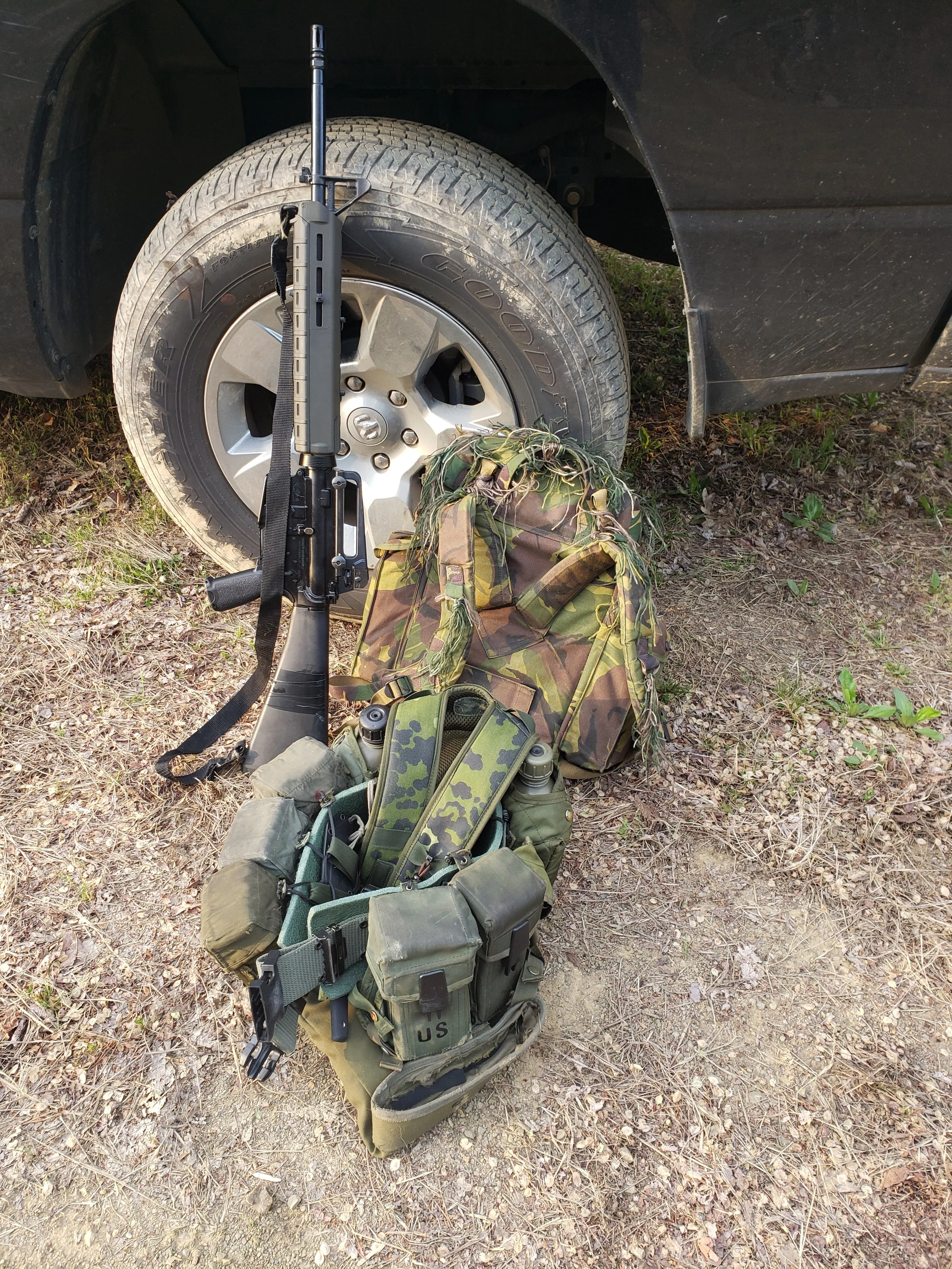
For my training courses, I used a Palmetto State Armory M16A2 clone, heavily modified ALICE gear or Jay Jays Commander webbing, and a Dutch DPM day pack. I dressed daily in the French CCE F2 uniform and wore Rothco Jungle boots with Panama soles.
Personally, I was really happy with the French uniform. It breathes well and it endured all the crap I put it through. The pattern worked phenomenally in the West Virginia mountains as well. I got made fun of lightly about being French because of the French pattern I wore, but I took it for the squaddie humor it was. I even cracked some jokes about it myself. But I could not deny it’s amazing performance in the heat, rain, and cold.
My M16A2 clone never had a hiccup in the 2k that I shot during the two courses. Apparently, the consensus is that Palmetto State Armory rifles and guns are considered bundles of crap. My experience was that Colt and Bravo Company rifles were the trouble rifles, not mine. I just kept mine lubed and shot steel and brass cased ammo freely.
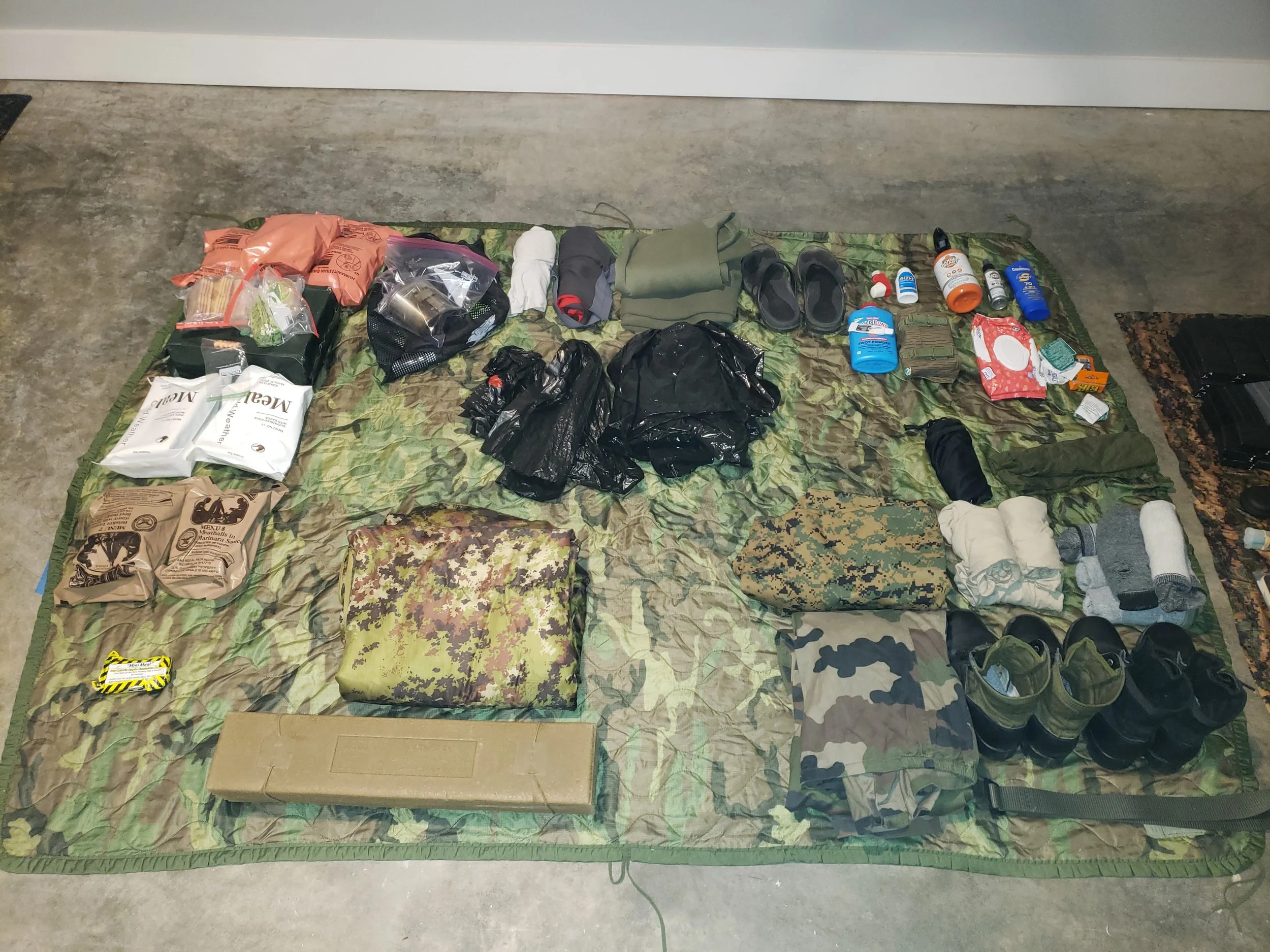
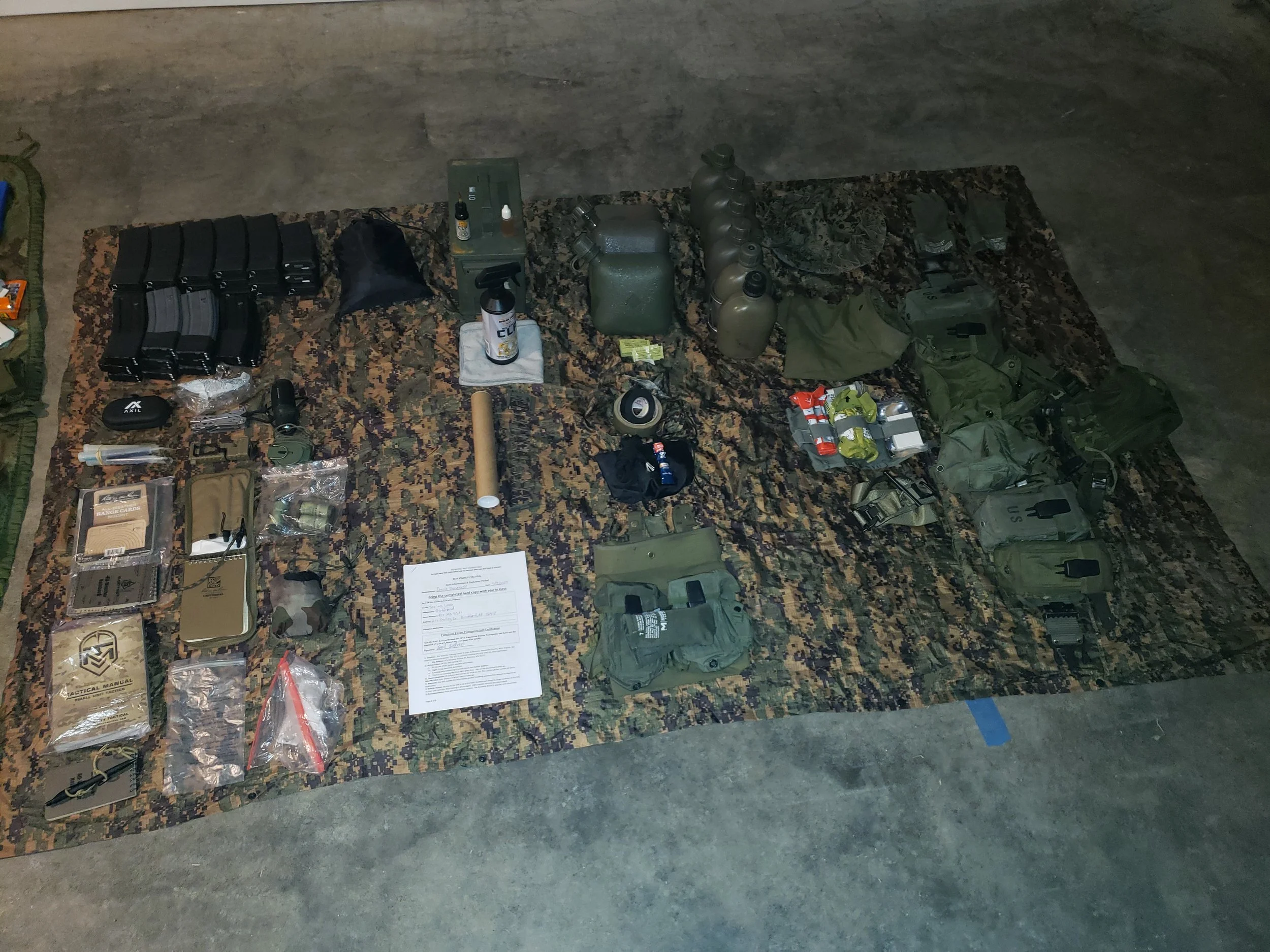
If I had to choose a belt kit system, the JayJays webbing system would win the battle easy. Though expensive, it is one sturdy, comfy, and functional piece of gear. I am in love with it and I am doing what I can to integrate it into my light infantry training curriculum (Review to follow). The ALICE gear I have worked well too, but I have been wanting to try the JayJays belt kit system for years. I just never had the motivation to spend $300 on it until recently. I am happy with the purchase, so far.
The Dutch DPM pack was honestly just right for a full day of patrolling and working on the ranges. It bears the loads well and is very comfy in all positions. Plus, it stays off the belt kit and doesn’t restrict pouch access. Enough said.
The jungle boots are still serviceable after all the miles I walked in them. I am taking them to the recon class and will continue to use them until they fall apart. They were cheap and they seem to be a heck of a value for the solid boot you are getting.
HOW TO GET YOUR MONEYS’ WORTH
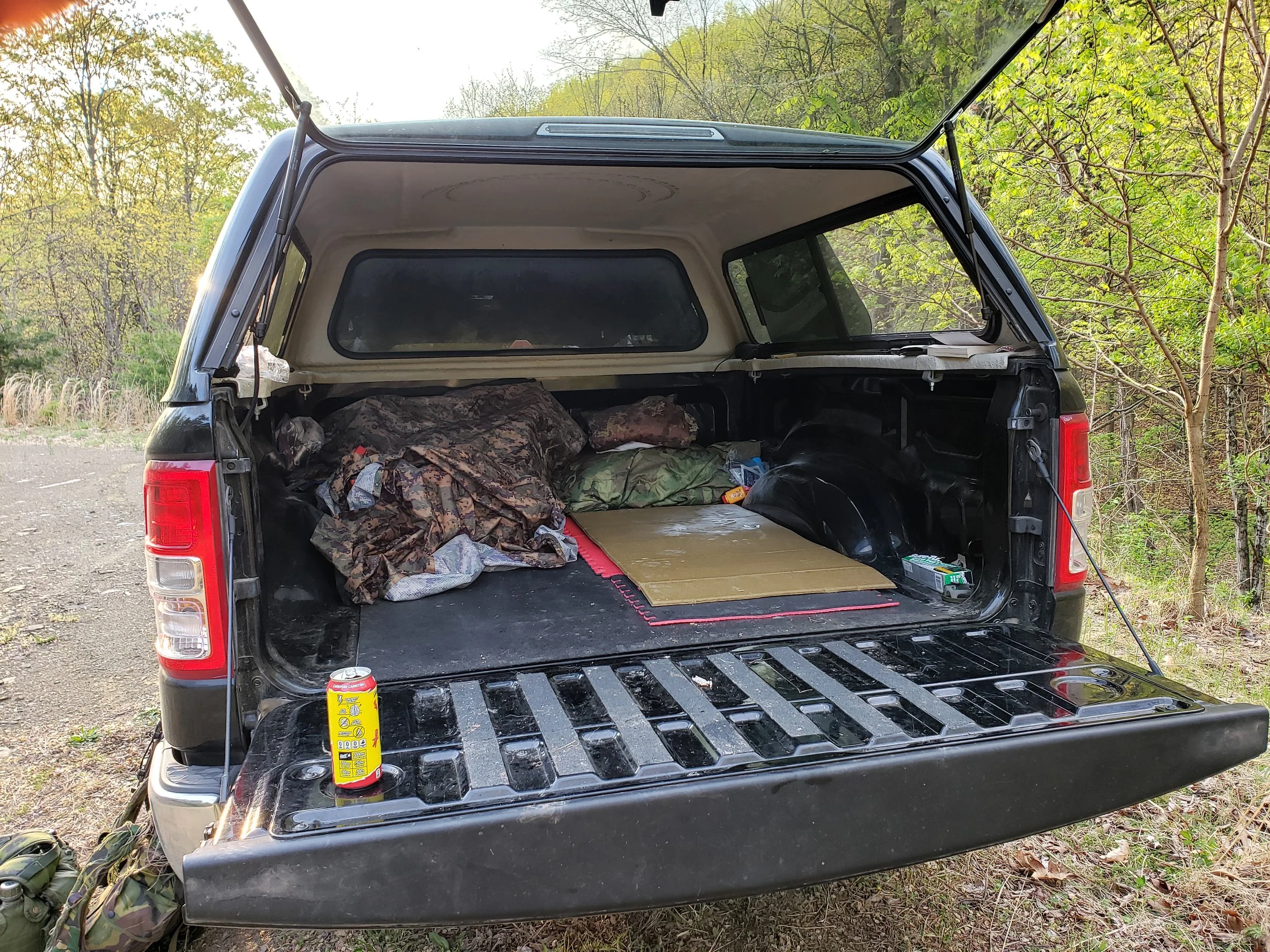
If you decide not to make a million excuses not to go, let me help you get your money’s worth out of the four-day courses. First, you will want to camp on site. I slept in my huge covered truck bed, but other people set up covered hammocks and tents.
Take canned food with you (The easy to open ones like the Walmart brand raviolis) and don’t count on leaving every night to get food. A lot of people would go back to town and then show up the next day with their lunches in Styrofoam boxed. By the time they ate it, the food was not good anymore. Just get a case of humanitarian daily rations and call it good.
When going to the ranges, preload extra mags, throw them in a pack along with food, water, and rain gear. Then hike all your crap to the range at a brisk walk or jog. Don’t be lazy and take a ride, even if offered. Get something out of the course by getting a small workout from going up and down the mountains with a real combat load. You may understand why we don’t do body armor in long range recon after you do this a few times. But trust me, it is worth the effort and it is always easier on the way back.
Lastly, get yourself some weatherproof notebooks and copy down the drills and information that the instructors pass on to you. Any suggestions or corrections you are given should be noted down too. This is a place to learn and learning can take time and constant exposure until it is learned thoroughly. In the meantime, you need to write down the info and save it for later recall when you can practice these lessons and review the info. Don’t come unprepared.
VARIOUS TRAINING OPTIONS
If you are active on the Max Velocity forum, you may see that Max and Scott, can offer different types of training to students, as long as the numbers add up to a sufficient class size for adequate instruction. A year ago, a CBRN class was offered, but no one seemed to truly commit, leaving Max no choice but to replace that class with the HEAT 1 class I attended. The biggest issue in this economy is getting people to just show up and follow through.
WHY TRAIN WITH MVT?
With all the concern about how the world is about to implode on itself and the economy is going to hell, I hear and read about a lot of people saying we need to get “ORGANIZED AND PREPARED”. Though the courses I took were refresher training for me, I can’t think of a better way to prepare than to get training in how to work and train as a team and operate in a hostile environment. Even though I was a Marine grunt, I discovered plenty of things I need to work on in order to function as an asset to a team. If you are a veteran, I think this set of courses are mandatory for you to be able to keep up with your skills and know what it will take to work with civilians.
When it comes down to it, being a porch sniper is not going to get you anywhere but dead. Stocking up with no plan and no team will ensure you die alone. However, forming a team and training to defend what’s yours is the best insurance money can buy. FYI, whole families go here to train, and yes even women go here to train. If you aren’t just full of talk, you won’t surround yourself with excuses for not training. You may want to consider not buying all that expensive body armor, extra guns in a niche caliber, class 3 items, etc. Money well spent is money spent on things like knowledge and instruction. Things like that are timeless.