CLINGER HOLSTERS IWB HINGE: BEST CONCEALMENT HOLSTER
If you are looking for a holster that can make your larger pistol seem to disappear, I would recommend you look into the Clinger holsters IWB Hinge. This holster used to be called the Comfort Cling holster, but I am assuming that the name change is to make it more appealing. Other than a name change, this holster is the same one that I started using nearly a decade ago.
A HUMBLE LITTLE COMPANY
For a small company, Clinger Holsters has a terrific business model and range of options. When I lived in Alaska, I was using the IWB Hinge holster for a lot of different pistols. It was able to conceal full size pistols better than any other holster system, and made it comfortable. I met the owner of the company at SHOT show 2017 and was intrigued by the claim that it was one of the most comfortable and best holsters for making larger guns easier to conceal. The holsters are made to order out of Arkansas. When I returned home from SHOT show, I got a couple of holsters and started testing them. From that point, I was hooked.
Recently, in the last few years, the IWB Hinge started coming with a comfort pad that would help manage the friction by placing a thin breathable pad in with the holster, along with little Velcro circles. You are able to decide the placement of the pad and it is incredibly comfortable for long term carry. Since this upgrade, other companies like Vedder Holsters have introduced their own version of the pad, but it doesn’t seem to have the coverage or effect that the Clinger Holsters pad has. You can buy the holster pads separately, or you can get it in addition to one of their holsters as an add-on for much less. It will come with Velcro dots so you can attach the pad to your liking.
OPTIONS AND BENEFITS
Recently, I have seen that Clinger Holsters are offering the holster shell alone for about half the price of a complete Hinge holster. Just make sure you select to have the shell drilled for the hinge. This allows you to get your first hinge, and then collect shells and just change them out when or if you change guns. This is a terrific change that I have already taken advantage of. You can also buy the leather and polymer Hinge tabs alone and even the IWB/OWB hardware kits.
When I bought the new MEUSOC 1911 from Military Armament Corporation, there were few to no holster companies that could take a 1911 with ambidextrous safeties. I simply called Clinger Holsters and requested he make a slight modification for carrying cocked and locked with the MEUSOC. He just needed pictures with caliper measurements and he made an amazingly good modification using spacers and attention to detail.
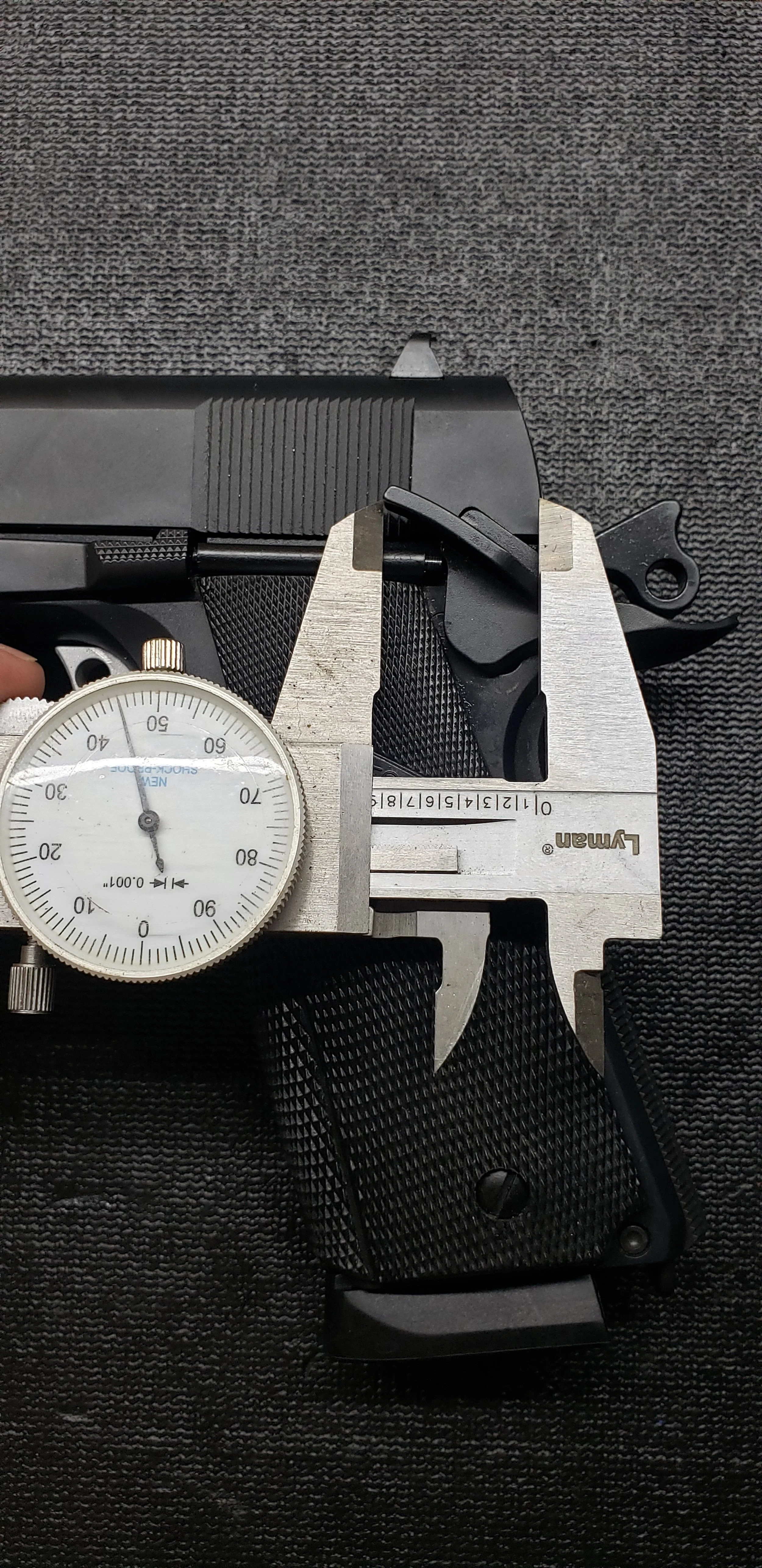
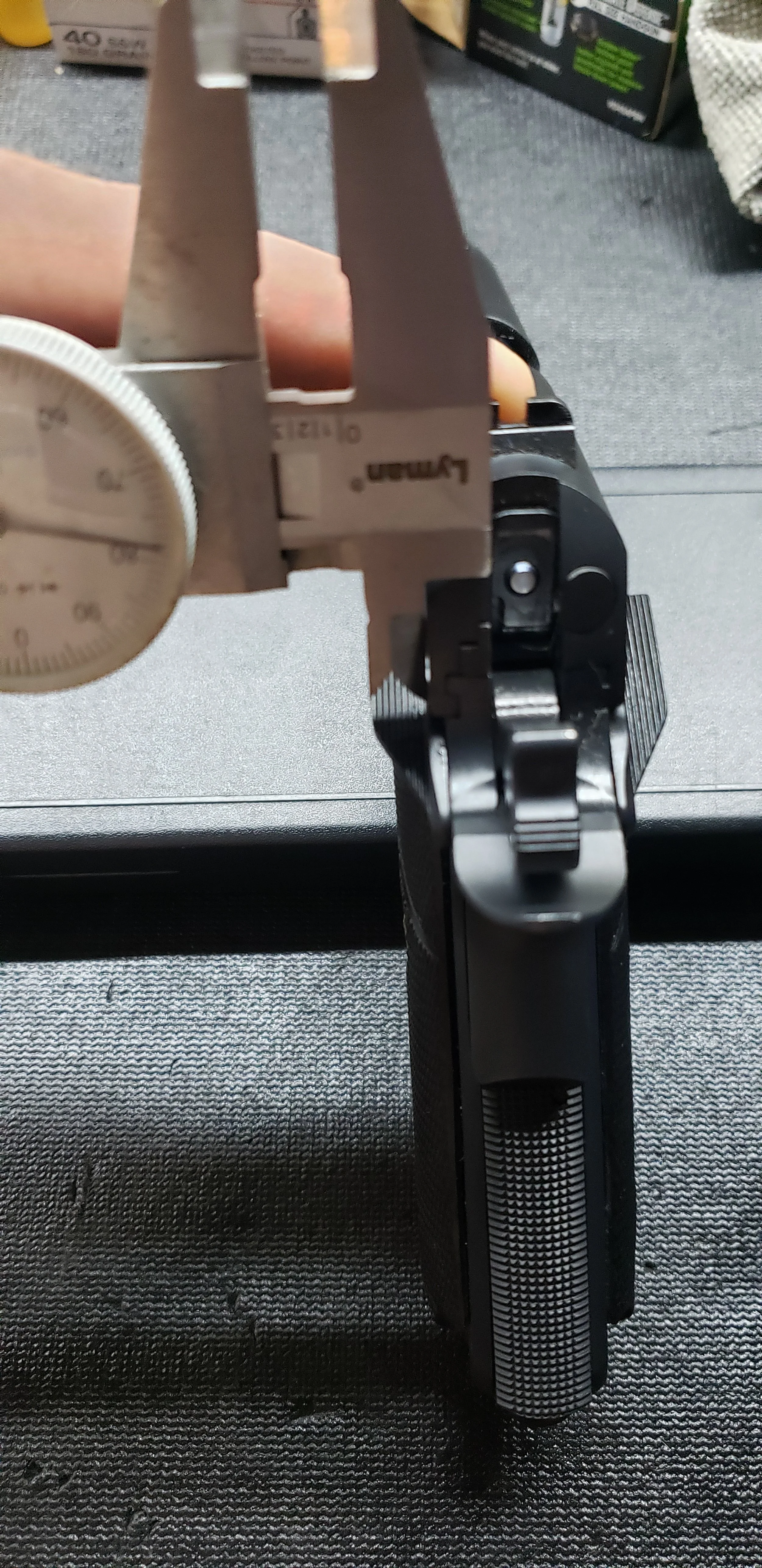
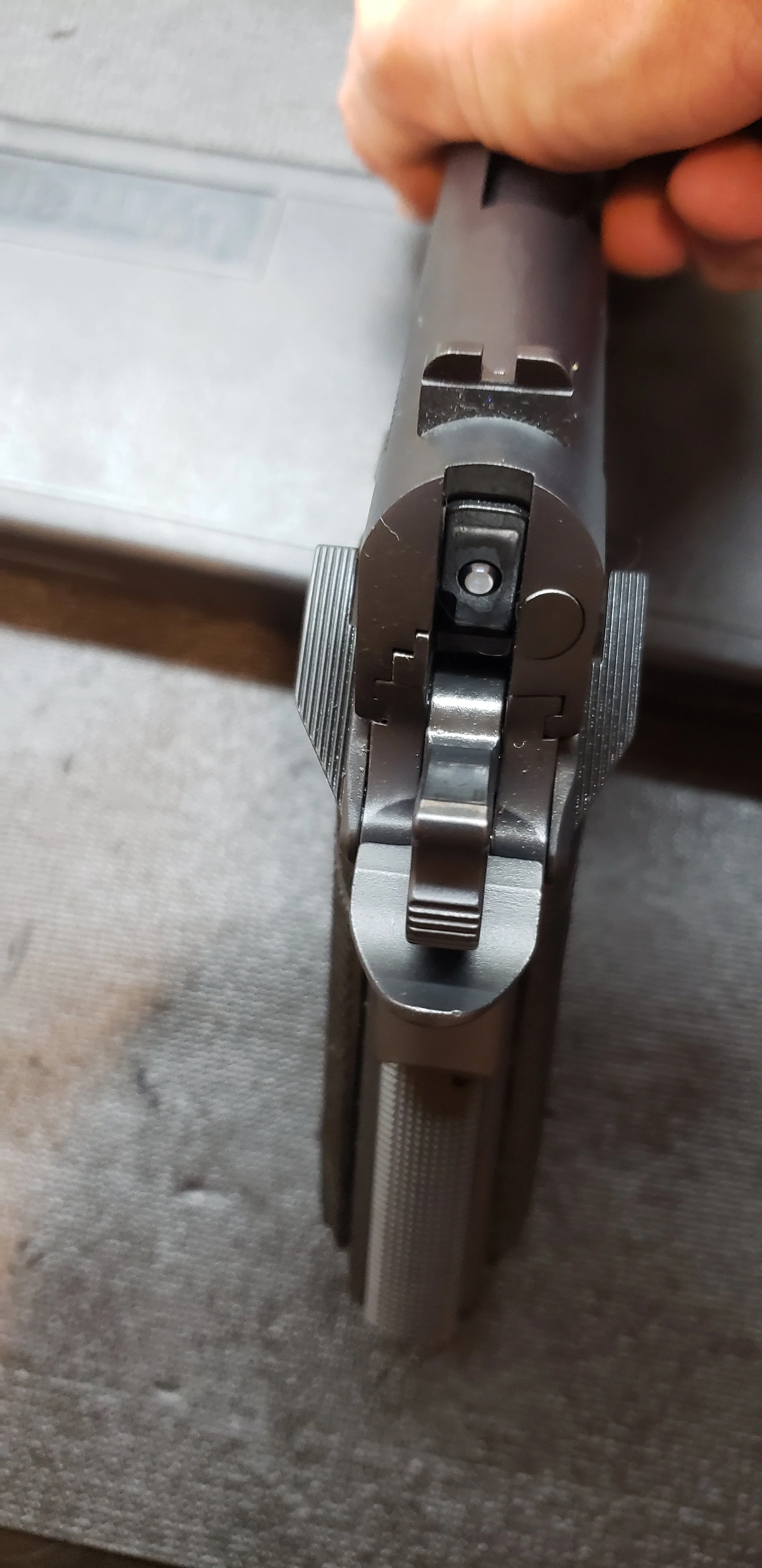
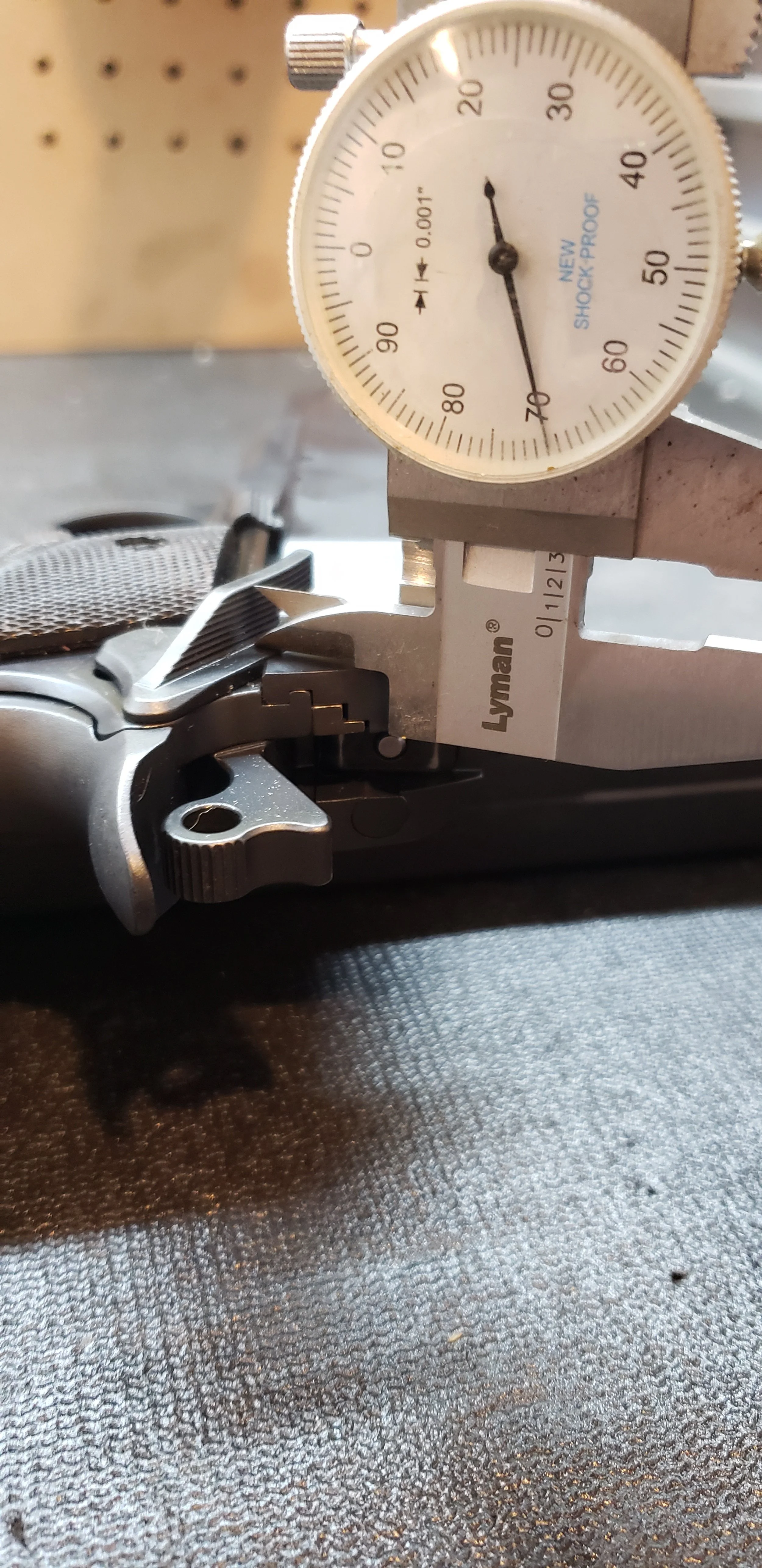
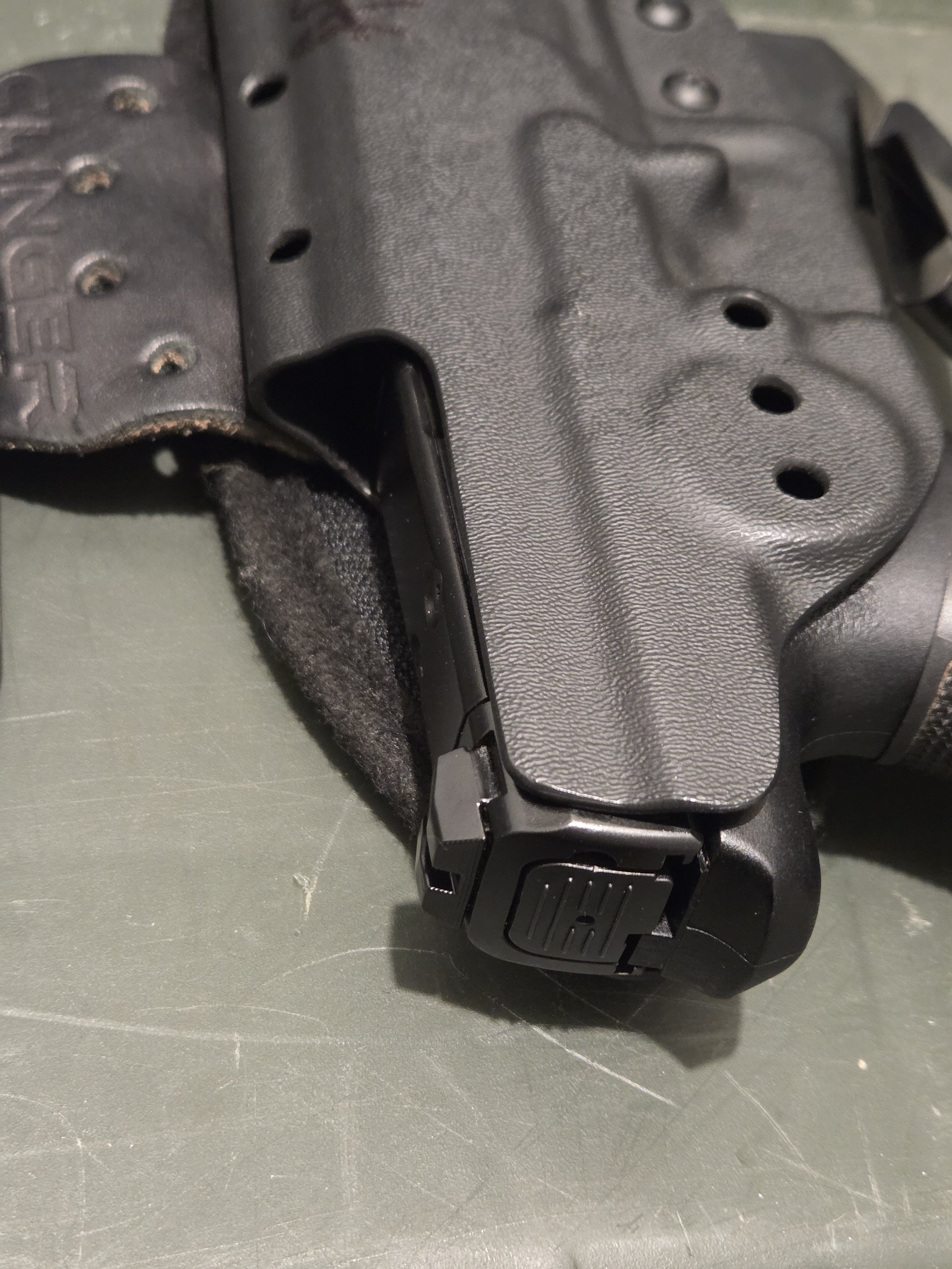
One of the features these holsters have as a standard is that all magazine releases are covered. In some cases, I have seen people want their magazine release open so they can eject the magazine while holstered. I personally don’t mind it either way, as long as the kydex isn’t interfering with my draw stroke.
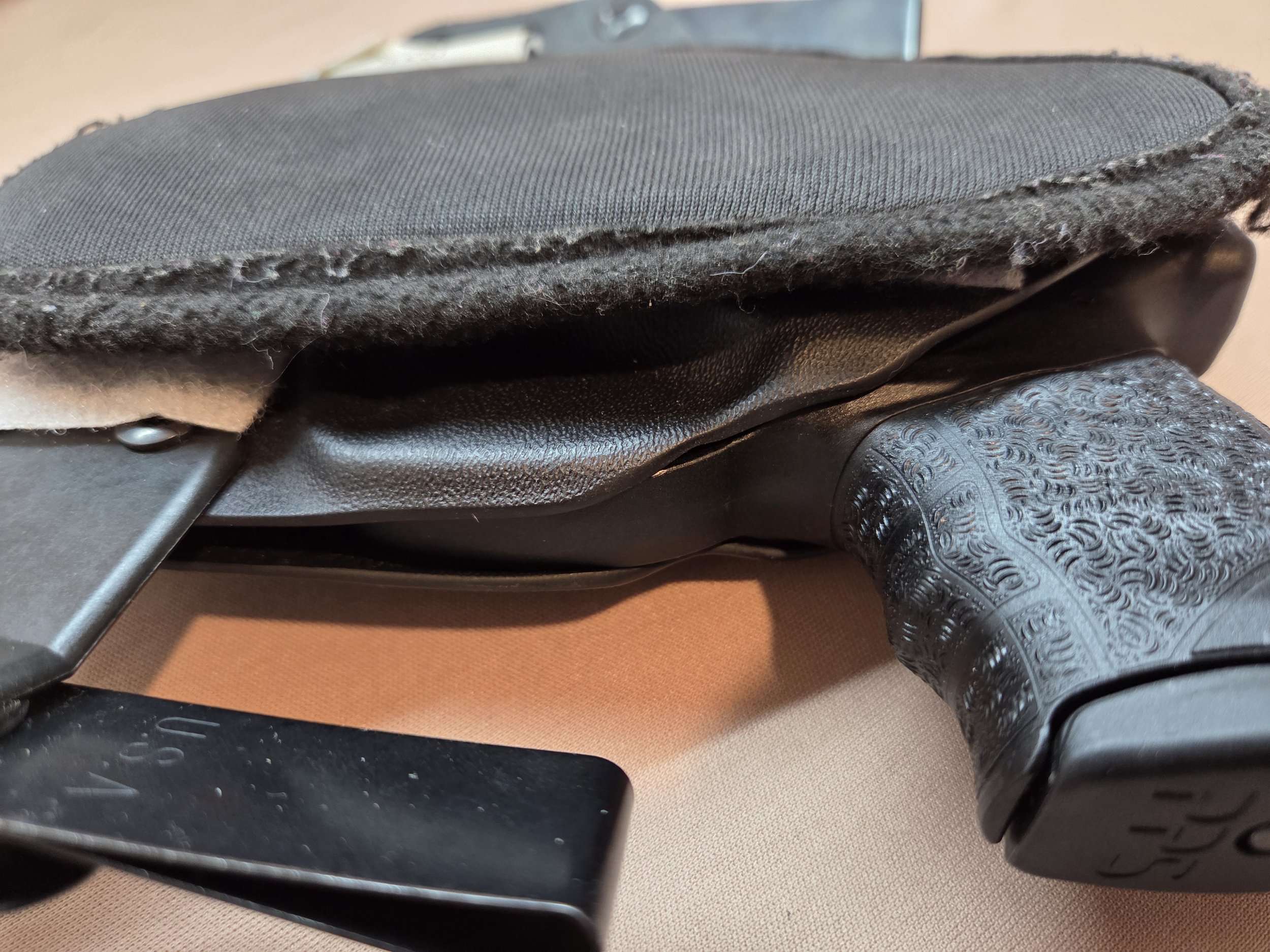
The holsters also have the option of being cut for an optic, which will come with an extra charge. I only have used this feature on my M&P and Beretta APX A1 holster. I actually like this feature because it helps me holster the pistol with relative ease, by finding the opening with the trigger guard and then tracing the pistol rearward until the muzzle is caught in the opening.
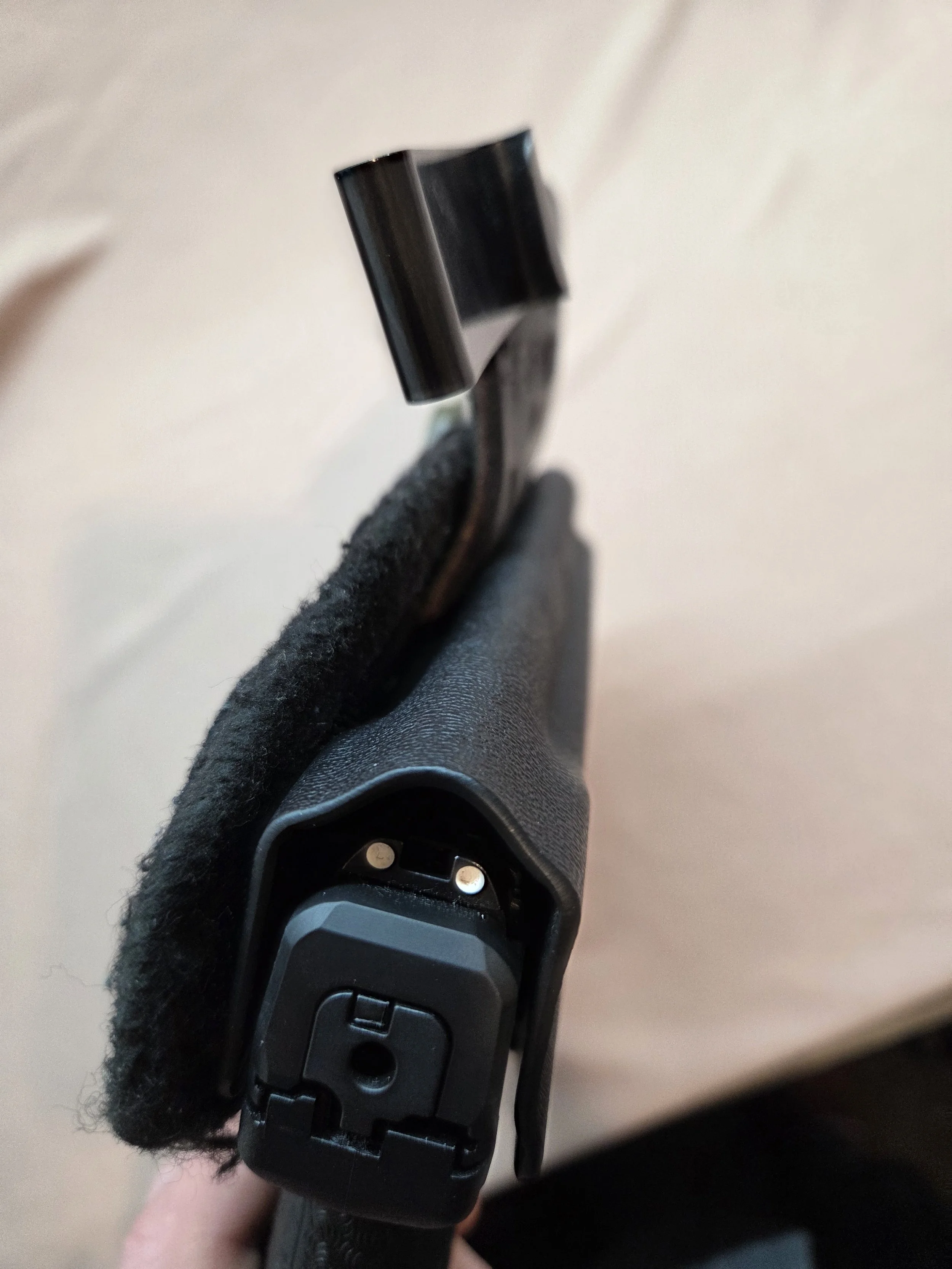
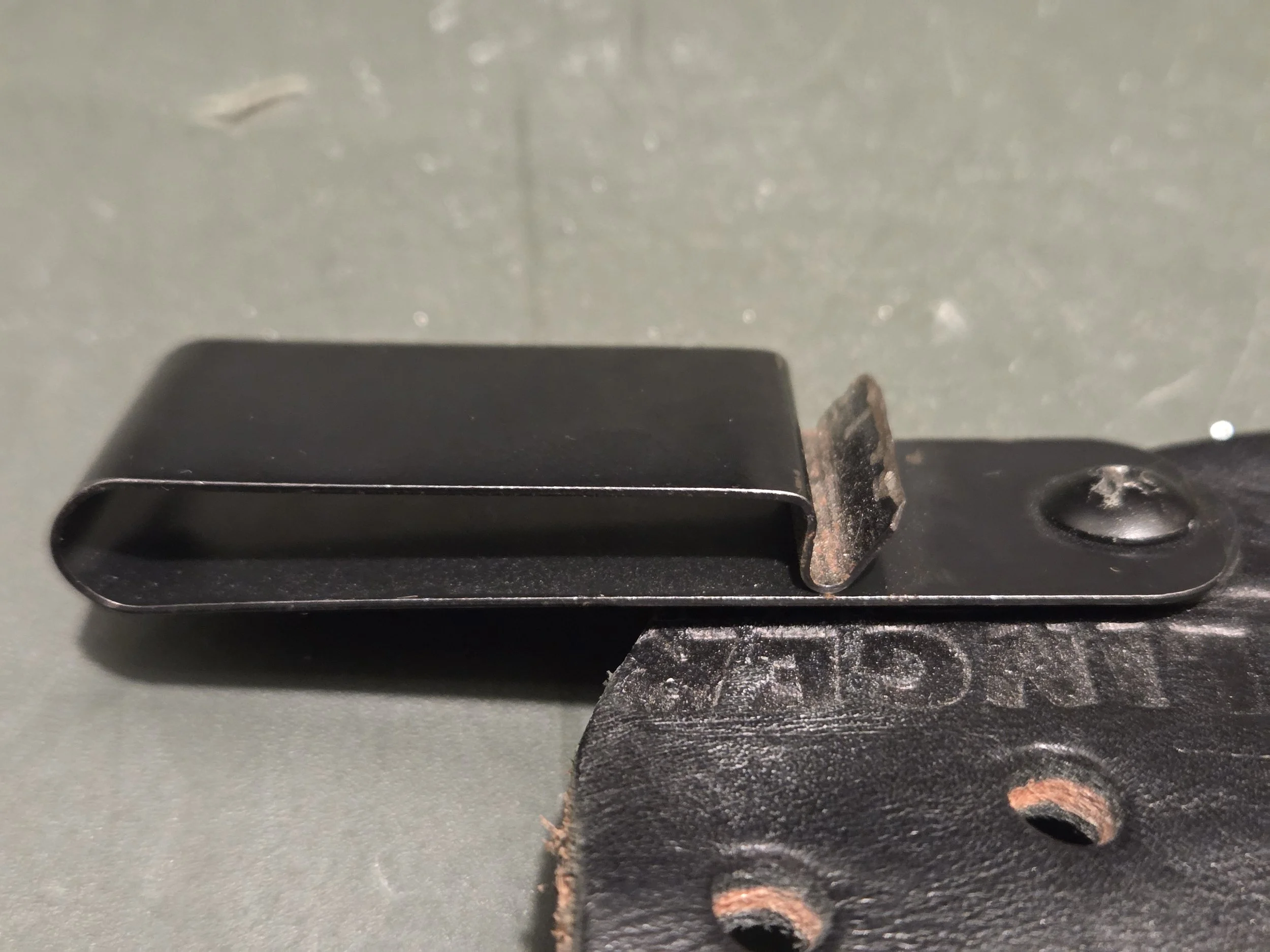
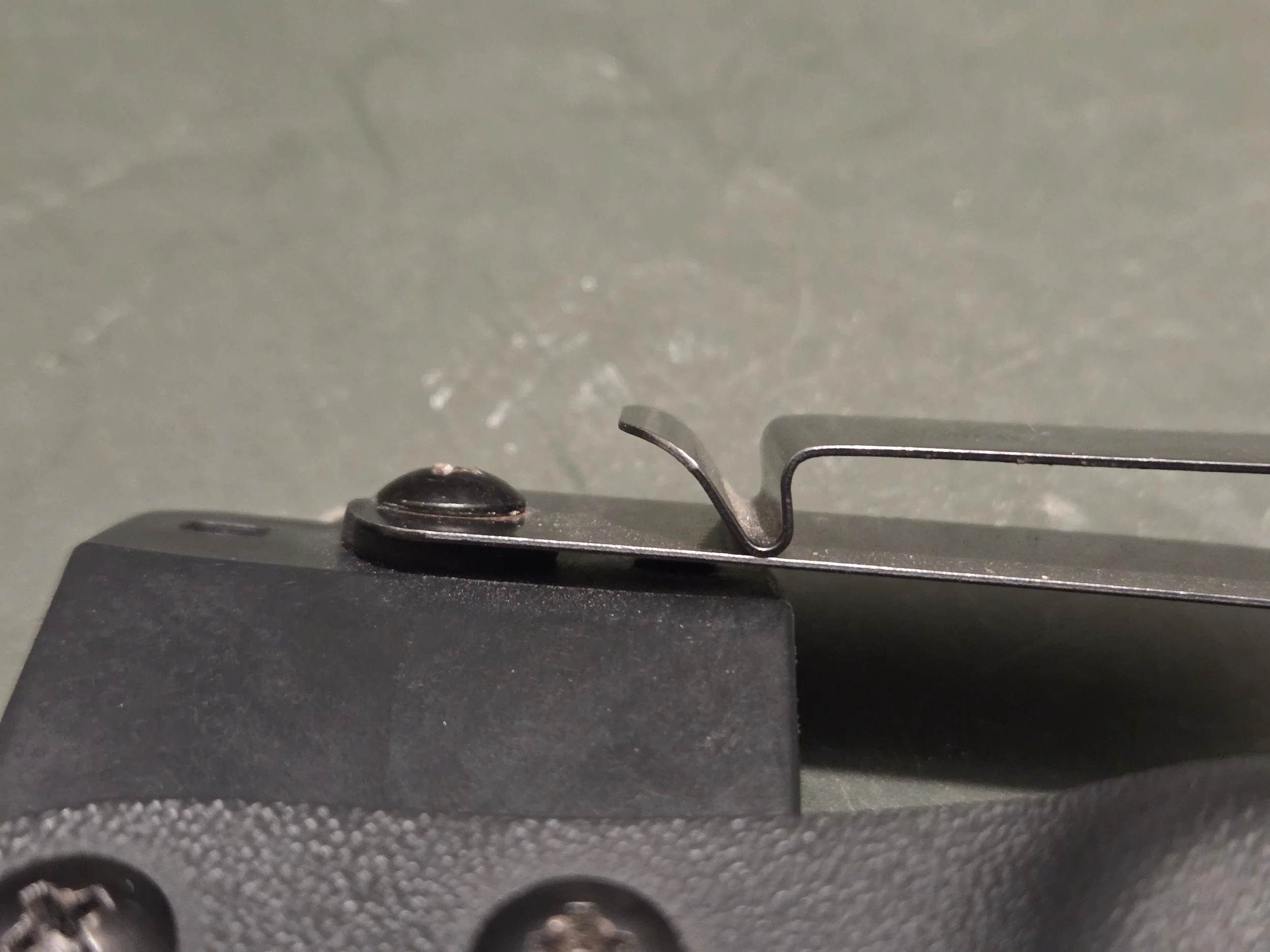
The holster clips that Clinger Holsters come standard with are a bit sharp and they stick out an uncomfortable amount for me. I ended up purchasing Stealth Gear Holster J-clips, which are the same types of clips as the ones used by Clinger Holsters, but will not snag on my cover garment.
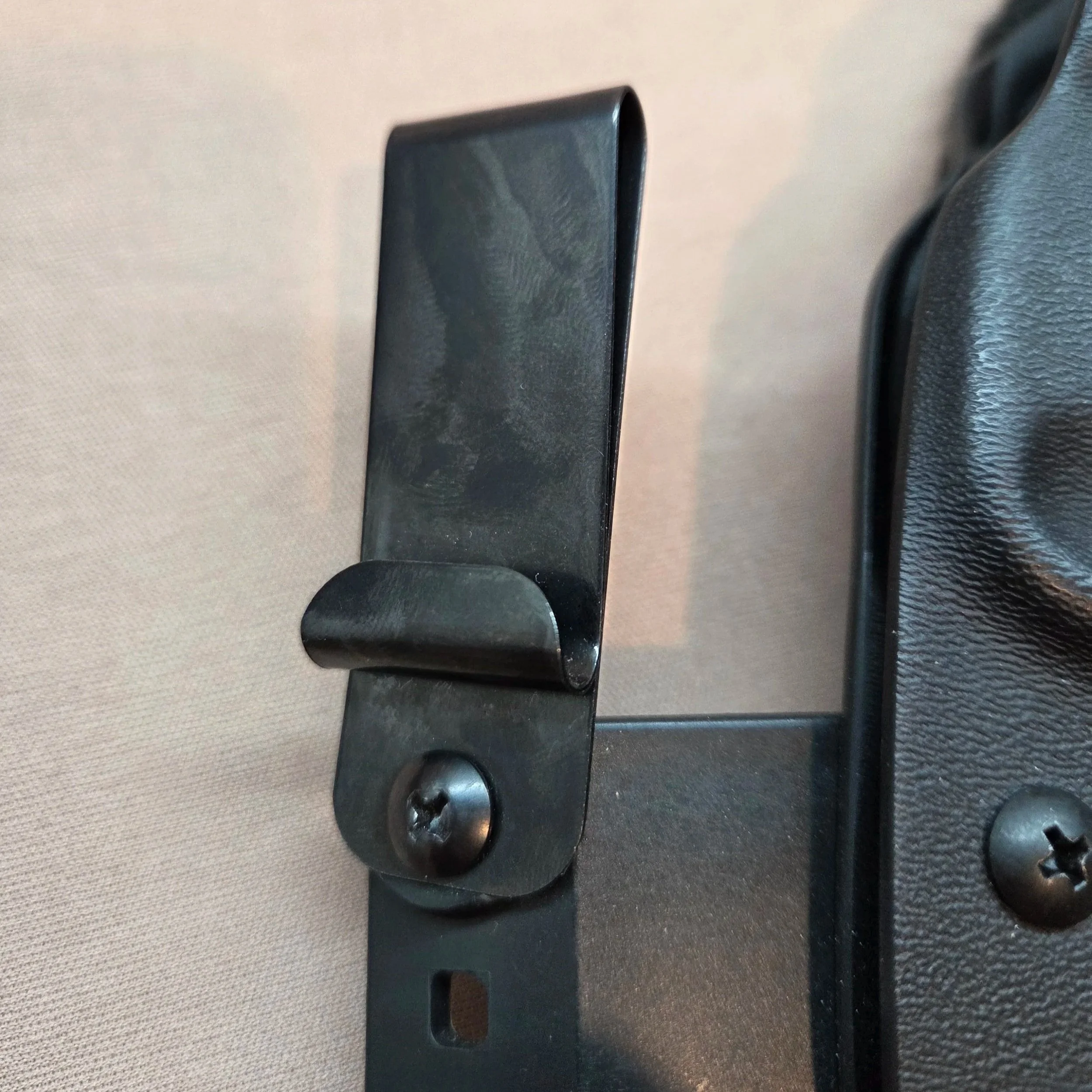
The issues I had with the J-Clips was the fact that it pulled the pants down and allowed the pistol to ride really low, almost to the point of not being able to get a grip of the pistol. This caused me to look for a C-clip option and I found it on Amazon for about $25. The steel C-clips appeared to be constructed exactly the way I would need them to be in order to prevent snag or yanking the pistol down.
If you do not have the cash to buy new clips, or just want a quick way around that issue, you can just take off some of the excess metal on the stock clips. My first solution, before looking for new clips, was to grind the standard clips down to a smaller and rounded edge with a Dremel. This did the trick for many years when I carried nothing but my M&P 2.0 Compact 4”. Luckily I only had to do this with the front clip, but as I have practiced more and more with my holsters, I have found that even the rear clips can be a source of drama. It is best just to change out both clips and be done with it.
ADJUSTMENTS & WEAR
When you first get the holster, the leather flap that houses the front clip will be a bit stiff. I have the holster against bare skin and the sweat plus the I personally had some friction burn from the Kydex on the first day due to rucking 5 miles nonstop while wearing the holster, and doing combatives and draw training for 2 hours on top of it. The part that caused the discomfort was that I had not installed the pad to the holster. There was a lot of friction against my hip where the three holes are predrilled in case you want to install the single point clip, and it showed.
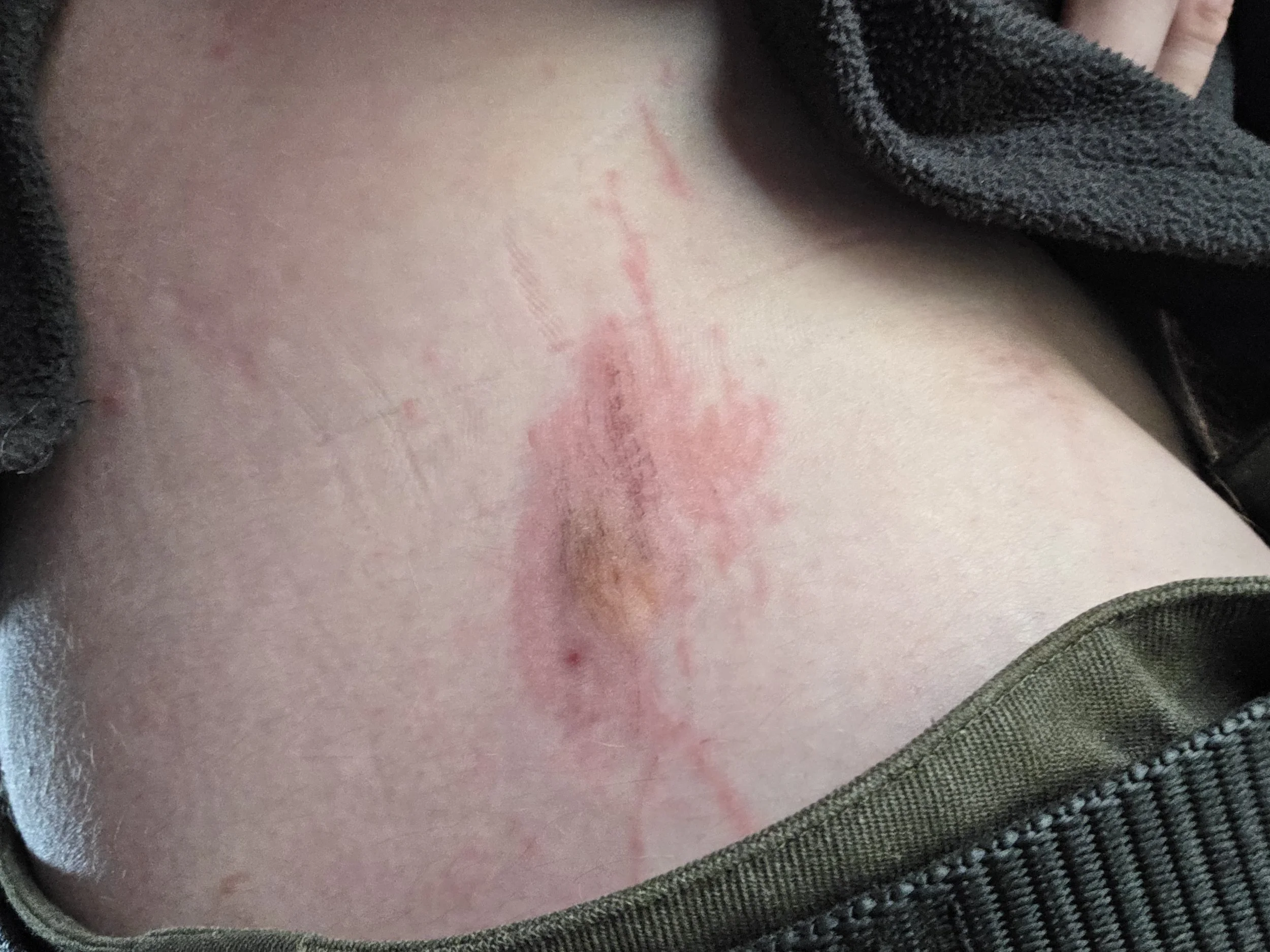

The next time I wore the holster, I had the pad installed, and I moved the same, if not more, and did twice the holster work, and there were no issues.
The tension on the screws that adjust the retention on the pistol is darn near perfect right away, though. The tabs on either side of the holster allow several cant adjustments and carry heights, to your hearts content. Just make sure you really crank down on the screws to make sure they stay put. As you wear the holster in, the leather will form to your body and any friction or stiffness should practically disappear. If you try being really active (doing exercise while wearing the holster) try to take it easy at first.
LONG TERM USE TIPS
The biggest advantage I have seen with using the Clinger IWB Hinge holster is that it hides larger pistols much easier than other holsters, and in a much more secure and comfortable manner. There is no special prying action like some appendix holsters, and it is terrific for any type of carry. It has the security and stability for all day carry like a hybrid holster, but it has an ease of draw like your standard Kydex holster.
As you wear and practice with the holster, you will notice the screws on the flaps loosen and the friction fit on the shell to give a bit. The best thing you can do to prevent this from being an issue is to go to Harbor Freight and buy some of their blue Loctite. Loctite the screws that secure the clips and perhaps put some Loctite on one of the screws that maintains tension on the pistol (I do the bottom one, closest to the muzzle).
The leather tab holds up really well, and though it softens over time, I have not seen any severe stretching or cracking. The only thing I would recommend is for you to keep an eye on your screws and get different belt clips. Just please do not get the IWB Hinge without the comfort cushion pad, or you will have a bad day if you move a lot like I do. For 90-ish bucks, this holster is a winner if you want to be able to comfortably carry a larger pistol and/or have hybrid holster stability and all-day comfort with a consistent draw
WRAPUP
The IWB Hinge is easily my favorite holster design, and it has been amazing at making larger pistols practically disappear. I cannot think of another holster that stays in place so well, is as comfortable to carry, and conceals as well as this holster. I recommend you look into their holster designs and see why this small company is worth your time. After nearly a decade, I have not found a better holster for my needs.