OLIGHT PL MINI 2 VALKYRIE: LOW COST/HIGH PERFORMANCE
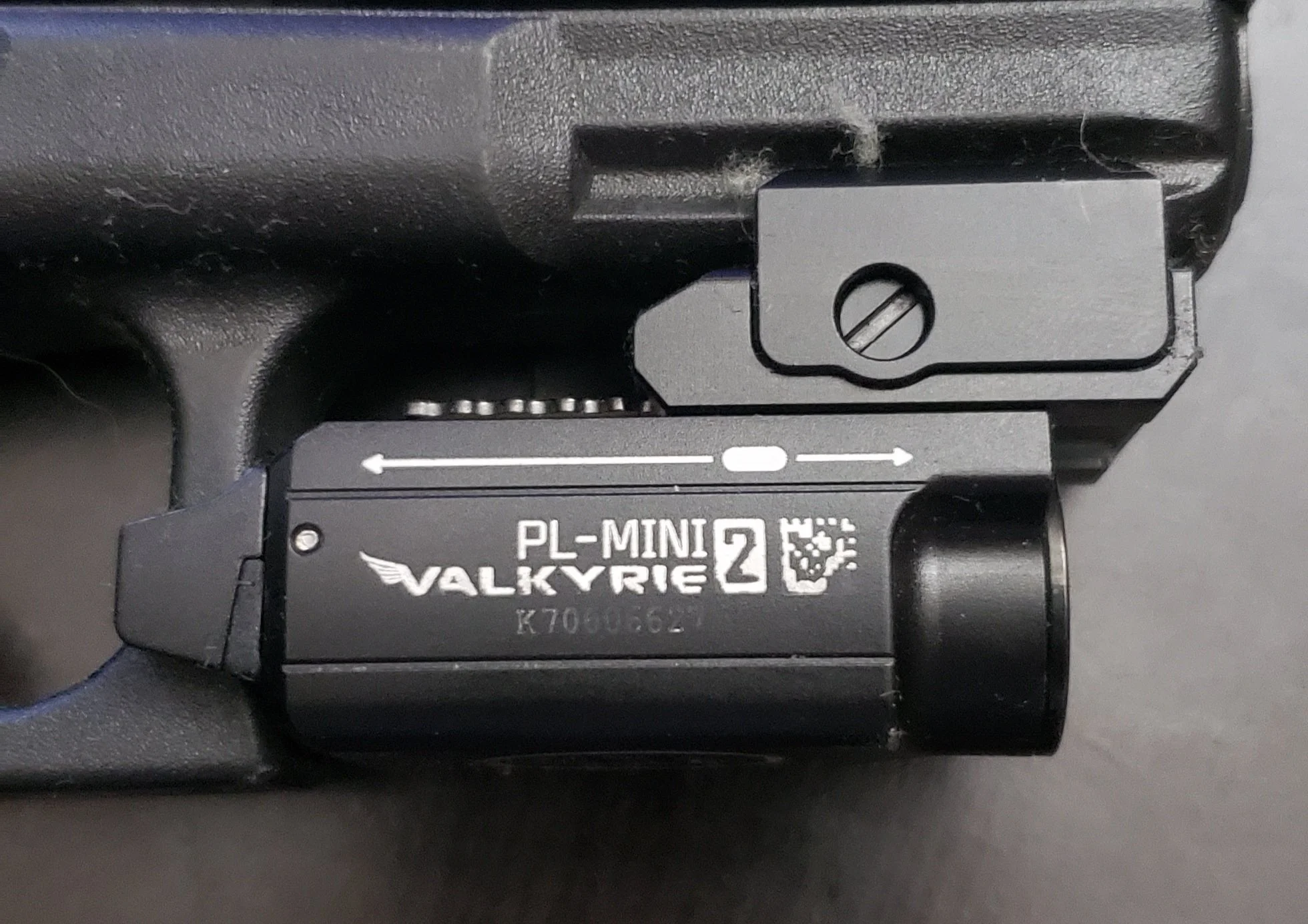
I decided to get an Olight PL Mini 2 Valkyrie after having a somewhat spotty history with the Streamlight TLR7. I have owned the original generation of the Streamlight TLR7 for several years and experienced mixed results throughout that time. Overall, I found it lacking in several key areas, including controls, lumen output, and durability. Given these issues, I figured it wouldn’t hurt to spend about half as much money and try out a light that claims to offer similar performance but in a more versatile and user-friendly package. The Olight PL Mini 2 is marketed, much like the TLR7 as being ideal for pistols like the Glock 19 that have a rail and are compact enough for carry. The attempt was to offer a light that could give good illumination in a compact size that would not look ridiculous, like when people throw a TLR1 or X300 on their Glock 19.
WHY A WEAPON-MOUNTED LIGHT?
The first thing to cover is whether it is even reasonable to use a weapon-mounted light on a carry pistol in the first place. For myself I concluded through practicing low light that it is extremely helpful in making tactical movements easier. However, I have found myself to be very skilled with using a handheld light. This skill does make it easier for one to decide to save money and stick with only a handheld for all needs from utility to tactical uses.
After conducting practice and a run-through of what it would be like to clear my own house, I found that the burden of quick engagements with a handheld light can be avoided. When searching for home invaders, a handheld light is not necessarily optimal, but it can be done. A handheld light can be helpful with establishing initial contact and searching in the dark on the street, but when it comes to needing to deliver deadly force with extreme prejudice, it is my responsibility to make only hits, not accepting near misses. But you must consider the context.
I am not a Law Enforcement officer and I cannot brandish a weapon on a threat. I will have to have a light out to discern intent and draw with my free hand if things get ugly. I am not going to drop my light and switch over to a weapon light just to justify its usage. This means that in 99% of situations outside of home defense, a weapon mounted light is going to serve as a cosmetic feature rather than a practical tool. The only other usage I could see is having the light on your weapon used to control a threat by blinding them temporarily during an engagement. I am not saying that a light on your pistol is absolutely useless, but I would say that using it ‘in addition to’ a handheld light, is optimal and logical.
FEATURES AND QUALITIES
By the time I was open to looking for a new light, I had investigated lights that were more built to last, but I looked at options that would give me more options. I was feeling like accepting an oversized light like the Surefire X300 if only to get most of the qualities I wanted even if I was losing concealment or having to learn a new set of controls that fell more in the realm of unintuitive and risky for an ND. When I found some reviews on the Olight PL series of lights, I glazed over the product, but initially chalked the reviews up to being sponsored and limited in scope of testing. I figured there were huge sacrifices involved in using the lights such as less durability and life. Some companies on the market only care about getting sales rather than making a name for themselves in terms of showing they can innovate and offer a new and better deal for consumers.
The features that drew me in were numerous, which is unusual since it is usually trading something bad for something tolerable. First thing that I found to be a juicy improvement was the controls.
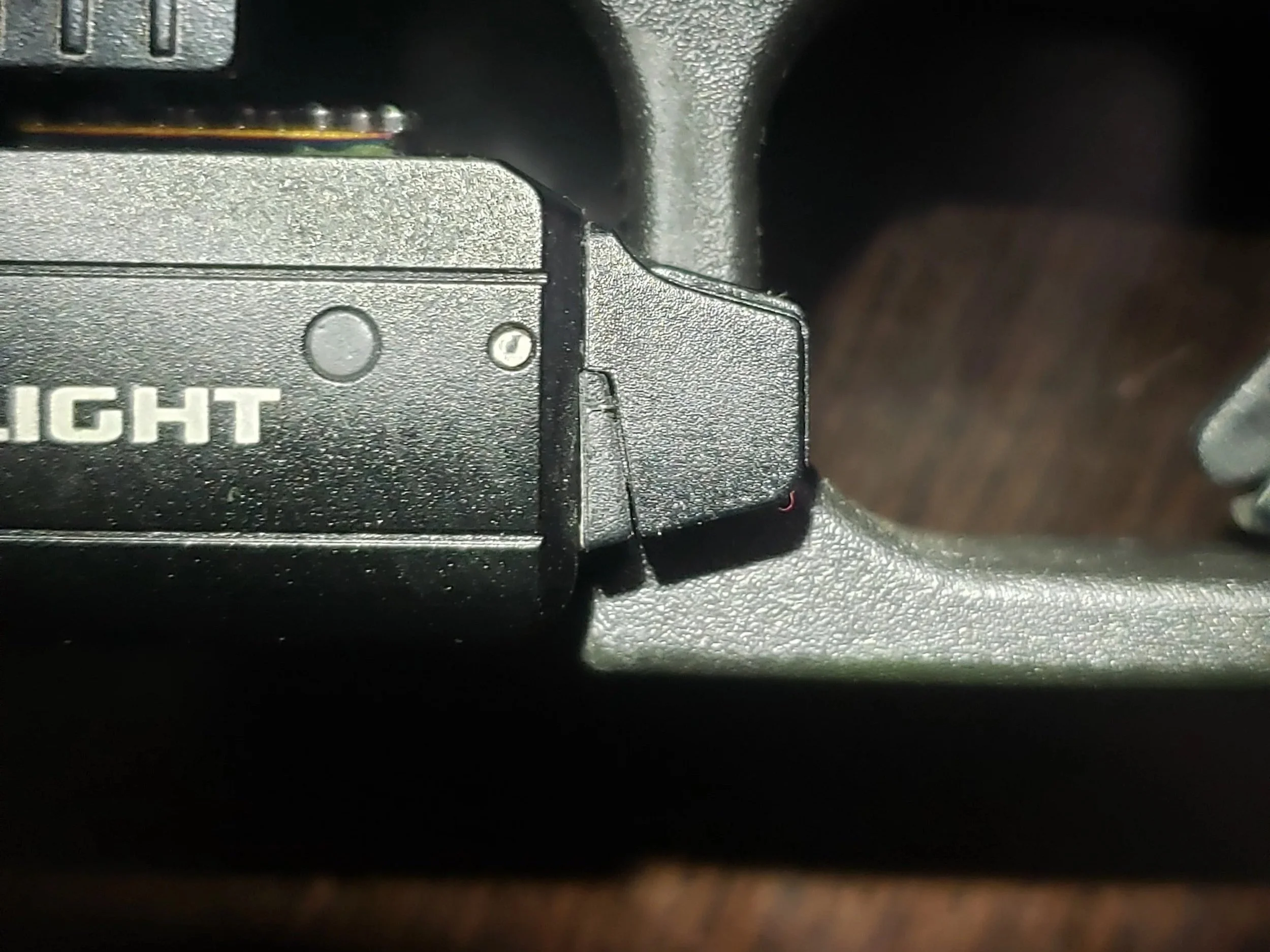
If you can’t get the light on from the draw, then it was as good as a paperweight. The TLR7 has been updated to have similar controls, and is honestly almost the same as this design, but it still falls short for me on other areas. Next feature is the quick release and easy adjustment.
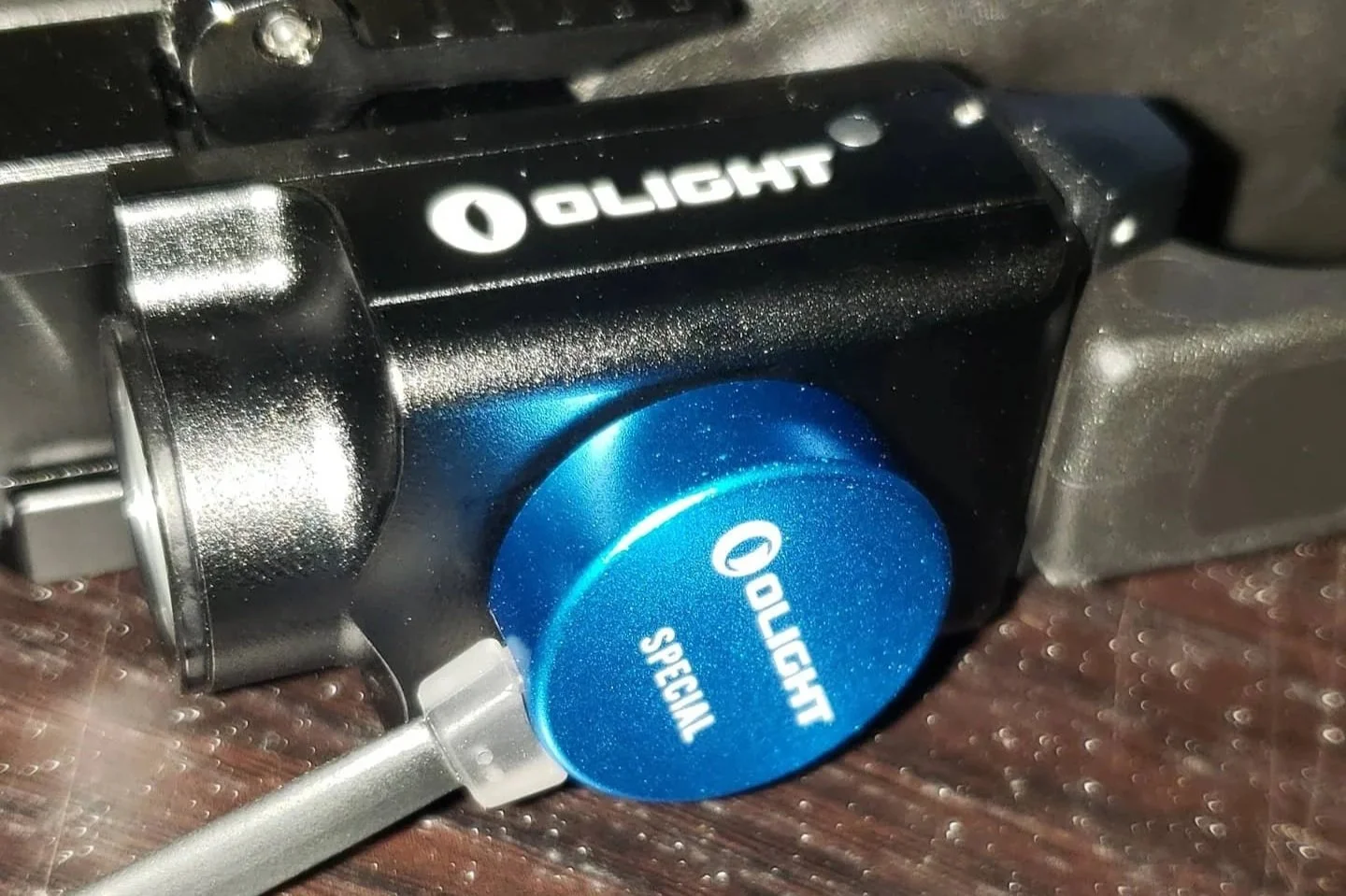
I had issues with the light loosening up to the point that I had to torque the hell out of it in order to get it to cooperate and stay. The next thing was related to my compulsive nature to practice. 123 batteries are priced at a premium while electricity bills are dirt cheap, so it was a huge deal that the integrated battery not only gave me a good life of 45 minutes like the TLR7, but the lumen count was higher. Simply let the magnetic charger snap on and charge until the charger light turns green.
To touch on the Lumens, the color of the light was a big deal for me. The color contrast and ease of identification and range of the Olight sets it up to be a terrific contender to the competition. The TLR7 had the hue of a washed-out LED and made the visibility severely limited. The Olight has a nice white hue to it that makes it easy to take in information and color contrasts. Overall, the light is an overall improvement over the TLR7 and comes with the added benefit of fitting in my holster for the TLR7. I am not sure if this is the case on all holsters for the TLR7, but the hybrid holsters take it on easily.
The Olight PL Mini 2 has a registered output of roughly 600 Lumens for about an hour. Within that hour, the lumens can drop as low as 60 lumens when the battery is desperately low. I have found that this is a relatively accurate output and it lasts for about 2 or 3 minutes before the output seems to downgrade. This is suitable for self defense for the layman. As long as you are using a weapon mounted light in addition to a handheld light, you will be well armed to defend yourself in low light environments.
POSSIBLE ISSUES
Much like the results I had with the TLR7, there is concern with the durability and company backing for the light, since I shoot mainly the light killing .40 caliber. Though I had to attach the light to the Beretta 96A1 to generate enough force to stress out the circuitry of the TLR7 to failure, I am unsure what the future holds for this light’s durability. The only thing I can hope for is that the light is easily repaired or replaced upon encountering a failure of the circuitry. This comes down the company living up to and honoring its warranty, unlike Streamlight who tried to argue with me about how their lights can’t fail. It took a month and a half to get the light replaced and, in my possession, which severely pissed me off.
Since I originally purchased the light, I have primarily used it on various .40 S&W pistols and have generally been satisfied with its performance. The only issue I’ve encountered has been maintaining the tightness of the screws on the track. Applying a small amount of red Loctite has significantly helped me keep the screws secure and has reduced the frequency with which I need to make any adjustments. Looking ahead, I may experiment with using contact cement beneath the track to see if I can create a more permanent or semi-permanent bond between the two surfaces, which could potentially eliminate the screw-tightening problem altogether.
WRAPUP
I only intend to use the PL Mini 2 as an EDC light since its size and lumen output are not necessarily conducive to universal application. If I have a choice, I will go to the PL PRO for more lumens since size wouldn’t be an issue for a home gun. Plus, they both seem to have the awesome built in battery that makes recharging a breeze. The good news is that more holster makers are making light bearing holsters specifically for this light, further illustrating the utility and merits of the design for the layman. I will be getting more Olight weapon lights in the future, and I look forward to implementing them into my defensive network.