NON-MODULAR TACTICAL VESTS: DESIGNED BY/FOR WARRIORS
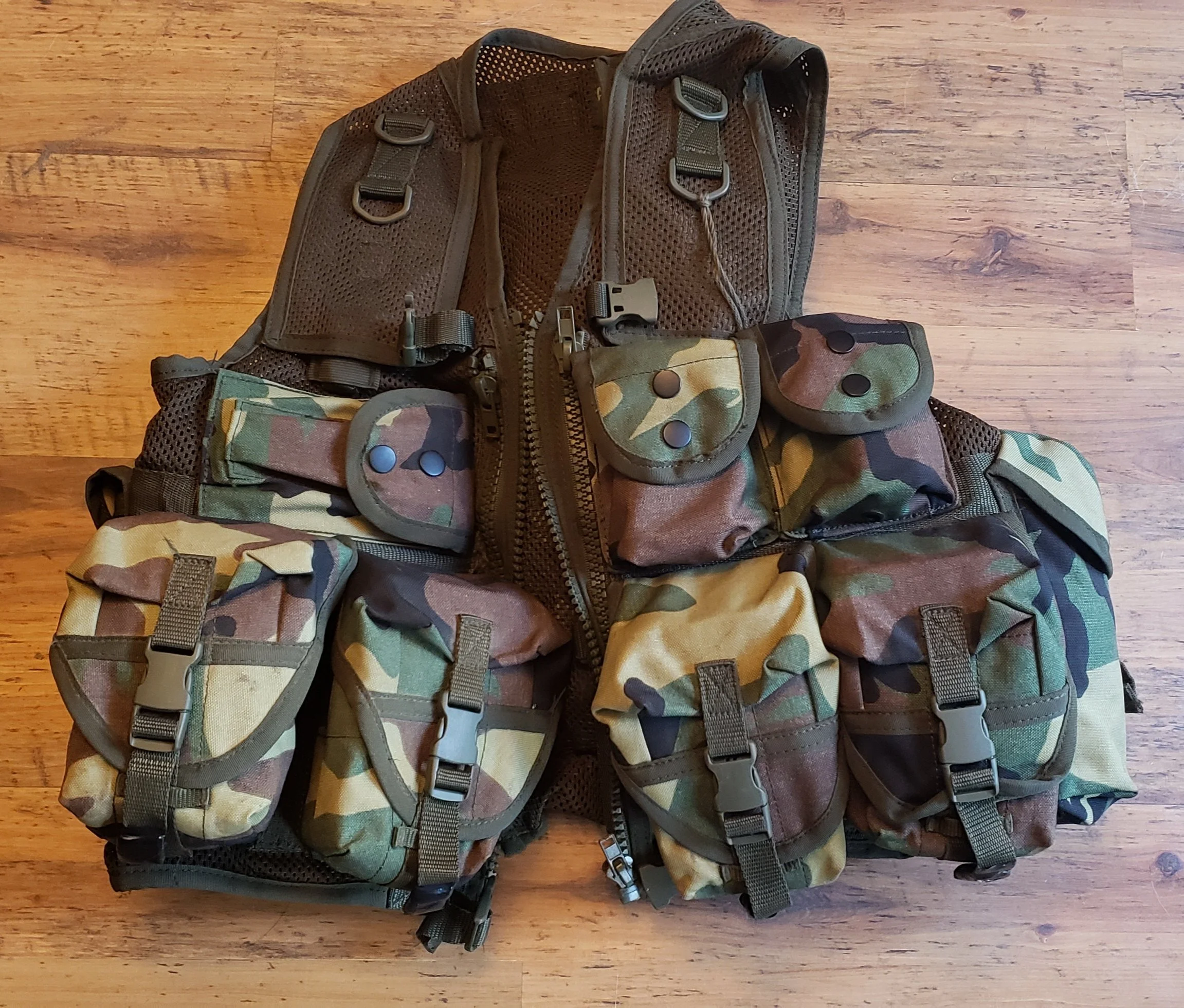
The most common type of gear you will find today uses MOLLE and integrated plate carriers or body armor. I understand the allure of having MOLLE, as it is generally very modular and allows you to customize the gear to your mission and your specific uses. However, I find that this leaves us with a hefty bill and people who are new to tactical training tend to not really know what to get and how to lay it out. Even for myself, I find that modularity offers me more headaches than solutions. For this reason, I lam a huge proponent of using non-modular, fixed pouch vests and chest rigs.
BENEFITS
Generally speaking, vests with fixed pouches tend to be easier to use. There is very little imagination needed and the only thing you need to do is fit the vest to your body, load up the pouches, and start training. Often these vests come with a robust and lightweight mesh that makes the vest feel like the weight of a feather.
On many of these vests with fixed pouches, they allow room around the waist for accessing a pistol or even having a fully loaded battle belt or utility belt attached. Also, you will find that there is a decent amount of storage on these fixed pouch vests.
These vests were developed with the operator in mind, and were not randomly assembled with cheap materials. If you look at vests made by Blackhawk or Eagle Industries before the GWOT in the early 2000s, you will find that their vests are very high quality and still are regarded as extremely durable products.
Many quality manufacturers are still selling these vests today for a good price. All things considered, I feel that $75 for a tactical vest that is made to carry 12 rifle mags plus shotgun shells and other accessories is a fair price. Many times, you will find these vests are built better and will last better than the individual pouches you buy for your MOLLE vests.
LIMITATIONS
When you lack modularity, there are naturally going to be some downsides and limitations to consider.
Unusable Pouches-
A common issue you may notice is that the individual pouches may end up being unsuitable for your specific mission. The old school way of handling an unsuitable pouch on a fixed-pouch vest is to take the pouch off and sew on a pouch that will work in its place. A common modification that British troops made with their Ops Waistcoat (tactical vest) was to take the magazine pouches off the left side and sew on the PLCE ammo pouches. Delta operators in the early 90’s often sewed together their own gear to give it a custom fit. In large part, those old school guys relished these fixed pouch vests, since it was already mostly what they wanted.
Worn Out Buttons/Velcro-
Most of these fixed-pouch designs rely on Velcro for their closure systems. Velcro is a material that will definitely wear out over time. Fortunately, Velcro is easy to replace and stitch on. Even if you are not a practiced stitch expert, gorilla glue and some light stitching around the edges should do the trick for your needs.
Worn out utility snaps will be a bit more difficult to manage due to you needing to rivet on new buttons. You may have to reinforce the fabric around the button to prevent it from ripping, or at least to just give it some extra durability.
Limited Color Options-
When you are trying to pair your gear with your camouflage uniforms, it is a basic requirement that you make sure that the color of your gear compliments well with your uniforms in the environment. An easy way to solve this problem is by painting your vest with an ultra-flat camouflage color combination using random patterns that mimic or compliment your camouflage uniform. I recommend using stencils that you can find on Amazon.
Another option is to dye the vest into a very neutral color that is similar to ranger green, or some other relatively subdued or complimentary color. This will mostly only be doable with vests that are coyote tan or light colors.
FIXED-POUCH VEST OPTIONS
LBV88E (ENHANCED)
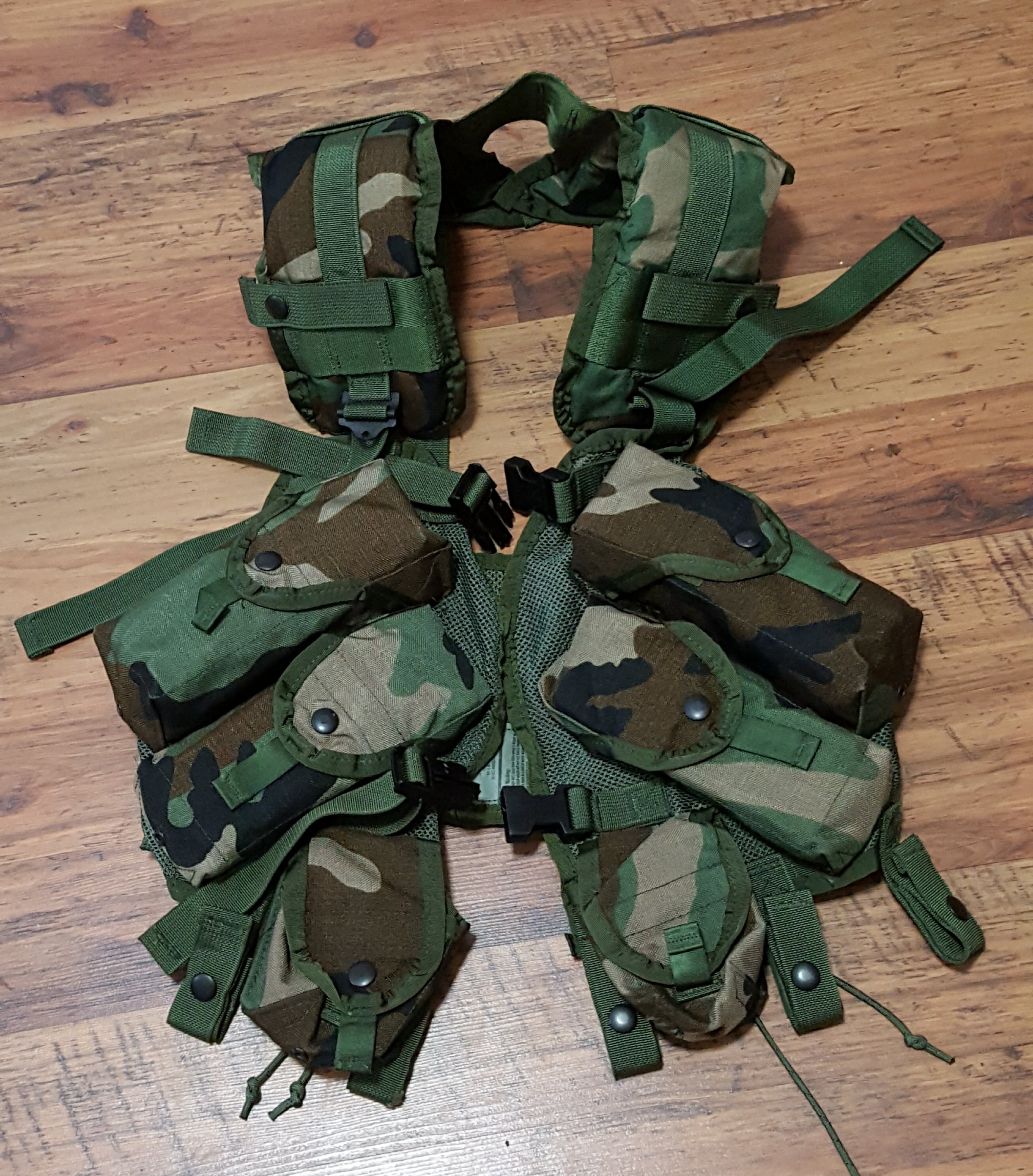
$30-$65 (depending on condition)
Used by the US military and designed to augment the ALICE belt system.
Only comes in M81 woodland, but copies have been made by other manufactures.
Moves the fighting load to the chest and leaves the belt to other items such as water, medical gear, navigation gear, pistol, and pistol ammunition.
Features-
Mesh body panels and padded shoulder straps with integrated drag handle
2 snap closures
Shock cord adjustment cables (Can be replaced with 550 cord for rigidity)
6 5.56 magazines (STANAG or PMAG)
2 fragmentation grenades.
ARKTIS K170 ASSAULT VEST
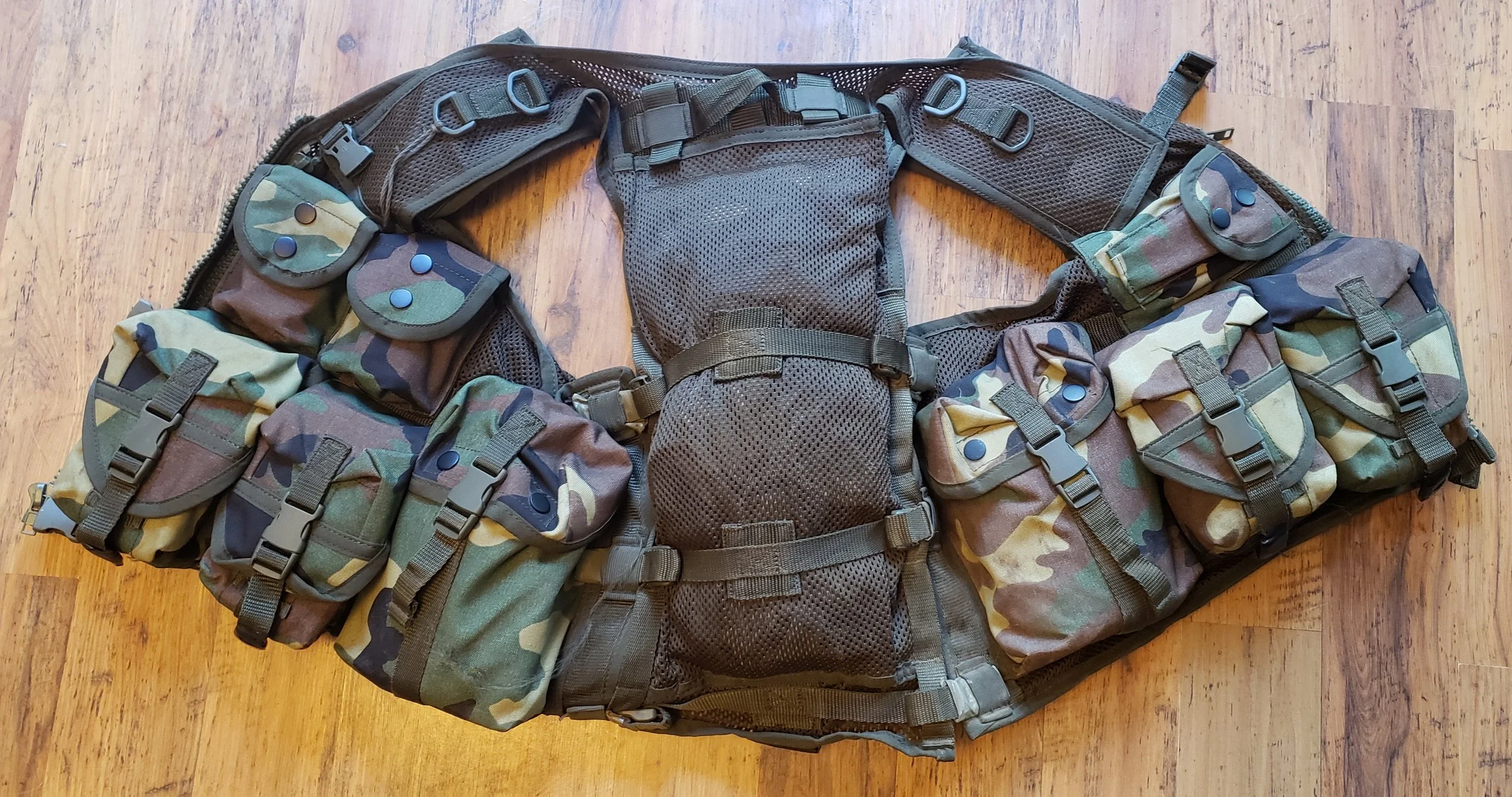
Offers a variety of layouts-
Elite Tactical Vest #1 -
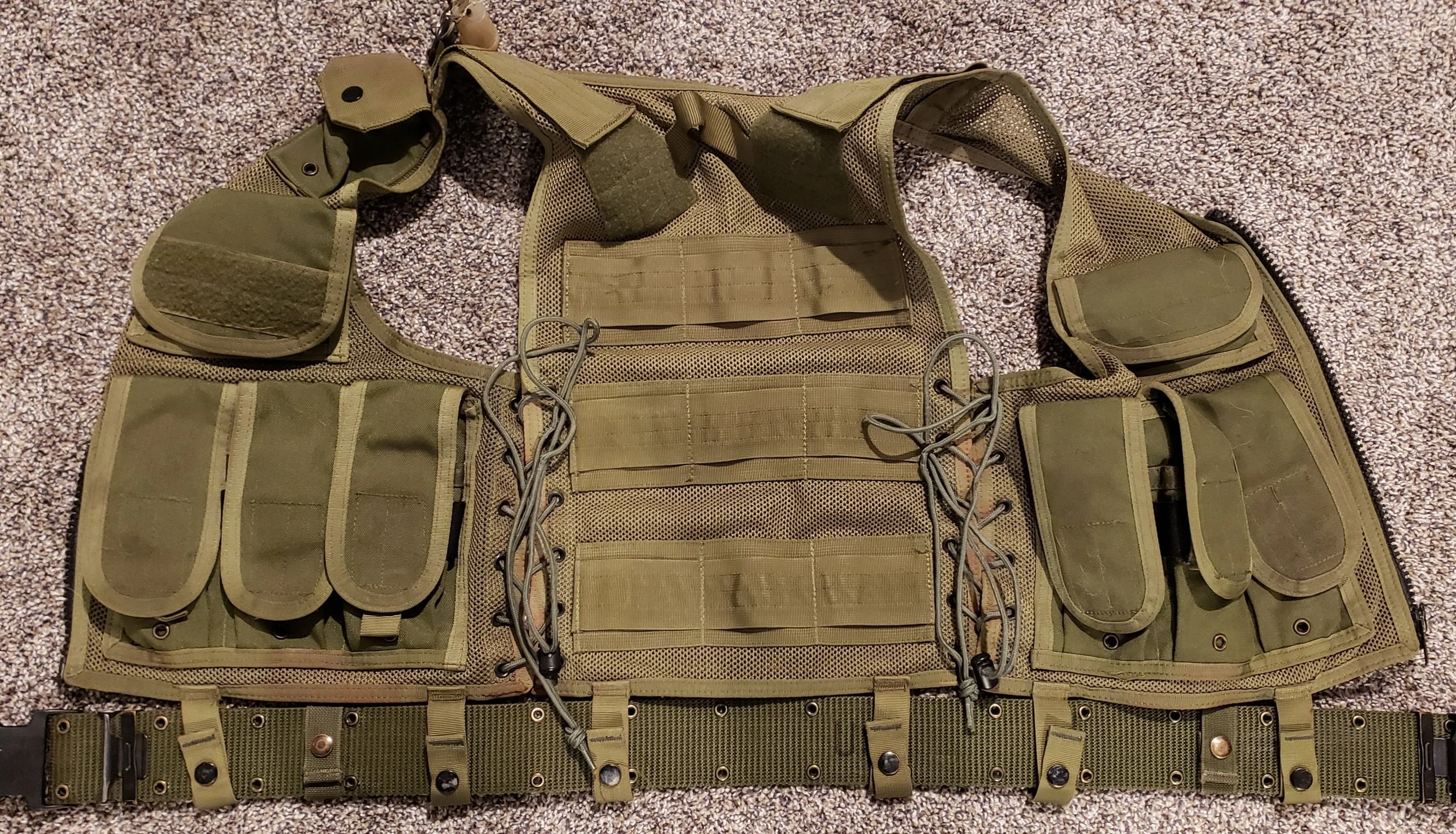
· 6 double m16/m4 magazine pouches
· 2 utility pouches on the upper chest
· 2 zipper pockets on the inside of the vest for holding documents and extra items
· Hydration bladder slot on back
Elite Cross-Draw/Pistol Magazine Vest-
· 3 pistol magazine pouches
· 1 utility pouch on the upper chest
· 3 rifle magazine pouches.
· Hydration bladder slot on back
Phalanx Homeland Security Vest-
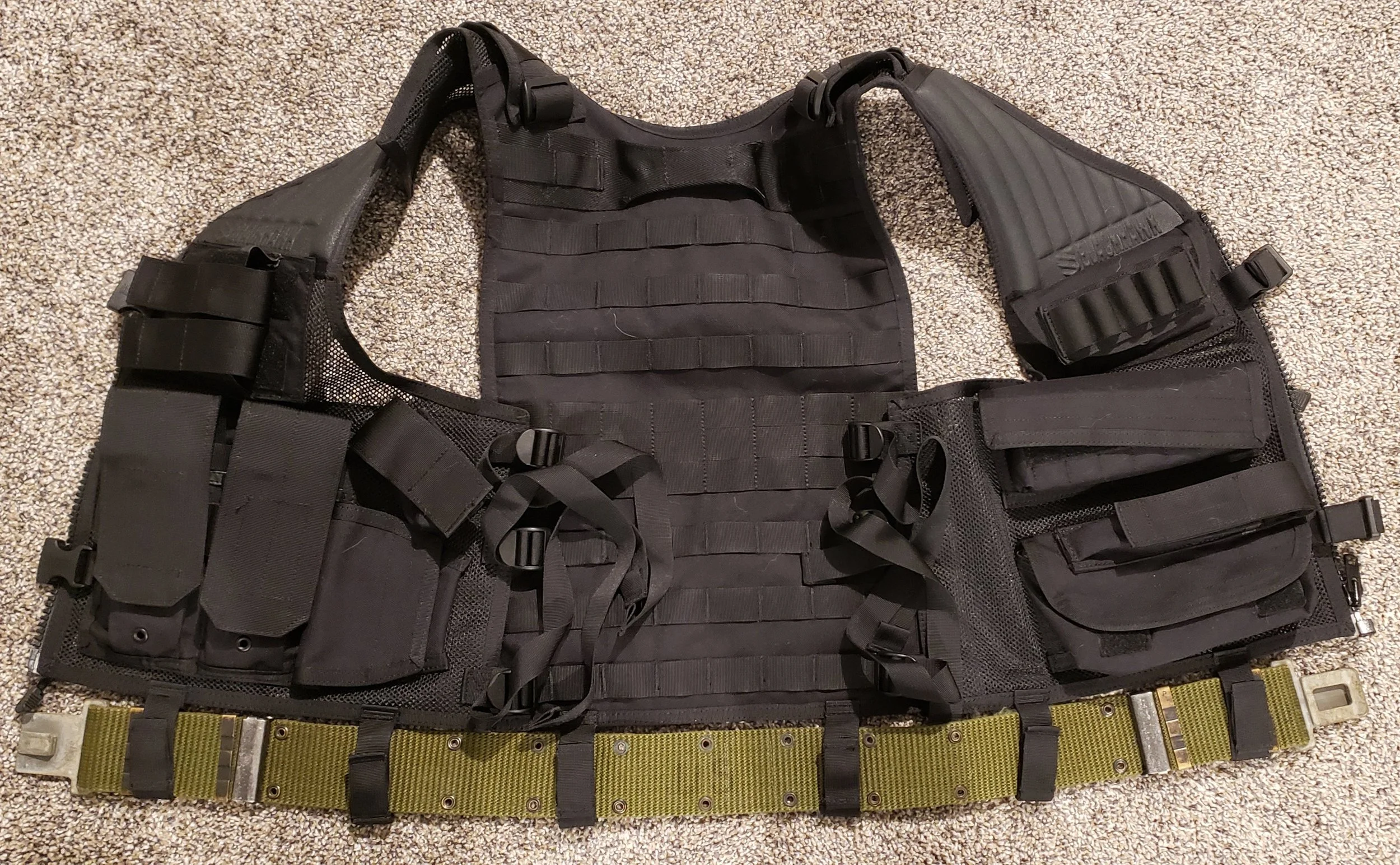
· 2 double M16/M4 magazine pouches
· 2 horizontal pistol magazine pouches
· 1 pouch with 14 elastic bands for shotgun shells
· 1 small utility pouch with a removeable 5 shotgun shell Velcro sleeve
· Large horizontal utility pouch.
· Hydration bladder slot on back
BRITISH OPS WAISTCOAT
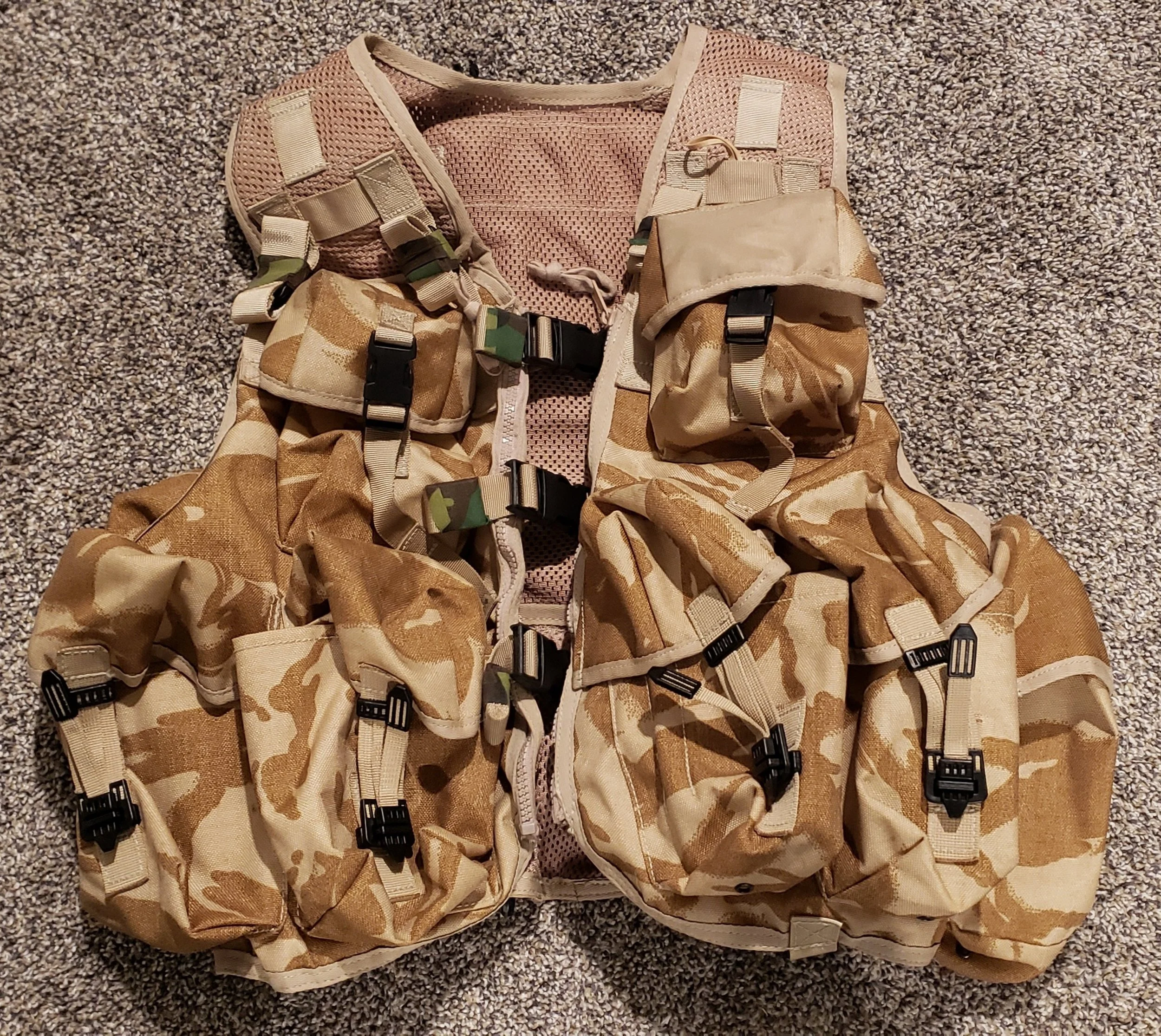
$50 (used)- $120 (like new)
Used by the British military
Has a DPM and Desert DPM version. Some countries copied (Kenya) and companies (ARKTIS) the designs
Features-
lightweight mesh body
2 triple magazine pouches w/ dividers and snap closure
4 large utility pouches w/ storm collar and snap closure
2 medium utility pouches w/ storm collar and snap closure
2 zipper pockets with pistol holster on left side/document pouch on right side.
Rear inside pocket for documents
Desert version does not have storm collars and has Spanish clips for all lower pouches
***For a more thorough comparison between the two types of vests, watch THIS video.
SUMMARY
I am not saying that fixed-pouch vests are the solution to all your tactical needs, but you would be surprised with how many problems it can solve with a third of the headache as something that is fully modular. A lesson I have learned from my many years of tactical training and combat experience is that it is beneficial to invest in simplicity as much as practicable.
If I were starting all over again, I would be very hesitant to invest in MOLLE systems when you have affordable and functional fixed-pouch vests like the ones I have shared. Let’s not forget that these vests were the best thing you could get before Molle was invented, and were still preferred for their durability and functionality even after MOLLE came out. These vests were designed with the professional in mind, and their age does not diminish their tactical functionality just because there are now highly modular options on the market.