SELECTING A DEFENSIVE AMMUNITION
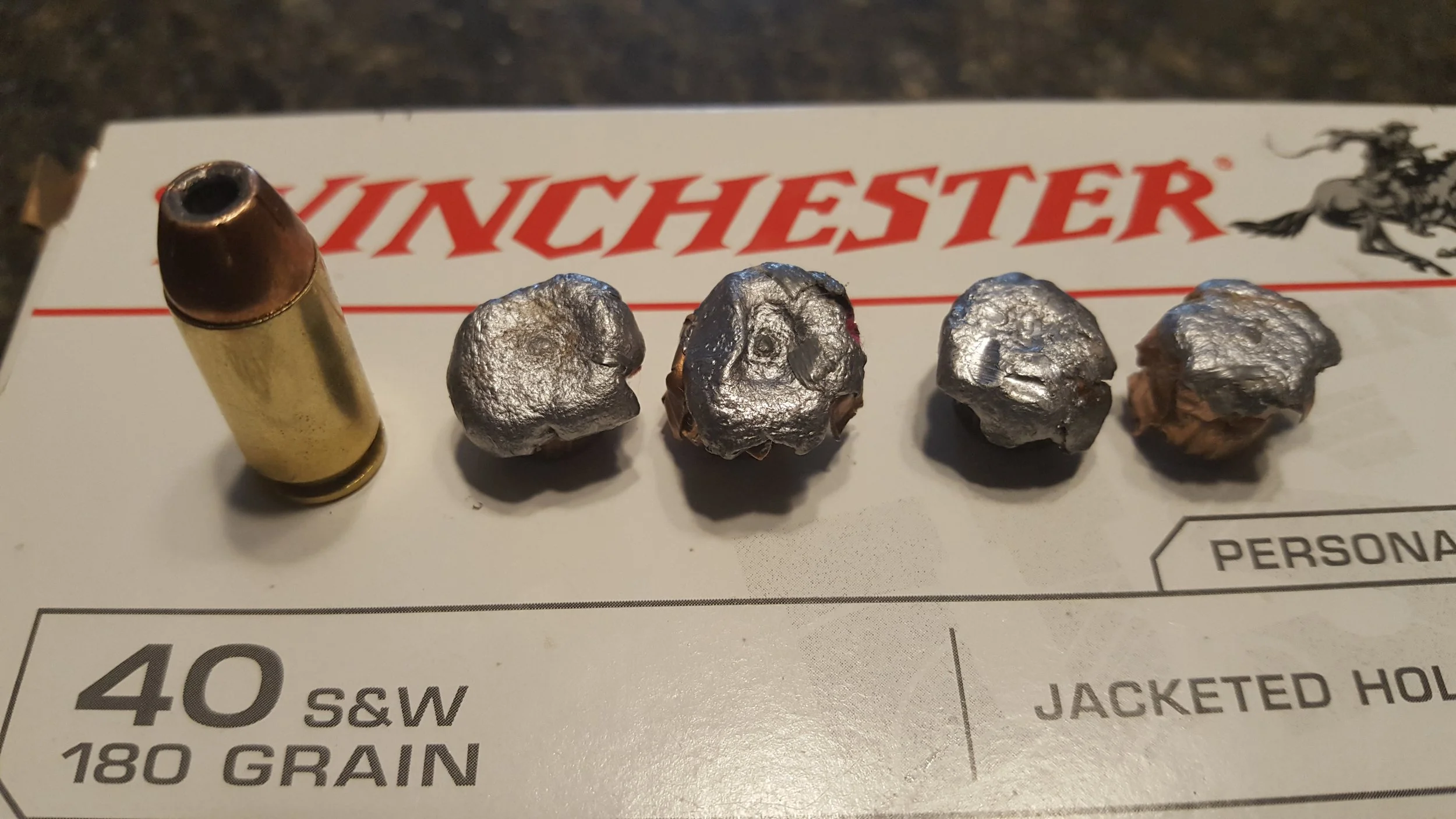
Your carry ammunition can sometimes be as much of an importance as the gun itself. If you do not have good ammunition in your gun, you might not have the effect on the threat that you might want. For this reason, the art of terminal ballistics is important to understand. I am not saying that you need to get a PHD in terminal ballistics, but I am saying that there is too much information at your fingertips to just pick something off the shelf that says JHP and carry it.
CALIBER SELECTION
The first thing that should be prioritized is selecting a caliber based on your personal needs. I personally like 9mm, .40 S&W, and .45 ACP equally. They each have strengths and weaknesses that you can take advantage of and utilize effectively. Knowing these strengths and weaknesses are going to be instrumental in deciding what caliber will work for your needs.
9MM
The 9mm is the most popular service pistol caliber in the world. It is renown for being small and light, giving the firearms a high capacity. It has low recoil, but tends to also be capable of delivering good terminal performance when barriers are absent. The firearms that are chambered in the 9mm are typically capable of being lightweight and small, allowing them to pack a punch in a small package. It is also the most economical caliber to shoot regularly.
On the other hand, the 9mm is not well regarded as being able to provide good terminal performance through barriers without careful regard to balancing bullet weight and barrel length. If you load too heavy of a hollow point into a short barrel, the hollow point will not expand, limiting the damage it can cause. In general, you have to really hunt for a good carry load in your 9mm because some will almost always fail to expand while others will almost always penetrate really shallow, despite good expansion.
.40 S&W
The .40 S&W was a cartridge developed for the sole purpose of giving 10mm-like performance but in a 9mm pistol frame. The terminal performance of the .40 S&W is unquestionably good, and has earned the trust of many civilians and Law Enforcement. Even through barriers, the .40 S&W still performs exceptionally, and nearly every hollow point is going to be capable of delivering exceptional performance. It even served in Delta Force for a number of years for its consistently excellent terminal performance at a variety of ranges.
A downside of the .40 S&W is that it has slightly more recoil than the 9mm. As the gun gets smaller, the recoil gets more aggressive and the gun wears a little faster. The .40 S&W is not going to be as inexpensive to train with as the 9mm. Also, being slightly bigger than the 9mm, you get slightly lower magazine capacity.
.45 ACP
The .45 ACP is well over 100 years old, and has been a proven and trusted cartridge ever since its inception. The .45 ACP is very versatile and can serve in an overt or suppressed category. It is a good cartridge for PCC usage, and has good terminal performance, even at long range. The ability for the .45 ACP to bust through barriers and stay on course is a terrific advantage that has made this caliber to be considered the king of semi-auto calibers.
Like the 9mm, the .45 ACP is going to require you to match the bullet weight to barrel length. Also, the pistols chambered in .45 ACP are going to be larger and heavier than the 9mm and .40 S&W pistols and carry less ammunition. Also, out of the three options I gave, this will be one of the more expensive calibers to shoot, though the difference is not all that much if you shop around a bit online.
Of all the calibers that I listed, I would love to shoot the .45 ACP all the time, but I find that the one pistol I shoot the best in that loading is a full size 1911. In the .40 S&W, I generally stick to compact or full-size pistols, and it is my ideal caliber for home defense. The 9mm is the caliber I choose when I want a pistol that is tiny and prioritizes concealment. Keep in mind that this is all based off my experiences and training, and capabilities. The best advice that I can give you is to shoot the biggest caliber that you can control and shoot well. I personally am fine with carrying a 9mm Shield Plus for ultra concealability, a .40 S&W M&P 2.0 Compact for maximum capacity, or a full size 1911 for full power and shootability.
PERFORMANCE STANDARDS
When we are discussing performance standards, be mindful that I am talking about your ability to shoot fast and accurately with the gun. Between the three calibers I discussed above, you will be able to perform similarly, but there will always be a slight advantage in time for the 9mm. The 9mm is more controllable overall, and the others are close behind.
This is not to say that speed is EVERYTHING. Hits are the number one consideration. In range drills, splits are impressive, but in the real world, getting rounds on target first is more important. Consider the Bill Drill, for instance. The standard for the Bill Drill is 3.5 seconds on an A-Zone IDPA target. If you happen to get a 3.25 second time with a 9mm, a 3.55 with a .40 S&W, and a 3.75 with a .45 ACP, then you merely performed half a second slower with the .45 ACP. In my experience, this is not necessarily enough to make a considerable difference in the real world.
In the grand scheme of selecting a caliber, you will find that you can adapt and work with nearly any of these three calibers, barring an injury or weakness. I do not subscribe to the idea of just picking the lowest recoiling caliber and trying to make it work. This is a very lazy way to be and it has not paid off when the chips are down. It says a lot about people when they choose the bare minimum to get by, and then try to brag about their skill, yet they complain about more recoil. Just my opinion.
TERMINAL PERFORMANCE STANDARDS
When it comes to deciding terminal performance standards, you need to take a few things into account. Will the round have to go through heavy clothing, a vehicle, auto glass, or a wall? In addition to this, you need to decide how deep you want your ammunition to penetrate. I personally like very deep penetration, like what is offered by Golden sabers and XTPs. People can be built very thick, and the gel does not necessarily account for the effects bone can have on the body.
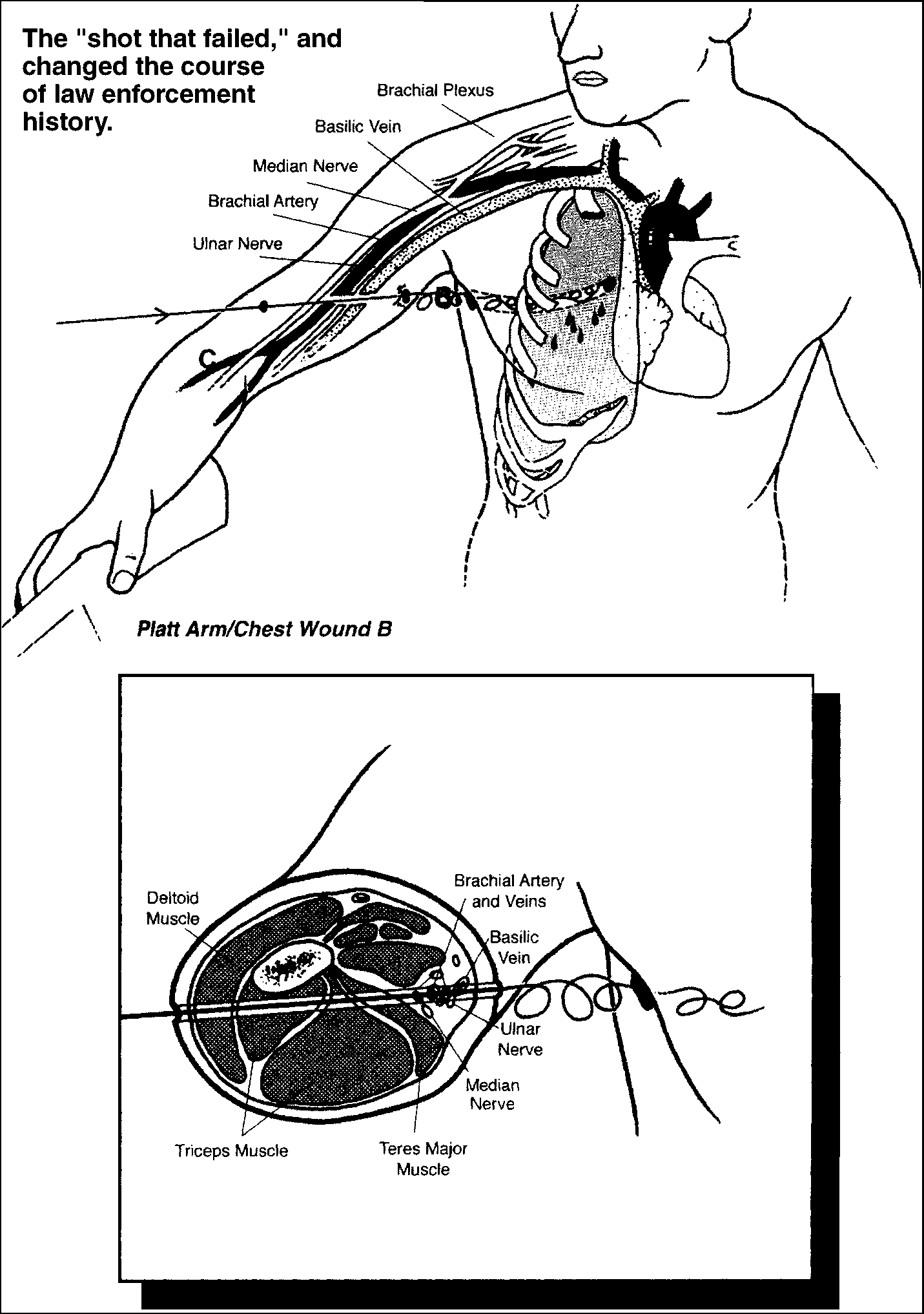
THE BULLET THAT “FAILED” ACTUALLY PERFORMED AS ADVERTISED AND PENETRATED 11 INCHES OF TOTAL TISSUE. IT NEVER HIT A BONE DURING ITS JOURNEY.
I prefer ammunition that penetrates a bare minimum of 14 inches. Even if the ammo doesn’t expand, there are few instances where unexpanded hollow points leave the targets body or even their clothing. It has just never been a problem in real world shootings to have rounds go through the intended target and hit innocent people, unless the shot is a glancing shot or a complete miss. Keep this in mind as you make your choices.
POINT OF AIM/POINT OF IMPACT TESTING
Once you choose a few ammunitions that you think will work for you, you need to test their ability to hit where you want them to hit at a variety of ranges. Not all rounds will hit in the same area, and some rounds will not stabilize well in certain barrels. Each company makes their ammo out of different ratios of lead, tin, and copper/brass. And each barrel is going to resonate with that make and design differently. At times, you may be required to take a precise shot. It will be vital to know if your carry ammo of choice tends to need a 6’o’clock hold, or if you are off in windage.
GEL TESTING
When it comes to selecting a caliber, you can also do some research on the terminal ballistics of the projectiles you are interested in. Many people turn to gel testing on YouTube to see the results of different popular carry options, and that is great. There is a lot of data out there, but you still need to be able to discern what is good information and what is not. Different tests are done with different barrel lengths, and you will have to take the time to process all that data and decide what information is most relevant for your purposes.
There are so many sources of information on the internet these days, and even you, the layman, can do these tests for yourself. You can make the gel (10% Ordnance) or just buy it outright (Clear Ballistics). One thing to remember is that Clear Ballistics gel is not going to show the same results that regular 10% Ordnance gel will. Clear Ballistics will typically show greater penetration and hollow points will not expand as reliably in the gel as they will in ordnance gel because Clear Ballistics is not water-based. Just be aware of this issue when you are looking at gel testing.
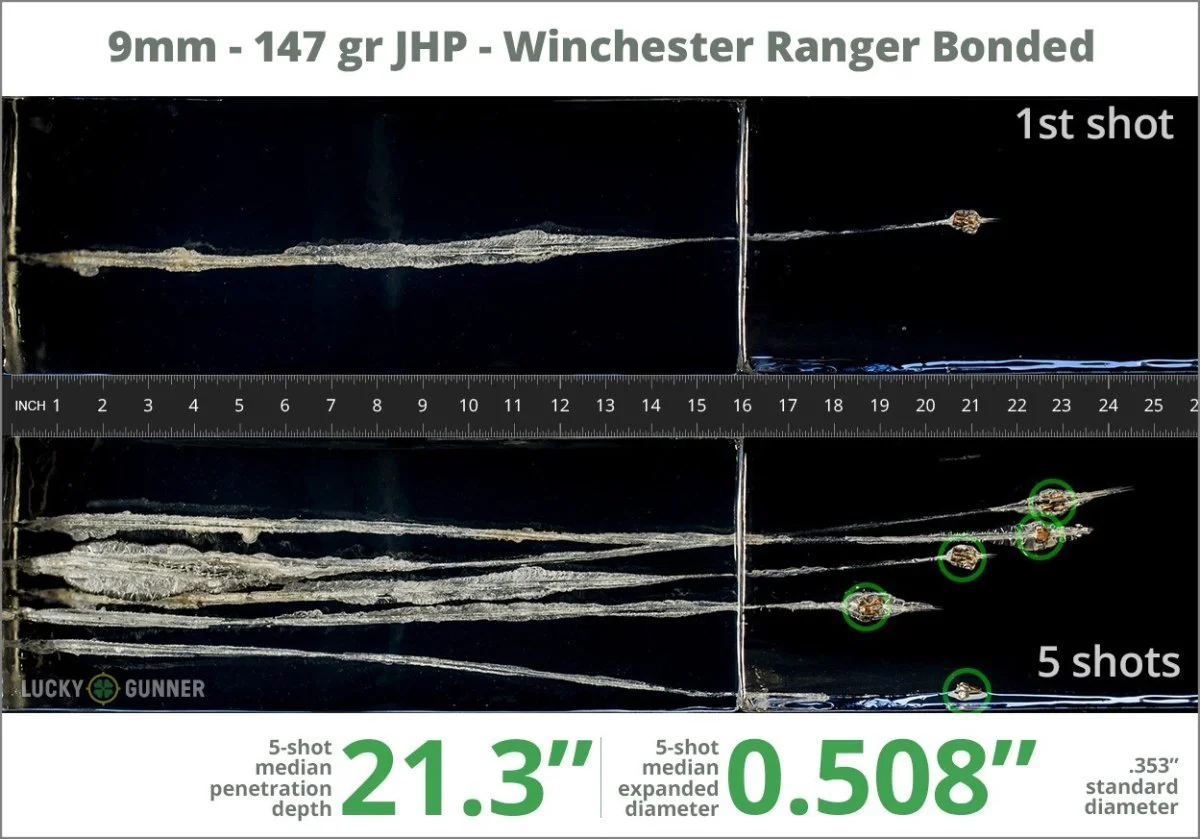
BEWARE THE HYPE OF HYPER-AMMUNITION
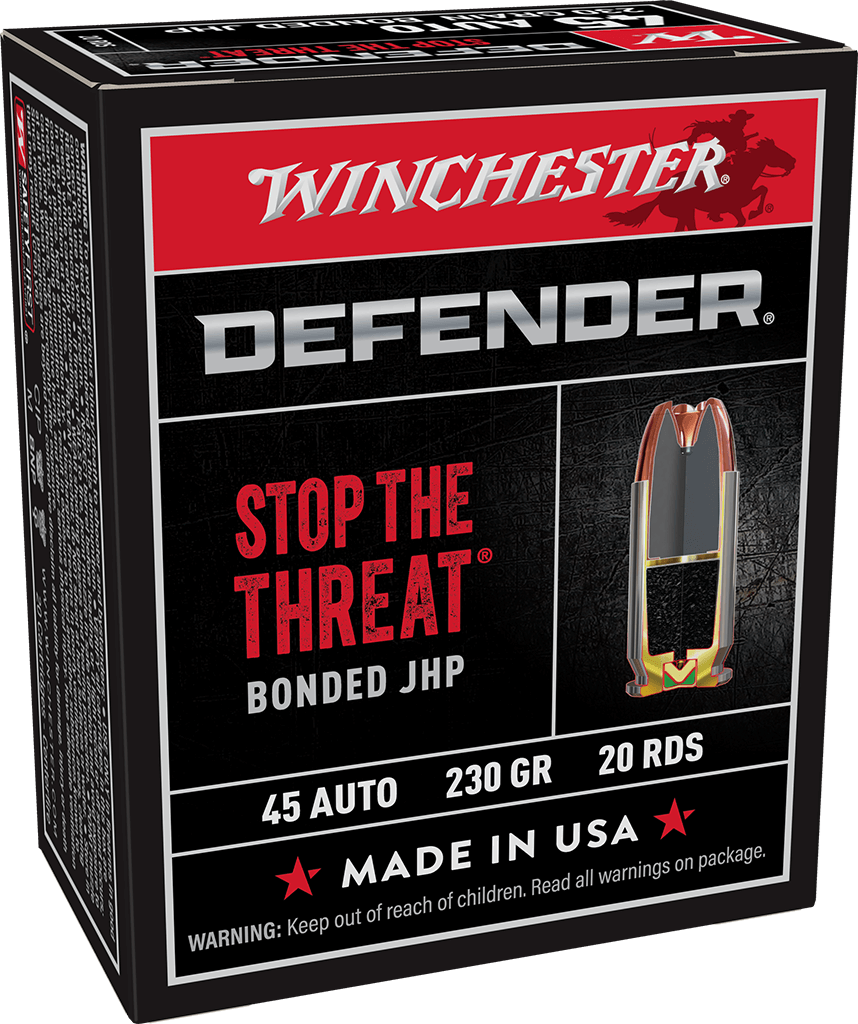
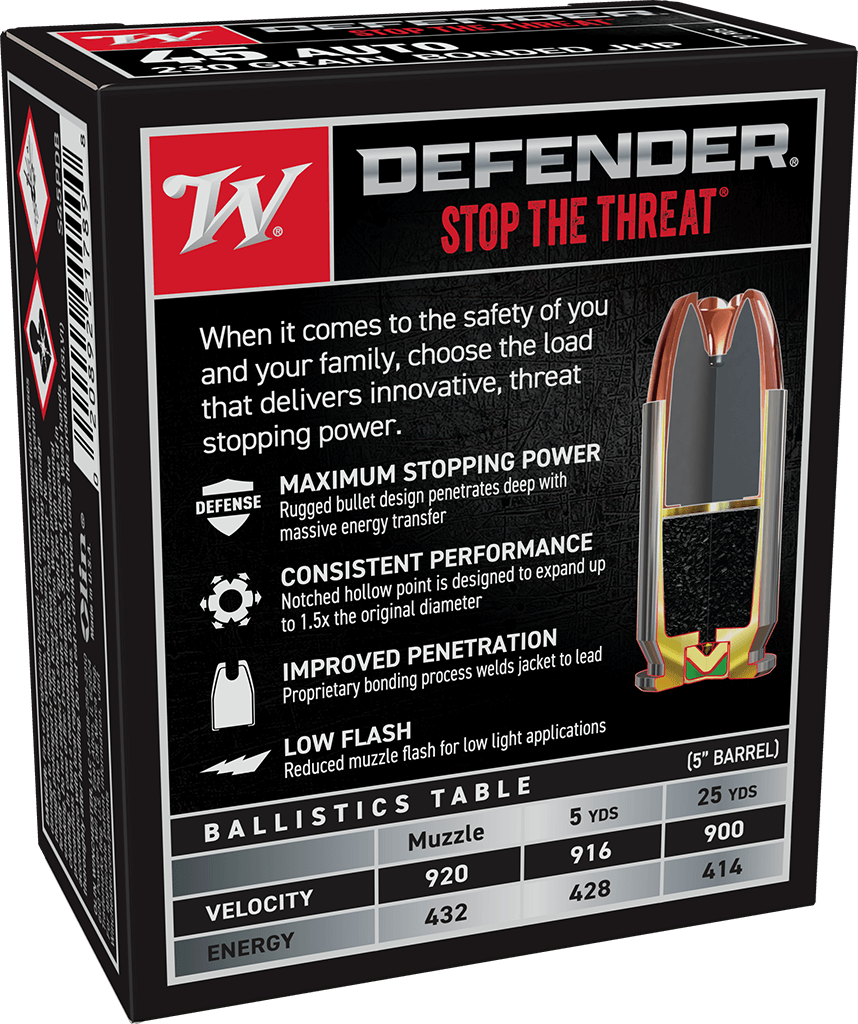
Some of the most popular ammunition selections on the market are no better than the generic hollow points. Often, these hollow points promise things like “barrier-blind performance” or “maximum stopping power” in exchange for about $1 per round, or more. Generic Hollow points are mostly non-bonded, and therefore may not perform too well through most barriers, but it is still dependable, despite being $0.50 per round. Just understand that when it comes to hollow point ammunition, price is not always a reflection of quality or promised performance. The generic hollow point ammunition made by Winchester is labelled “personal protection” on the box, noting that it is intended for use against threats. Similar ammunition by Winchester is called DEFENDER and is a bonded hollow point similar to the old school bonded Ranger T-Series.
FBI TESTING PROTOCOL
The FBI ballistics testing protocol assigns a score out of 500 points to each tested ammunition round, with higher scores indicating better suitability for use by the agency. This scoring system evaluates a bullet's terminal performance reliability through a series of tests, with the final score derived from three main components: penetration, expansion, and retained weight.
The testing involves firing 30 rounds—five shots for each of six test events: bare gelatin, heavy clothing, plywood, sheetrock, sheet metal, and laminated auto glass. The gelatin used is specifically two-day-old organic gelatin, 10% by weight, with the remainder being 140°F water, temperature controlled and acclimated to 40°F. The test is designed to simulate real-world scenarios, including penetration through common barriers like auto glass and walls.
The final score is calculated with 70% weight given to penetration depth and consistency (up to 350 points), 20% to expansion (up to 100 points), and 10% to retained weight (up to 50 points). Penetration is scored based on average depth, with points awarded as follows: 1 point for 0–11.99 inches, 8 points for 12–13.99 inches, 10 points for 14–15.99 inches, 9 points for 16–18 inches, and 5 points for over 18.01 inches. Consistency is measured by standard deviation (SD) of penetration depth, with higher points awarded for lower SD, down to 0.1 points for an SD greater than 4.5 inches. Additionally, the number of shots penetrating less than 12 inches is penalized, with 10 points awarded for no shots under 12 inches, and points decreasing from 10 to -0.5 based on the number of failures.
Expansion is scored based on the bullet's upset diameter, with 10 points awarded for a diameter of 0.625 inches (1.5x original diameter), and one point deducted for each 0.028-inch decrease below that. Retained weight is scored from 0 to 10 points, with 10 points for 98–100% retention, and one point deducted for every 2% decrease below 80%.
The final scores are calculated using the following formulas:
Penetration Score=(((Penetration Points×SD Points)×0.5)+(Shots under 12"×0.2))×50
Expansion Score=(Expansion Points×0.2)×50
Retained-Weight Score=(Retained-Weight Points×0.1)×50
The total score is the sum of these three components. The protocol is considered the gold standard for evaluating handgun ammunition for self-defense, although some argue it may prioritize performance through barriers. But depending on what you are looking for your ammo to do, you may appreciate this score, or completely omit recognizing these testing standards. Your choice, of course.
MEAT TARGET TESTING
For the layman on a budget, you can get some ingredients that are relatively inexpensive and still get good performance indicators. For the meat target, I got this test from Paul Harrell and I have found it to be a realistic and inexpensive way to test a hollow point ammunition on the cheap. The ingredients you will need are:
- 2 Pork ribs (front and back): $20
- 6-8 Pork chops (skin): $20
- Watermelon/Bag of oranges: $10
- Cotton t-shirt/hoodie: $10
- Roll of towels: $10
This is a list of ingredients and priced at the high end of prices. You can find these components for much less if you shop around, but $70 to test your carry ammunition is not a bad investment.
When testing this ammunition, a good carry ammunition will typically be able to fully penetrate the entire meat target and be stopped by the t-shirt or get caught in the outside roll of the towels. Any less penetration is not good, and any more penetration is a bit excessive and typically indicative of the hollow point not expanding.
WATER JUG TESTING
One of the cheapest and quickest ways to test a carry load is to shoot into water jugs and perform a math equation to figure out how that penetration might have turned out if done in 10% ordnance gel. This is not going to be exact, but it will be pretty good for getting a baseline understanding of whether your ammo of choice will even expand for you.
The conversion for this testing is based on the formula developed by Dick Fairburn. Take the number of jugs penetrated prior to the jug it was found in, and multiply that number by 6. Next, you add a terminal addition based on the effect it had in the last jug it penetrated.
- No mark (NM): 3”
- Marked back (MB): 6”
- Broke back (BB): 6.75”
- Marked next jug (MN): 7.5”
- Broke next jug (BN): 8”
Take this terminal addition and add it to the sum of the last equation. This will be your water penetration total.
Next you will take your water penetration and divide it by 1.55 (handgun), or 1.3 (rifle over 1800 FPS). This will give you a relative penetration that you may see in 10% ordnance ballistics gelatin. This is the least expensive way to test your ammunition and it is pretty accurate.
WRAPUP
When you are selecting your optimal carry or duty load, you need to first consider the threats you will encounter. Once you have done this, you have a clear idea of the type of ammunition you will want to invest in. This includes figuring out what kind of terminal performance you need your ammunition to have. Once you have done this, you should get a sample of each type of ammunition you want to try out. Try out their relative POI (Point Of Impact) to POA (Point Of Aim), make sure they function properly in your firearm, and then do some terminal performance of your own, if desired. Luckily, you have several options for testing that are economical and relatively accurate. Ammunition selection can be a bit of a chore, but it is important for making sure you have made a good choice in a loading that will perform for you when you need it to.