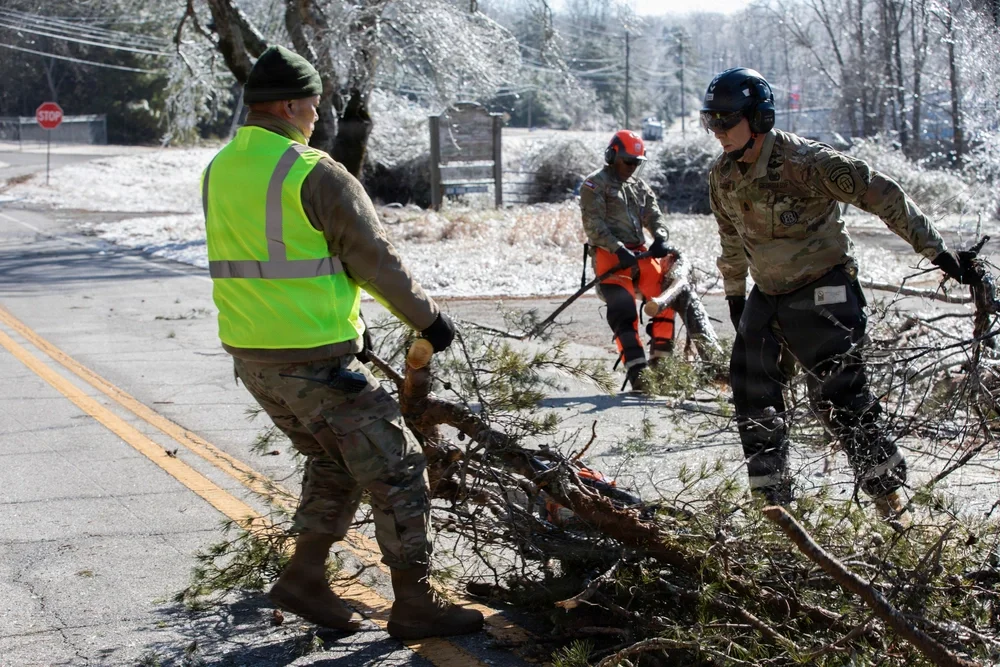
In spring 1775, as British troops marched on Lexington and Concord, local Minutemen mobilized immediately. Farmers, blacksmiths, and tradesmen sworn to be ready at a minute’s notice, they filled a frontier defense gap where no standing army existed. They defended towns until larger militia or regular forces arrived and answered town and provincial authorities, not acting as vigilantes. It was practical community defense, not ideology.
That quick-response model still matters. This piece contrasts real Minutemen with the broader militia, then examines modern legal equivalents and tactics for a 21st‑century version. From Florida’s permissive rules to California’s limits, states can authorize governor‑approved volunteer forces while preventing unregulated groups.
Historical Background: The Colonial Militia System
The colonial militia in British North America was a long-standing tradition rooted in English law and necessity. Every able-bodied man (typically ages 16–60) was required by colonial statutes to serve in his local town or county militia company. These were not full-time soldiers but part-time citizen-defenders responsible for protecting settlements from Native American raids, foreign invasions, or internal unrest. Training was minimal—usually just a few days a year (often 3–6 total)—and focused on basic drill, musket handling, and musters. Militia units could be called up by governors or town leaders for campaigns, quelling rebellions, or frontier defense. They operated as irregulars in many cases, favoring skirmish tactics over European-style line battles, but they were fully integrated into the colonial legal and governmental framework.
By the early 1770s, as tensions with Britain escalated, Massachusetts (and later other New England colonies) sought a faster-response option. In October 1774, the Massachusetts Provincial Congress formalized “minute companies” as part of a broader militia reorganization. These were not a separate or rogue force but a voluntary, select subset drawn directly from existing militia muster rolls.
Organization and Function of the Minutemen
Minutemen were volunteers—typically younger (often 25 or under), physically fit, enthusiastic, and politically aligned with the patriot cause—who agreed to be ready “at a minute’s notice.” Key features included:
Higher training commitment: Regular militia drilled a handful of days per year. Minuteman companies trained two to three times a week, sometimes more, emphasizing rapid mobilization, marksmanship, and quick-response tactics.
Compensation: They received pay for extra drills (about one shilling per half-day), unlike the unpaid standard militia service.
Structure: Organized by town into companies of at least 50 men. Officers were elected, and each unit signed formal covenants. They kept gear (musket, powder, ball) ready at home and mustered from local alarms (church bells, riders, drums).
Role: Purely defensive and localized. They handled immediate threats to settlements—French and Indian-style raids, British incursions, or emergencies—without waiting for slower full-militia call-ups. They were not meant for prolonged campaigns or large-scale offensives; that was the broader militia or, later, the Continental Army’s job.
At Lexington and Concord (April 19, 1775), the first shots involved a mix of standard militia and minutemen. The minutemen’s rapid response helped turn the British retreat into a running fight. Here’s a period engraving showing the chaos on Lexington Green—colonists (including quick-response volunteers) facing British regulars.
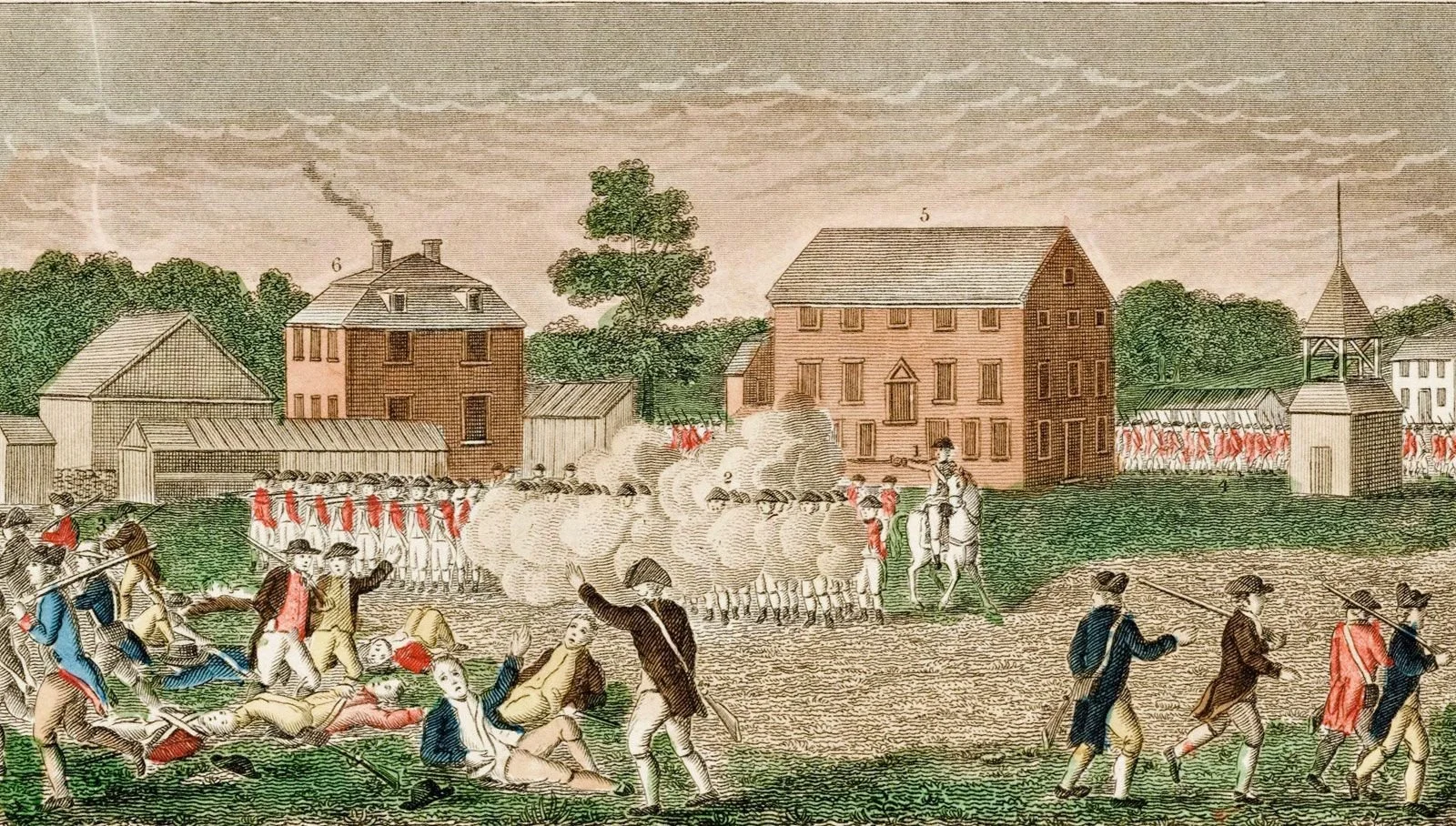
Battles of Lexington and Concord | Date, Location, Map, & Paul Revere's Ride | Britannica
And a modern reenactment capturing minutemen mustering in everyday attire, muskets ready—no pomp, just practical readiness.
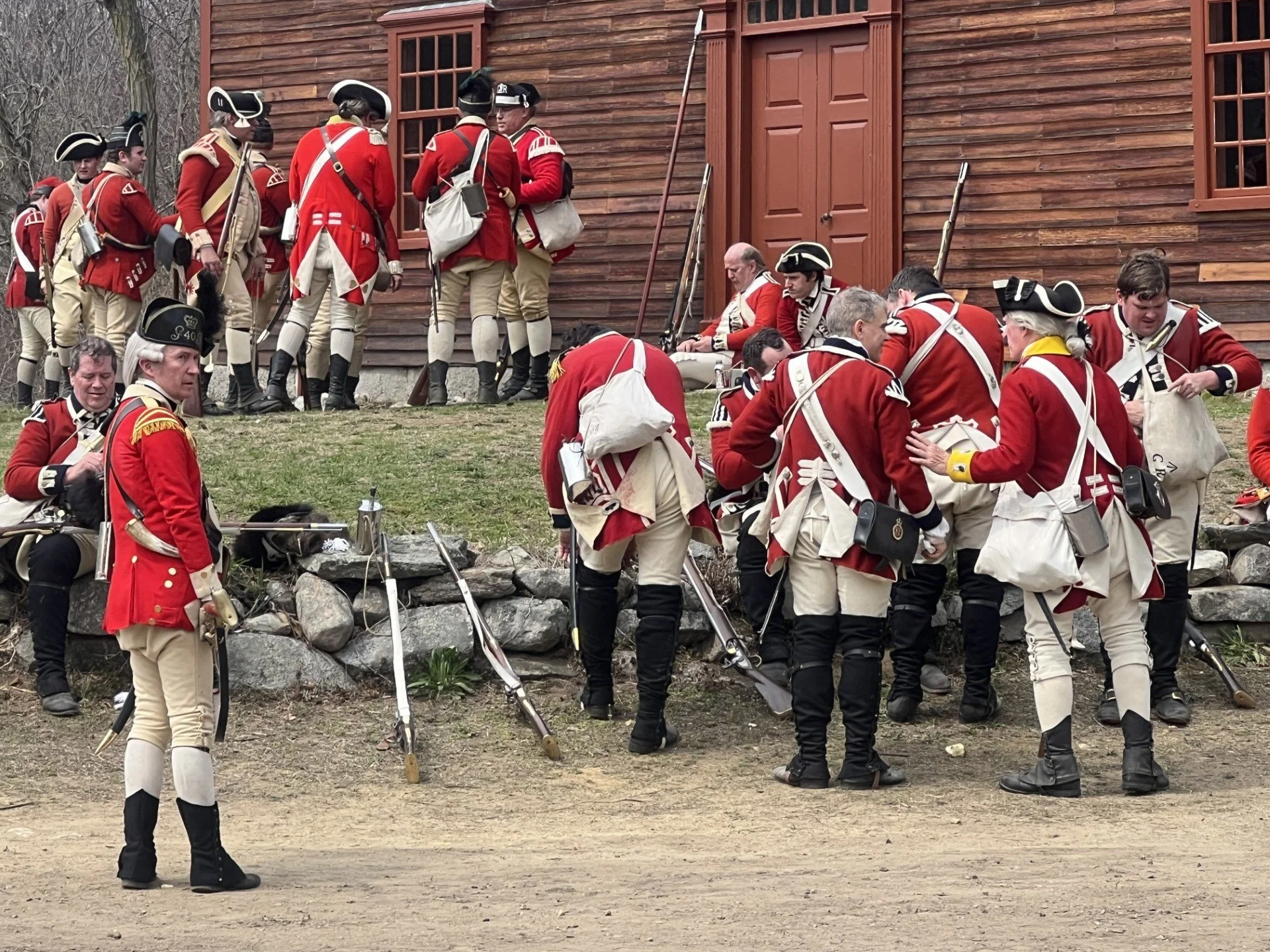
Battle of Lexington and Concord 250th Reenactment - Online Review of Rhode Island History
Key Differences: Militia vs. Minutemen
Scope and Readiness: Militia was mandatory, broad-based, and slow to mobilize (seasonal training). Minutemen were voluntary, elite-in-readiness only (a quarter of the militia), and designed for instant action.
Training and Pay: Militia got minimal drills; minutemen drilled far more frequently and were compensated for it.
Selection and Perception: Minutemen were hand-picked from militia rolls for enthusiasm and reliability—not “irregulars looked down upon,” but the go-to rapid team out of necessity. They weren’t a vanity or ideological project; they filled a gap where frontier settlements lacked standing troops.
Legal Tie-In: Both operated under colonial authority (town selectmen, provincial congresses). Minutemen were never outside the system—they enhanced it.
This was necessity-driven local defense, not nationalist ideology or self-promotion.
Current U.S. Laws and Legal Equivalents
Today’s framework is defined in federal law. Under 10 U.S. Code § 246 (Militia: composition and classes):
The militia consists of all able-bodied males ages 17–45 (plus certain females in the National Guard) who are U.S. citizens or intend to become one.
It splits into:
Organized militia: The National Guard and Naval Militia—state-controlled but can be federalized.
Unorganized militia: Everyone else in the age range—not an active force, just the legal pool for potential call-up.
Private armed groups calling themselves “militias” have no official status and often violate state laws against unauthorized paramilitary training.
The closest legal equivalent to the historical minuteman concept is State Defense Forces (SDFs), authorized by 32 U.S. Code § 109. These are volunteer, governor-only units (cannot be federalized) in about 20 states plus Puerto Rico. They handle disasters, security, search-and-rescue, and homeland defense when the National Guard is deployed elsewhere. Members train regularly, wear uniforms, and operate under strict state chain-of-command—exactly the “local, rapid-response, community-rooted” model.
Here’s a modern Virginia Defense Force team in uniform—practical, professional (YEAH, THEY LOOK LIKE WANNABES), state-sanctioned.
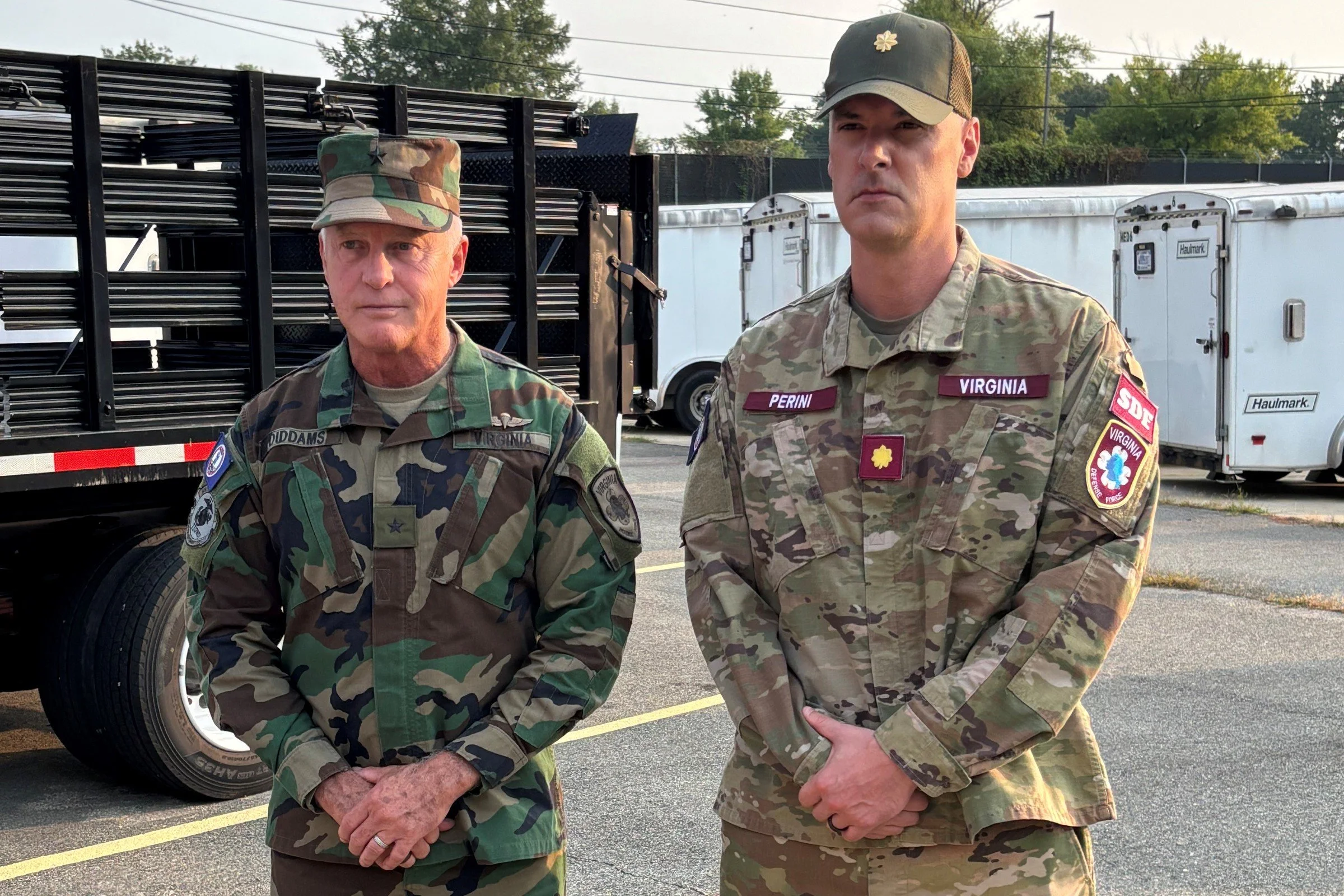
Virginia Defense Force authorized new uniforms – Virginia Defense Force
Modern Local Concepts: A 21st-Century “Minuteman” Force
Your article can pivot here to practical, legal applications: reviving the spirit as armed citizen rapid-response teams within legal structures. Think:
Local emergency response: SDF-style units or county-level volunteer auxiliaries (coordinated with sheriffs/FEMA) ready for terror incidents, active shooters, natural disasters, or civil unrest. Focus on de-escalation, medical aid, crowd control, and securing perimeters—not offensive action.
TTPs (Tactics, Techniques, Procedures): Community alert apps/radios, pre-designated muster points, basic medical kits (Stop the Bleed training), ham radio comms, and joint drills with law enforcement. Emphasize accountability: background checks, chain of command, and no lone-wolf ops.
Armed citizen role: Law-abiding locals with CCW permits acting as first responders (like an SRT/SWAT adjunct) until professionals arrive—but only under official activation to stay legal.
Risks to avoid: Steer clear of unregulated private groups. Most states ban paramilitary training outside official channels.
Modern TTPs (Tactics, Techniques, and Procedures) for a 21st-Century Minuteman Force
These are practical, legal guidelines for a localized rapid-response volunteer unit—modeled on historical Minutemen but operating strictly within state-sanctioned frameworks like State Defense Forces (SDFs), sheriff auxiliaries, or governor-activated volunteer groups. The focus is on necessity-driven defense (e.g., terror attacks, active shooters, natural disasters, or civil unrest) while maintaining chain-of-command accountability. No private “militia” ops—these assume official activation.
Alert and Mobilization: Use redundant systems—community alert apps (e.g., CodeRED or local sheriff apps), ham radio nets, SMS chains, and pre-arranged church bells/sirens. Goal: full muster in under 60 minutes at designated county points. Pre-map “rally points” tied to schools, fire stations, or armories.
Communications: Primary = encrypted apps or state-issued radios; backup = analog ham (GMRS/FRS) and runners. Train on brevity codes and no social-media leaks. SDF-style units often integrate directly with EOC (Emergency Operations Center) comms.
Training Focus: Drill 2–3 times/month (like historical Minutemen) on marksmanship, medical (Stop the Bleed, TCCC basics), de-escalation, crowd control, and search-and-rescue. Emphasize defensive posture only—never offensive tactics. Include joint exercises with local law enforcement for interoperability.
Equipment and Sustainment: Personal kit = legal firearm (per state CCW/open-carry rules), trauma IFAK, water filter, 72-hour pack, body armor (if authorized). Unit-level: shared medical trailers, generators, and comms vans. No military-grade surplus without SDF approval.
Roles in Scenarios:
Terror/Active Shooter: Secure perimeters, provide first-aid until SWAT arrives, assist evacuation under LE direction.
Natural Disaster: Traffic control, supply distribution, SAR teams—exactly what Florida State Guard does during hurricanes.
Civil Unrest: De-escalation teams (non-lethal focus), protect critical infrastructure only when activated.
Command, ROE, and Accountability: Strict chain-of-command (elected officers report to sheriff/governor). Rules of Engagement = deadly force only in self-defense or to protect life per state law. Mandatory background checks, body cams, and after-action reports. No lone-wolf or ideological ops.
Community Integration: Partner with local government—background vetting, public transparency reports, and “serve the community” ethos. Avoid politics; focus on real threats.
These keep the Minuteman spirit (localized, volunteer, rapid) without crossing into illegal private paramilitary territory.
Sample Legal Comparison: Florida (Permissive Framework) vs. California (Restrictive Framework)
Both states maintain official State Defense Forces (the closest modern legal equivalent to Minutemen—volunteer, governor-controlled rapid-response units). Private groups have no official status in either; unauthorized paramilitary activity is restricted everywhere. Florida’s environment is far more open for armed citizen response and training; California’s is among the strictest.
Florida (often called one of the most permissive states for firearms and volunteer defense):
Official Minuteman Equivalent: Florida State Guard (FSG) is fully active (revived 2022, expanded to ~1,500 members by 2025–2026). Volunteer force under the governor only—cannot be federalized. Handles disasters, security, and emergencies. Members train regularly, wear uniforms, and get state pay when activated. Applications open year-round; focus on rapid local response.
Private Militia/Paramilitary Rules: Unauthorized military organizations are banned (Fla. Stat. § 870.06—misdemeanor to drill/parade with firearms in public without governor’s license and local approval). Paramilitary training is a felony only if intended “for use in, or in furtherance of, a civil disorder” (Fla. Stat. § 790.29). Training for lawful self-defense, hunting, or recreation is explicitly allowed.
Firearms/Response Context: Constitutional carry (no permit needed), open carry legalized in many settings (2025 updates), stand-your-ground law. Armed citizens can legally respond in self-defense or as part of authorized auxiliaries, making a “pseudo-SWAT” local capability far more feasible.
California (among the most restrictive):
Official Minuteman Equivalent: California State Guard (CSG) exists and is active—integrated with the California Military Department. Volunteers (mostly unpaid) provide civil support, training, and readiness under the governor. Focus on disaster aid, force protection, and interagency work. Members can be called for Emergency State Active Duty.
Private Militia/Paramilitary Rules: Extremely tight. Penal Code § 11460 makes it a misdemeanor (up to 1 year jail + $1,000 fine) for two or more people to assemble as a “paramilitary organization” for weapons practice, or to teach/demonstrate firearms/explosives “knowing or intending” they will be used in civil disorder. Also bans training in guerrilla warfare/sabotage/rioting. Private groups cannot legally drill or train together in tactical formations.
Firearms/Response Context: Strict permitting, assault-weapon bans, high-capacity magazine limits, red-flag laws, and no constitutional carry. Open carry heavily restricted. Armed citizen response is legally riskier; any coordinated group training can trigger charges even without violence.
In short: Florida allows more breathing room for organized, legal volunteer rapid-response teams (via FSG or permitted drills). California’s laws effectively shut down private paramilitary-style activity, pushing everything through official channels only.
WRAPUP
The 1775 Minutemen were ordinary citizens who trained because their towns had no other protection. That local, need‑based spirit should shape modern community defense.
State Defense Forces—volunteer units run by governors—already fill this role: disaster response, security, and quick reaction without federal control. With clear procedures (redundant alerts, medical and de‑escalation training, firm command, and legal coordination with police) they can bring the Minuteman idea into today’s law.
State law matters. Permissive states like Florida allow State Guard units and lawful self‑defense training to build quick‑response capacity; restrictive states like California keep such activities inside official agencies. Both can work if they are accountable, non‑political, and integrated with government.
The point: effective citizen defense is not unregulated militias chasing attention. It is organized, trained, local volunteers who act responsibly. Any revival should be based on true history, clear law, and practical procedures—readiness, restraint, and responsibility.