IRON SIGHTS: COMBAT-PROVEN & EMP-PROOF
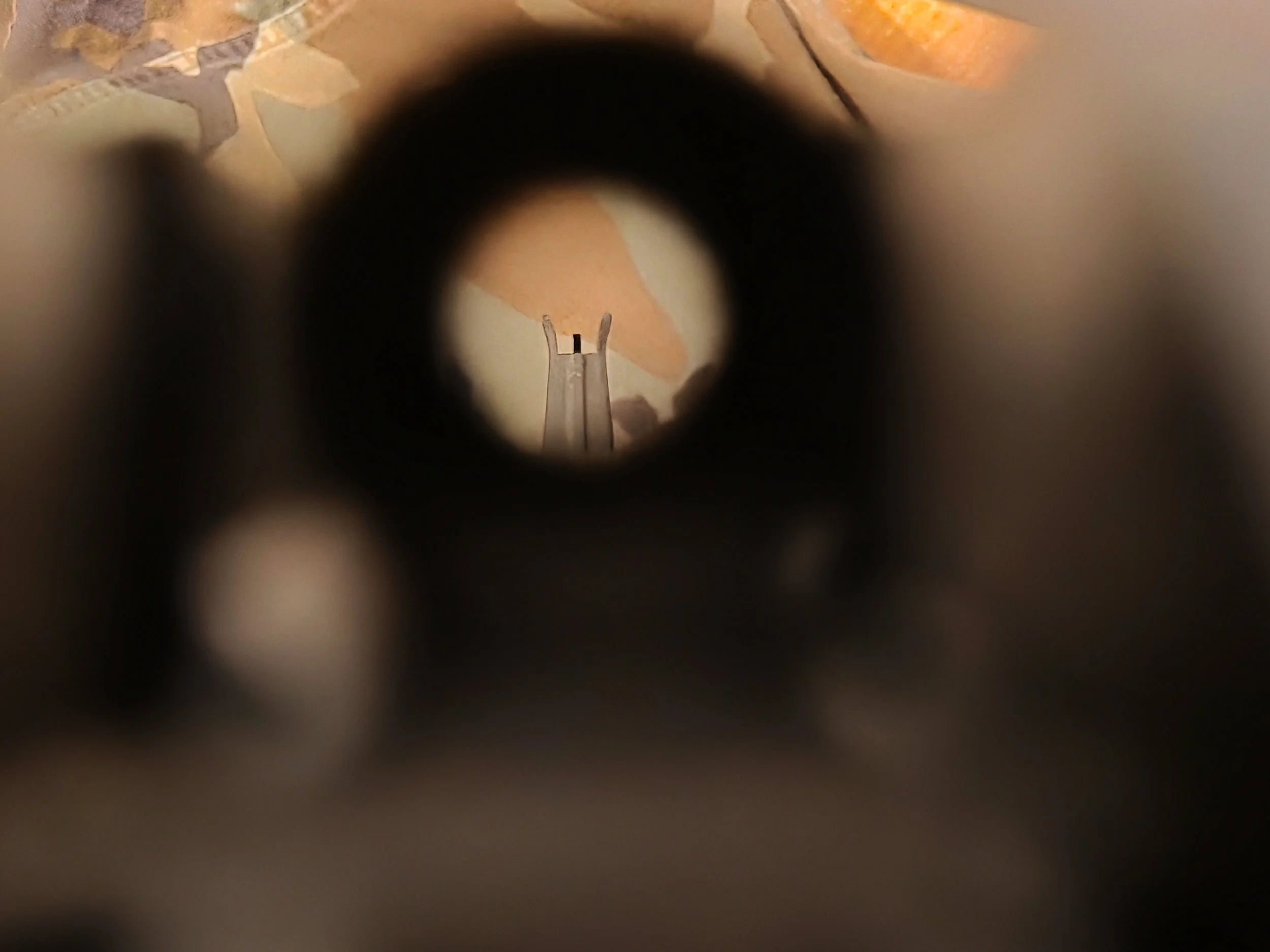
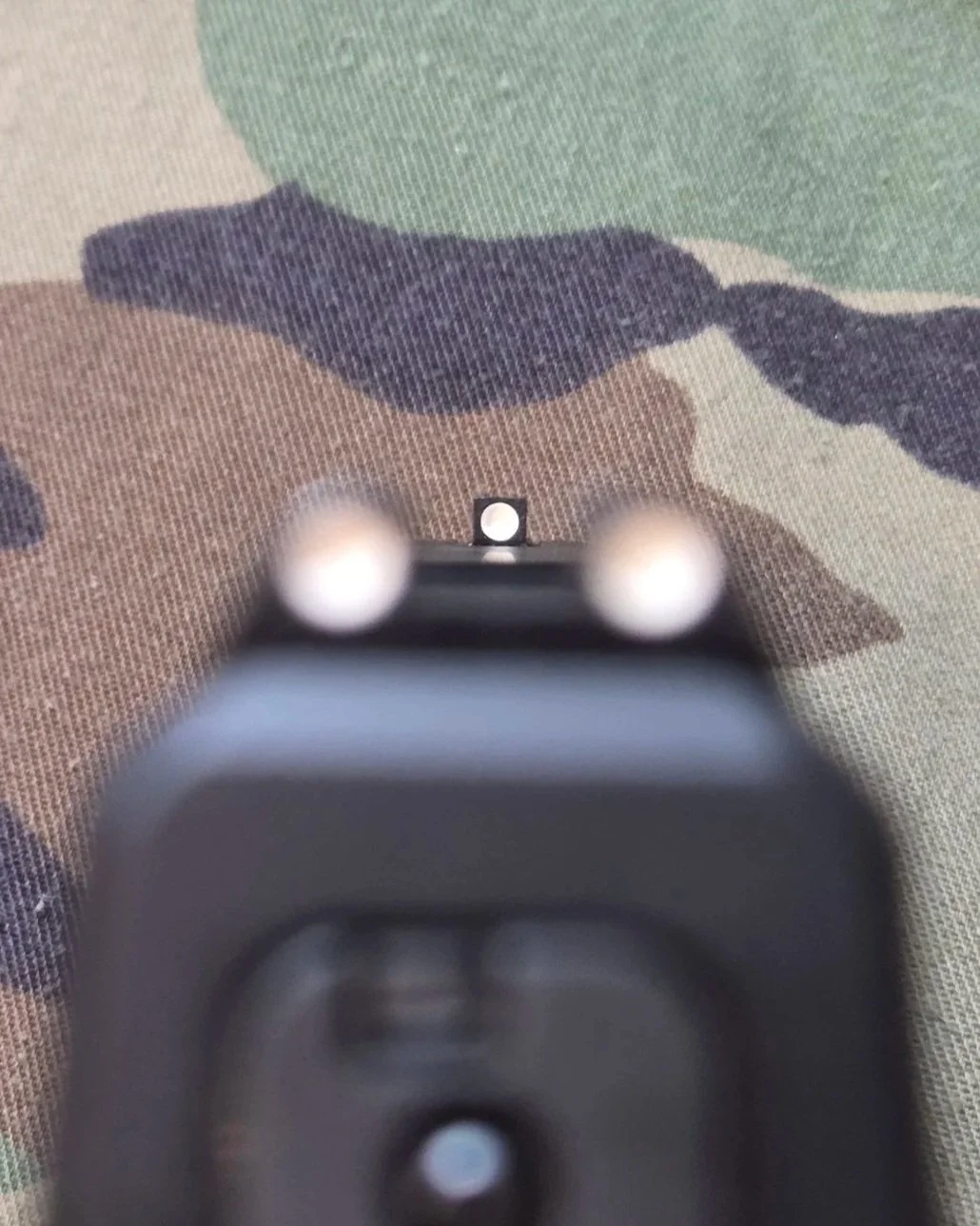
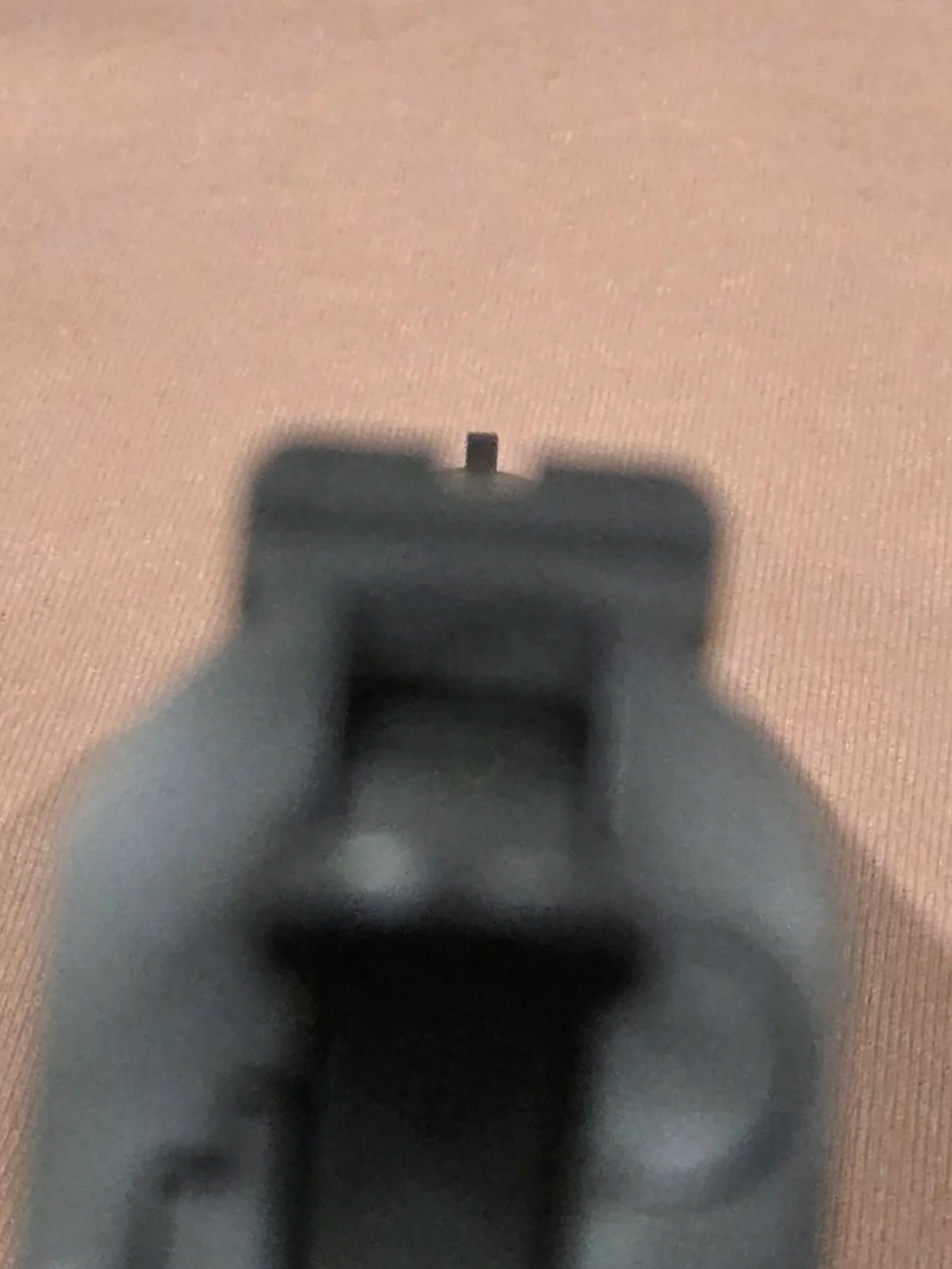
In an era where red dots, holographic, and prism sights dominate gun culture, iron sights are often dismissed as relics. Our military's tech push has trickled down to civilians, promising faster target acquisition and easier hits. But is that true, or are we substituting gadgets for genuine skill? This article explores the enduring value of iron sights, their real-world track record, and why they remain a smart choice for reliability—especially in scenarios where tech fails. Let's dive in.
MY HISTORY
My journey with iron sights started simple. As a kid, my first rifle was a .22LR bolt-action with quirky irons calibrated for a 6 o'clock hold at 25 yards. It taught me alignment the hard way—no batteries, no excuses. Joining the Marines, I qualified on the M16A2's classic irons in Boot Camp. Speed and precision came naturally; I felt in control.
But at SOI (School of Infantry), they handed me an M16A4 with an ACOG. Ironically, the carry-handle irons came in a padded MOLLE case—but we weren't allowed to mount them. It was all optics from there. Post-military, I've experimented with every sight option: red dots, LPVOs, you name it. What I've learned? Iron sights still have a place. They're not inferior; they're different. The key is mastering their optimal use, which often means stripping back the tech to rebuild fundamentals.
Have you ever shot irons after months on optics? You may be surprised by your performance after the transition? You may realize how unessential red dots are after going back to simple pistol iron sights.
EXCUSES VS REALITY
I often hear shooters claim they "need" a red dot because of "bad eyes." If vision is so impaired that aligning irons feels impossible, how do you even identify a target? In competitions, where courses are pre-walked and silhouettes are blurry cardboard, it's forgivable. But in real-world concealed carry or defense, visual acuity matters.
That said, this claim can be controversial—it's easy to sound dismissive of genuine impairments like astigmatism, which can blur red dots too. The truth? Many "bad eyes" excuses evaporate when people try irons properly. I've seen shooters with claimed vision issues perform fine on irons after a few sessions. It's not about eyesight alone; it's about practice. Red dots lower the initial curve for some, but they don't replace skill.
Factual check: Studies from the American Academy of Ophthalmology note that 20-30% of shooters have astigmatism affecting dots, making irons a viable alternative. If "need" is your word, ask: Have you timed yourself on irons lately?
OPTICS AREN’T UNIVERSAL
Optics adoption isn't as widespread as U.S. trends suggest. While militaries consume ~68% of the global firearm sight market (per Mordor Intelligence 2025 data), battery-dependent optics like prisms or red dots are concentrated in advanced forces—primarily NATO and allies (about 10-15 nations, or roughly 5-8% of the world's ~195 militaries, based on RAND and NSSF estimates). Most forces stick to irons due to cost, logistics, and reliability.
In Ukraine's conflict, iron-sighted rifles dominate. Reddit threads and YouTube analyses (e.g., "Why Russian Soldiers Are Often Seen Without Optics," Jul 2025) highlight supply gaps: Optics are expensive, and Ukraine's forces rely on donated or scavenged gear. Even Holosun AEMS dots appear sporadically; many AKs and M4s run irons only. AR15.com forums note: "Lots of iron sighted rifles... optics are almost exclusively red dots, and not high end."
Elsewhere, French forces on Operation Sentinel patrol with HK416 irons (21st-century standard), and Croatian VHS-2 rifles often ship without the built-in magnifier. Even as NATO modernizes (e.g., replacing aging systems for M4 compatibility), training budgets lag behind tech spending. Skills earned in blood—like WWII irons proficiency—are forgotten amid gadget reliance.
The cost? Optics demand batteries (holographics last ~1,000 hours, red dots 30,000+), vulnerable to temperature, supply chains, and failure. Irons? Zero dependencies. In a new cold war era, this gap matters.
What global conflicts have you followed? Do optics seem like a luxury or necessity there?
EMP-PROOF
No electronics means no vulnerability to electromagnetic pulses. An EMP—from solar flares or nuclear detonations—could fry battery optics, rendering them useless (per U.S. Department of Defense reports on EMP threats, 2024). Red dots and prisms rely on circuits; irons are mechanical steel.
Factual context: RAND studies estimate 9% of global batteries are military-grade, but optics failure in EMP scenarios is near-total without shielding. In Ukraine, where power grids falter, irons prevail. For concealed carry, imagine an urban blackout—your irons keep working when dots blink out.
Pro tip: Paint your front post (Caveman Red Dot) for visibility—acrylic or nail polish does the trick. But that's just a teaser; full drills belong elsewhere. Is EMP a real concern for you, or overhyped prepper talk?
WRAPUP
Optics have their place, but iron sights build fundamental skills that optics can't replace. In a world that chases the latest tech, remember this: both modern conflicts and history consistently prove that irons work. Whether you need EMP resilience, lower cost, or straightforward, reliable proficiency under stress, iron sights remain combat-proven and indispensable.