9MM VS .40S&W VS .45ACP
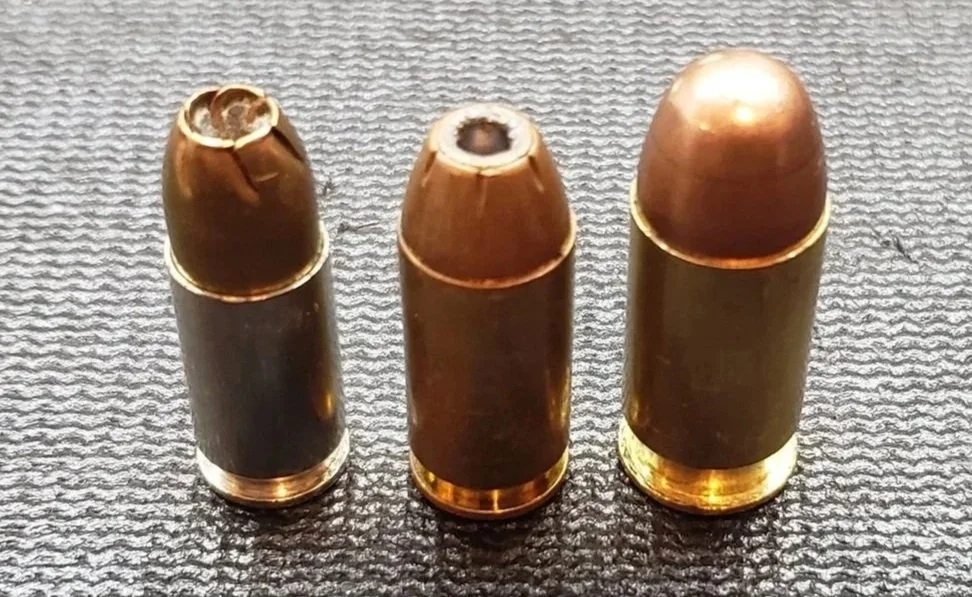
With the 9mm now firmly established as the top choice for civilians, law enforcement, and the military alike, it’s worth taking a closer look at how other popular calibers compare in terms of performance and practicality. How does the time-tested .45 ACP measure up against the 9mm in today’s context? And what about the newer .40 S&W—does it still hold any advantage or relevance? Are these calibers considered equally useful for modern defensive needs, or have they become somewhat outdated in the evolving landscape of self-defense ammunition?
CAPACITY
The 9mm has always maintained a distinct advantage, primarily due to being the smallest caliber widely used in handguns. Even way back in the 1920s, when the Browning Hi-Power was first introduced, its very name highlighted its standout feature: a high ammunition capacity compared to other pistols available at the time, such as the Luger and the 1911. While the 13-round capacity of the older Browning Hi-Power was impressive for its era, most people today would consider it somewhat anemic when compared to the significantly higher capacities offered by many modern pistols currently on the market.
The .45 ACP is a classic and time-tested cartridge design that traces its origins back to the dependable and widely respected .45 Long Colt. From the very beginning, the .45 caliber round has been trusted and valued primarily for its impressive terminal performance and stopping power. Even during the Global War on Terror (GWOT), special forces frequently relied on the well-proven World War II-era 1911 pistols, hoping to maximize their lethality on the battlefield. One of the most significant challenges this caliber has consistently faced is its inherently large and bulky size. Not only does this necessitate a thick magazine, but the firearm itself must also be equally large and robust to effectively handle the cartridge’s substantial power. The Glock 21 serves as a prime example of a modern pistol that offers a reasonable magazine capacity in .45 ACP while maintaining as compact and manageable a package as possible for practical carry and use.
The .40 S&W is the newest kid on the block, developed as a slightly watered-down version of the powerful 10mm cartridge. The intention behind its creation was to deliver 10mm-level performance in a 9mm-sized duty pistol. This concept proved successful, and today the .40 S&W was widely regarded as the “Goldilocks caliber.” It offers a balanced combination of strong performance and magazine capacity that is only moderately lower than that of the 9mm, making it a popular choice for duty carry.
PRICE & AVAILABILITY
The 9mm is generally regarded as the most cost-effective option when it comes to practice ammunition, especially when evaluating the price per round. If you are purchasing by the case and acquiring multiple cases at once, this strategy tends to make sound economical sense. When shopping around carefully and keeping an eye out for deals, you can quite easily find a case of 9mm ammunition for around $200, which is very attractive for most shooters. However, this changes if you are looking for a very specific type or brand of ammo, as is my preference. For example, I favor the Winchester 115gr FMJ flat nose round, which is hotter and performs more like NATO spec ammo, often reaching velocities in excess of 1300 feet per second. This particular round typically sells for about $260 per case at most retailers. One of the biggest challenges with popular cartridges like the 9mm, though, is that their availability is highly sensitive to market pressures. During sales events or periods when the public grows anxious about potential new gun control legislation, 9mm ammo is almost always the first to disappear from store shelves due to rapid buyouts.
The .40 S&W comes in a bit more expensive, in general. It will typically cost about $0.30/round or more, depending on the brand you are wanting. Luckily, the .40 S&W seems to be relatively panic-proof in price and availability because it is always there when a gun control threat causes panic-buying. This is also true for the price and availability of weapons as well. Since .40 S&W is less popular and it has served in Law Enforcement all over the country, you can get a fairly decent pistol for only a few hundred bucks. That is a huge steal, if you include the whole package.
The .45 ACP is not too far behind the .40 S&W in terms of price per round, making it a reasonably affordable option for many shooters. In my experience, I have had luck finding it for around $0.35 per round when shopping around and comparing prices. When it comes to panic-proof availability, the .45 ACP falls somewhere between 9mm and .40 S&W. You can generally expect it to be on store shelves, but it might be slightly more challenging to find your specific brand or preferred type of ammunition. Typically, all the cheaper bulk ammo gets snapped up quickly during the initial rush of panic buying. For that reason, it’s wise to invest in a solid stockpile of both practice and defensive ammunition well ahead of time to ensure you’re prepared.
When police departments are considering the price of ammunition, they are having to buy ammunition to cover training, and qualifications for the whole department. In cases for large departments, like the LAPD, you could be looking at contracts that may be swayed by 5 cents per round. If you have a department of 500 officers, and you estimate 5 cases (5000 rounds) per officer per year, you could be looking at a difference of $75K/year. This is not even considering the price of hollow point ammunition.
For myself, I have noticed that all three of these calibers are economical in generic hollow point ammunition.
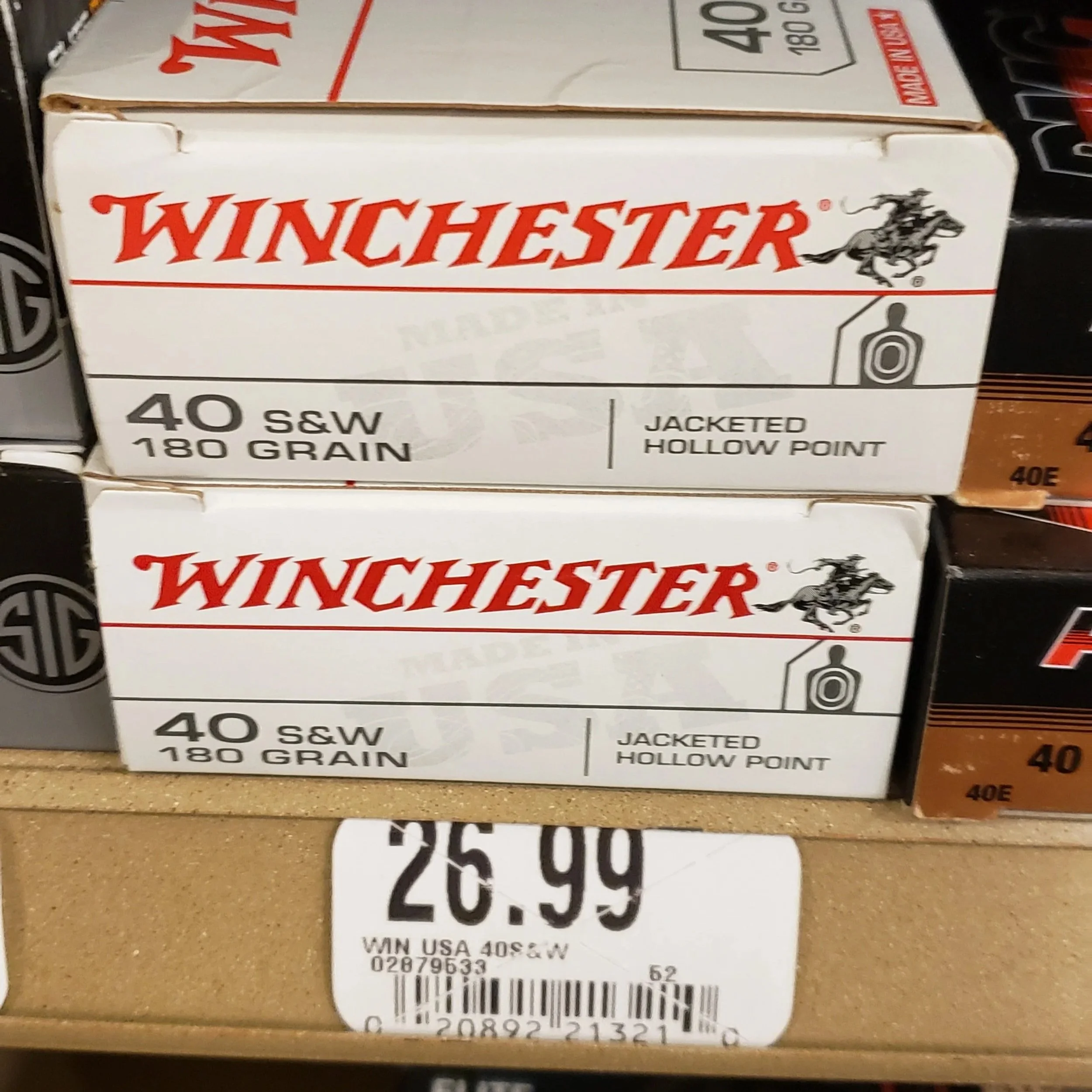
Even in brand name ammunition, I have found no advantage in one caliber as far as price. Keep in mind that 1000 rounds of 9mm 115 grain Winchester White box JHP will cost the same as the .40 S&W 180 grain JHP equivalent. The difference is that the .40 ammunition seems to test well through all FBI terminal ballistics tests. The .45 ACP ammunition also seems to perform well in testing and goes for the same price.
RECOIL CONTROL
The 9mm is widely lauded as being one of the most controllable and versatile combat pistol calibers available on the market today. It is chambered in a broad range of pistol sizes, from large duty-sized pistols used by law enforcement and military personnel to tiny micro-compact pistols that are small enough to conveniently conceal in your pocket. Naturally, as the overall size of the pistol decreases or the firearm platform becomes lighter, the felt recoil experienced by the shooter tends to increase. This effect is simply a matter of physics in action. However, shooters and manufacturers have developed several effective methods to significantly reduce or even virtually eliminate recoil, such as the use of muzzle brakes, compensators, and selecting lower powered ammunition loads. It is important to note, though, that while these techniques can reduce recoil, they may also come with trade-offs that could affect other aspects of performance or terminal ballistics.
The .40 S&W is known as being a “snappy” cartridge that can be somewhat difficult to control. However, remember that this cartridge was originally ‘watered down’ from 10mm until it was considered controllable. The majority of people having an issue with the cartridge recoil are receiving improper training, or are shooting a platform not designed to handle the loading. The Glock, in the earlier generations, were not very well built to handle the .40 S&W cartridge because the platform was barely designed to handle the 9mm NATO. It wasn’t until recent generations of the platform that Glock started adapting the pistols to handle the .40 S&W reliably. In general, I have found that a proper grip on a .40 S&W will yield favorable control and not damage your shooting efficiency to any truly measurable degree.
The .45 ACP is considered to be somewhat less “snappy” when compared to the .40 S&W, but to make up for that lack of snap by giving the shooter an authoritative “push” and muzzle flip. Some people find this to be equally distressing to shoot, but most people seem to think that .45 ACP is slightly easier on the hand than .40 S&W, but still too stout to be comparable to the 9mm. Some people love shooting .45 ACP because they say they can tell they are shooting something substantial., and somehow the recoil felt gives the shooter confidence that the terminal effects of their ammunition is equally substantial. You be the judge on that one.
TERMINAL PERFORMANCE
Terminal performance is a tough subject to cover, because bullets tend to do strange things once they leave the barrel of a gun. However, I think it is interesting to note that there are a couple of standards that I have for performance that may help this debate slightly. First standard I have is making sure that the ammunition in question does not deviate off the intended trajectory.
The concept behind intended trajectory is that when you aim for a specific spot on the body, it is because you have a clear understanding of the underlying anatomy in that area—including the layers beneath the skin such as muscle, fat, and bone. This knowledge allows you to target vital organs accurately. If a bullet deviates from its intended trajectory, it means that it has strayed off course and missed the precise organs or structures it was meant to affect.
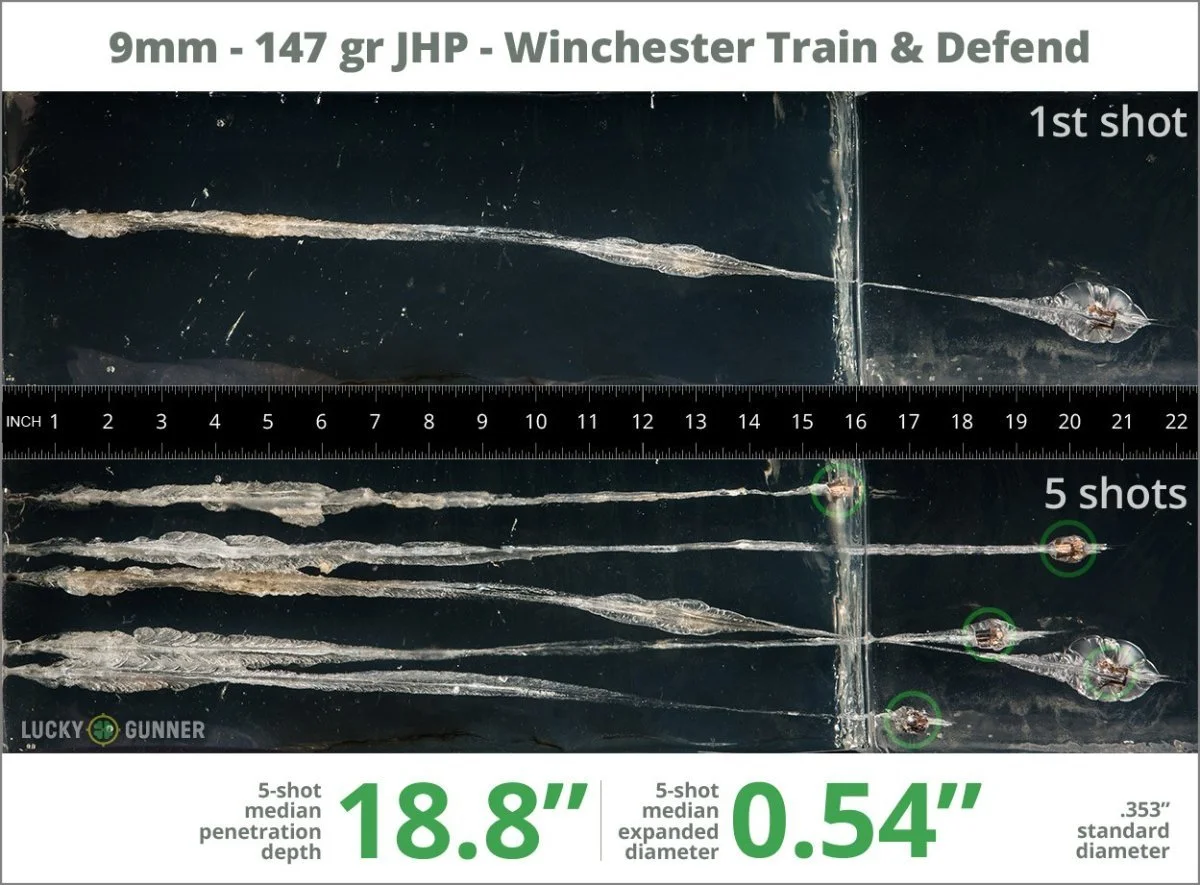
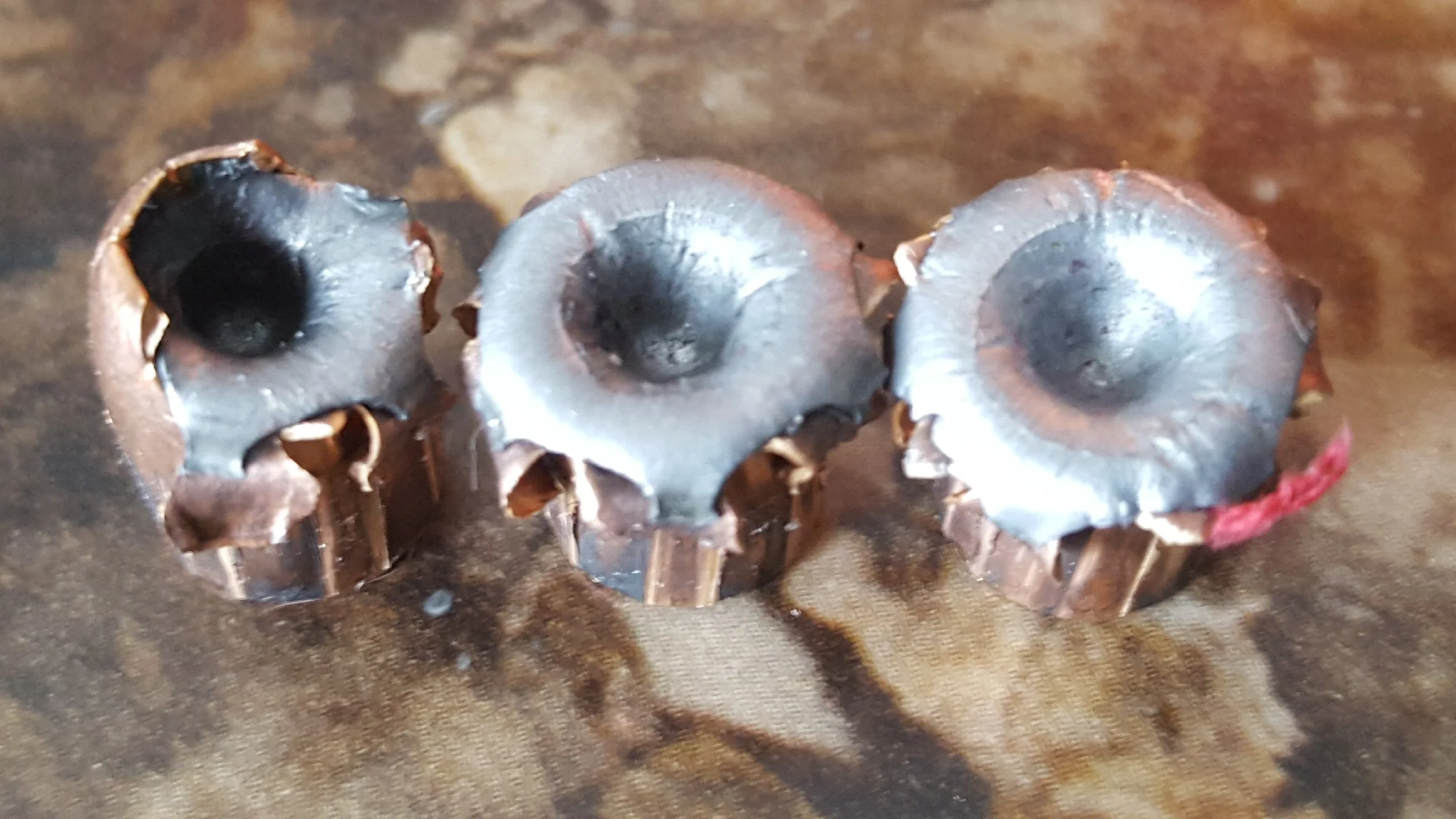
Of all the three calibers listed, the 9mm has the worst record for terminal performance. It either falls short in penetration, deviates off the intended trajectory, or fails to deliver lethal performance through barriers. This is even the case in the heavy for caliber 147 grain hollow point projectiles launched from full size duty pistols. Gel tests tend to show the 9mm performing very well in virtually any medium, but one thing all the tests show is how it has an issue staying on course.
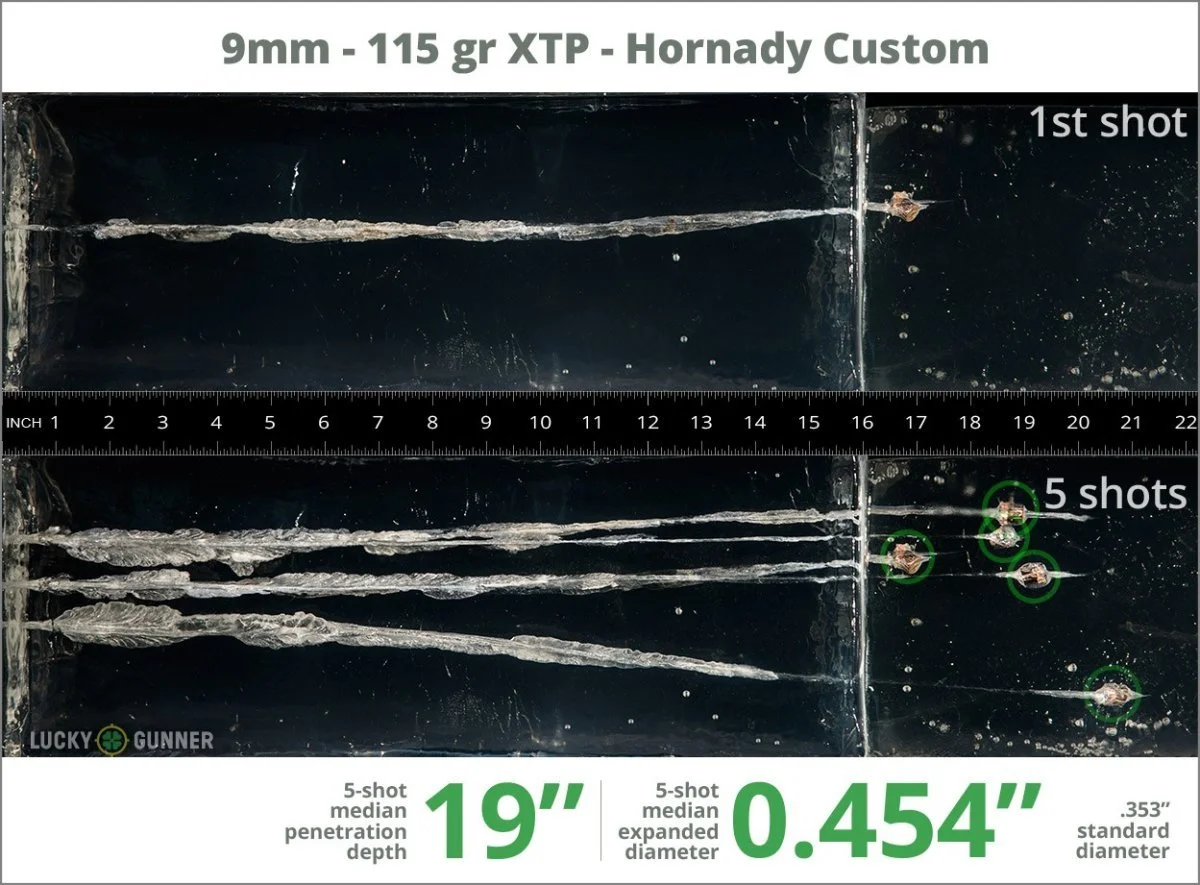
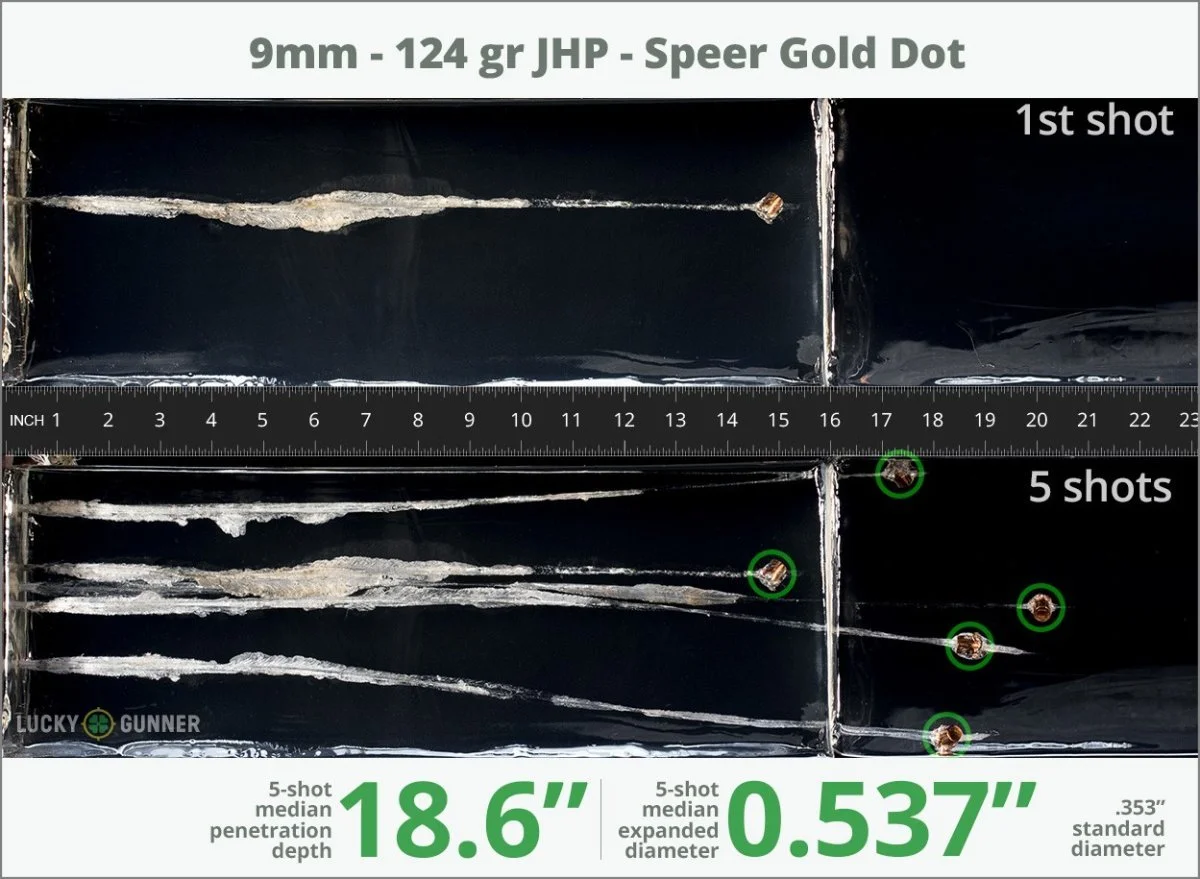
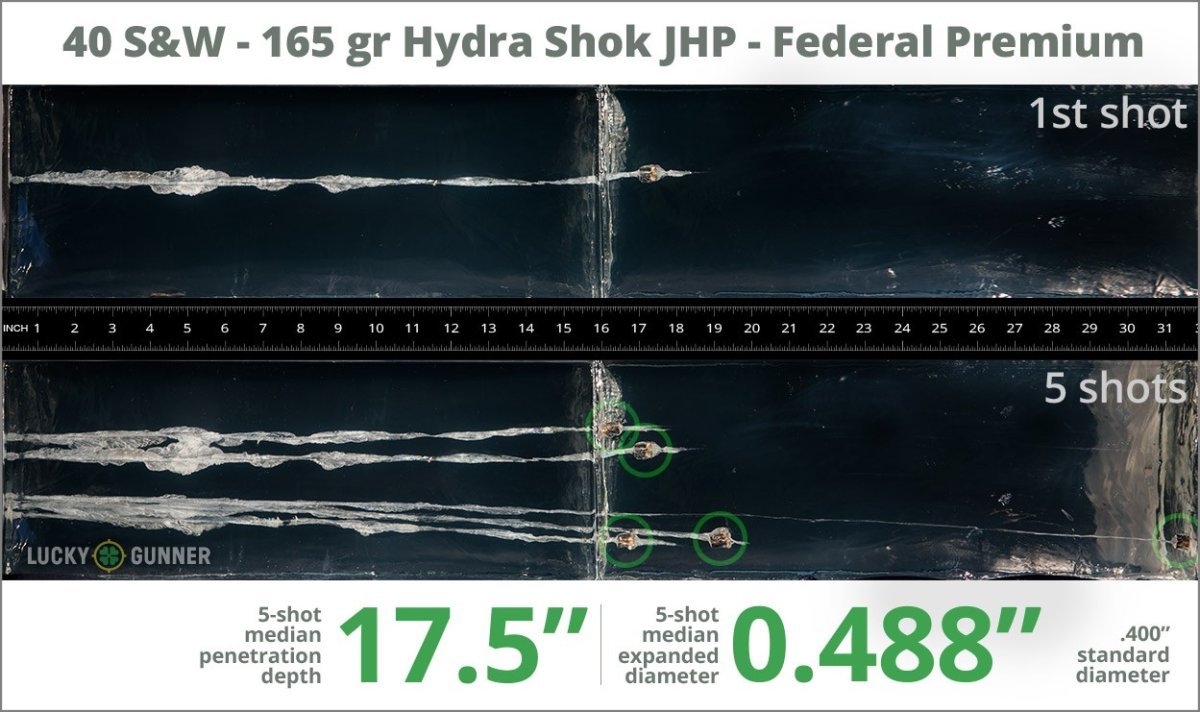
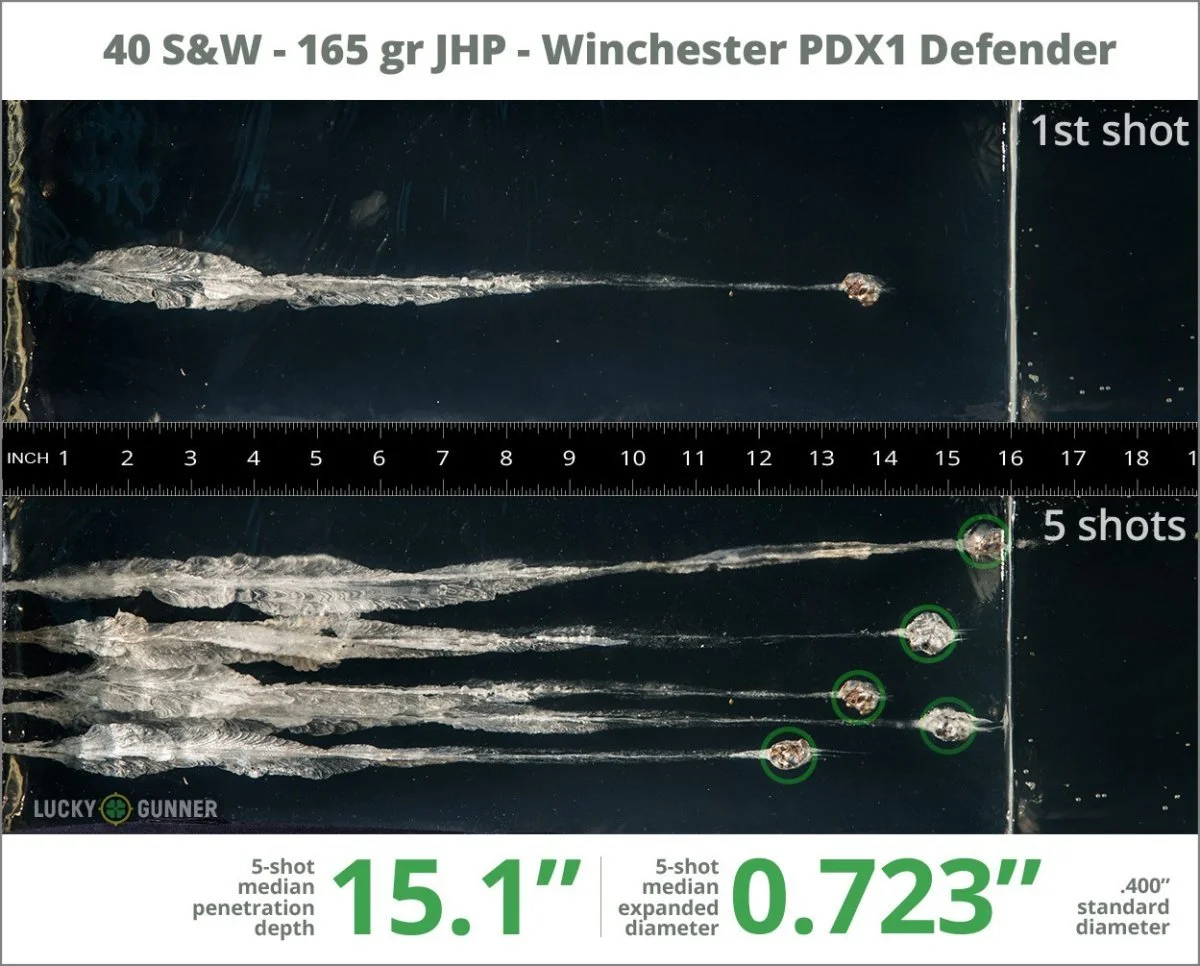
The .40 S&W offers noticeably better performance when shooting through barriers compared to the 9mm, as it maintains its trajectory more reliably and penetrates obstacles with greater consistency. In my experience, the .40 S&W truly excels only when using heavier projectiles for its caliber, typically in the 165 and 180 grain range. The encouraging aspect is that even generic hollow point ammunition in .40 S&W caliber tends to perform exceptionally well, especially when fired from full-size and compact pistols, providing solid stopping power and reliable expansion. This is a huge benefit during times when self defense ammunition is a bit harder to come by.
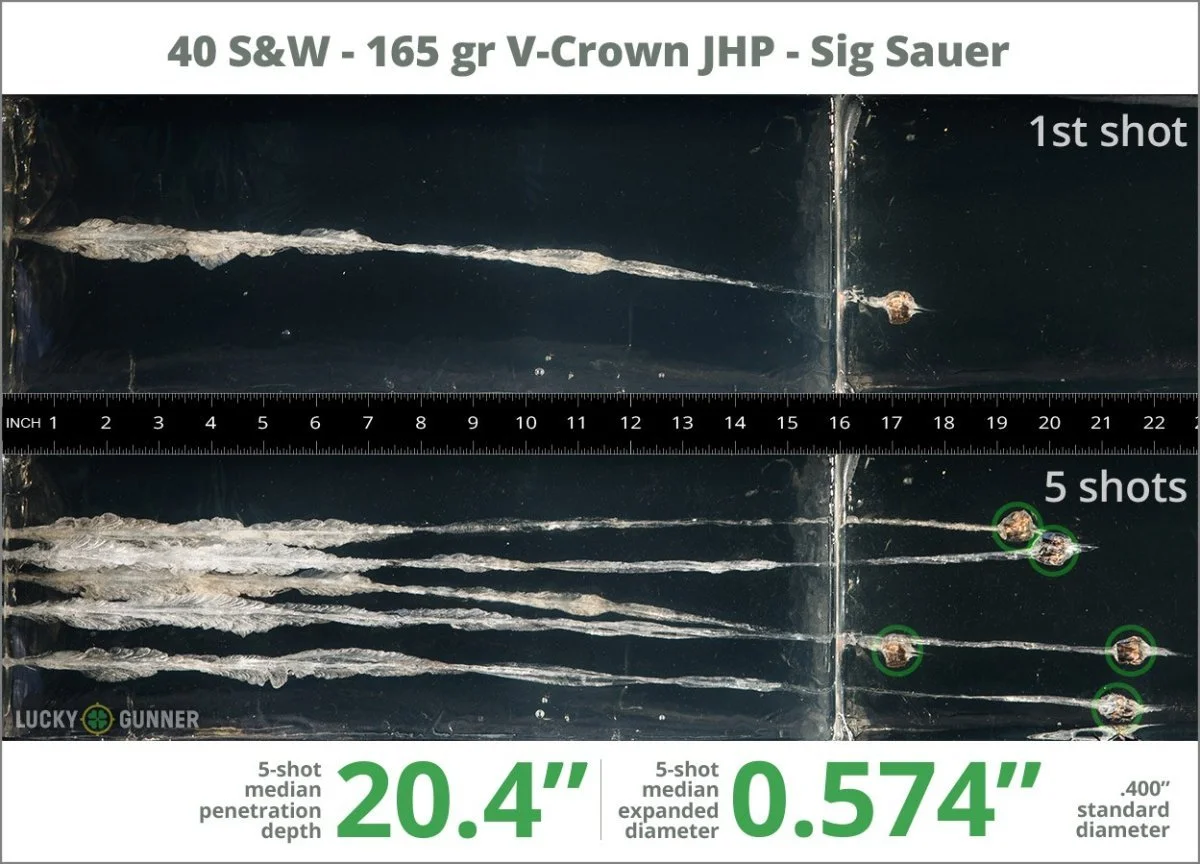
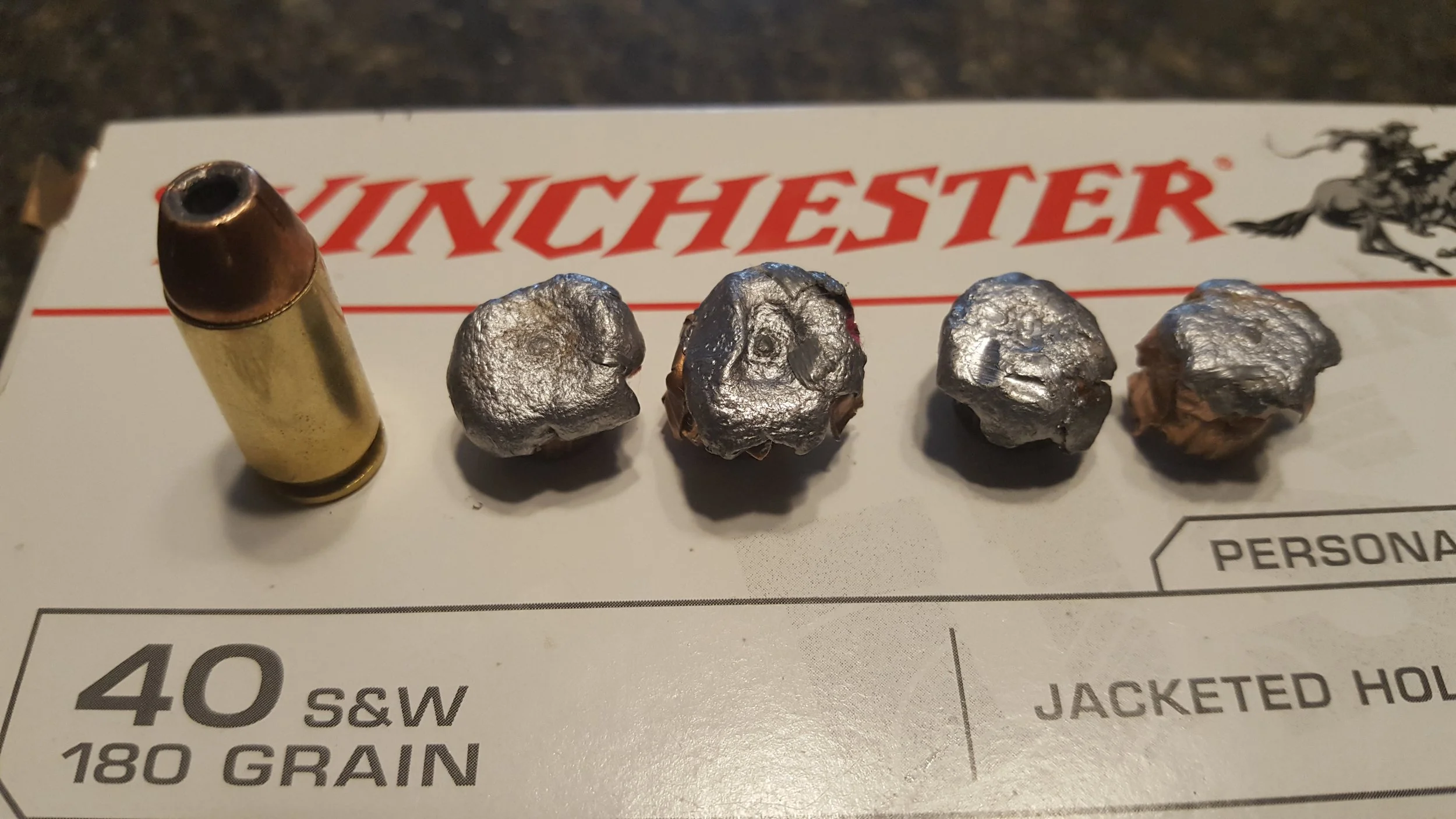
The .45 ACP is referred to as “Gods Caliber” by a number of enthusiasts. The idea is that ‘if you shoot them with a 45, they wont survive. If you shoot them with a 9, they will be fine.’ There is some truth to this because of the terminal performance displayed by the .45 ACP through barriers. the .45 ACP is generally considered a reliable combat caliber in almost any JHP loading, and pass-throughs are hardly reported as being a true concern. Generally, the density of a human torso has proven to be sufficient to stop the .45 ACP, even in FMJ loadings, despite what you may see in gel testing.
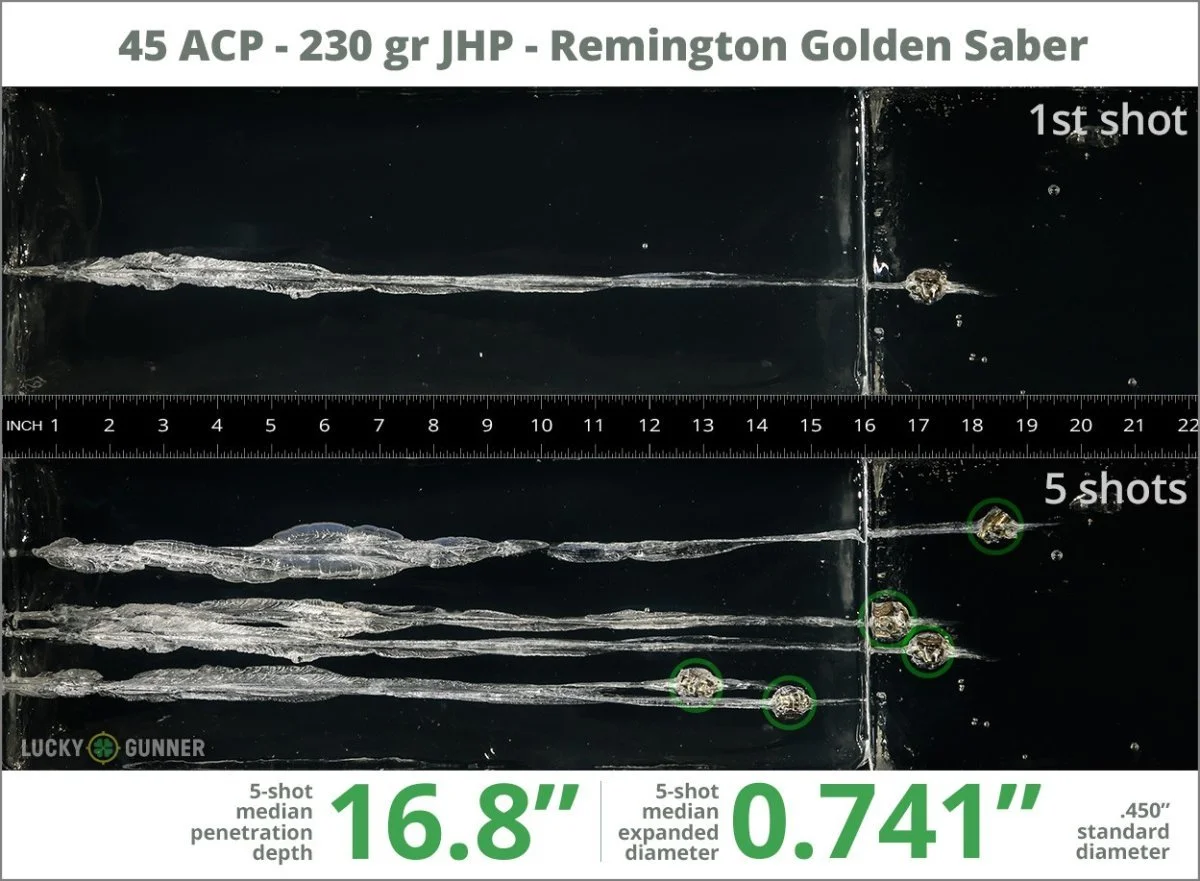
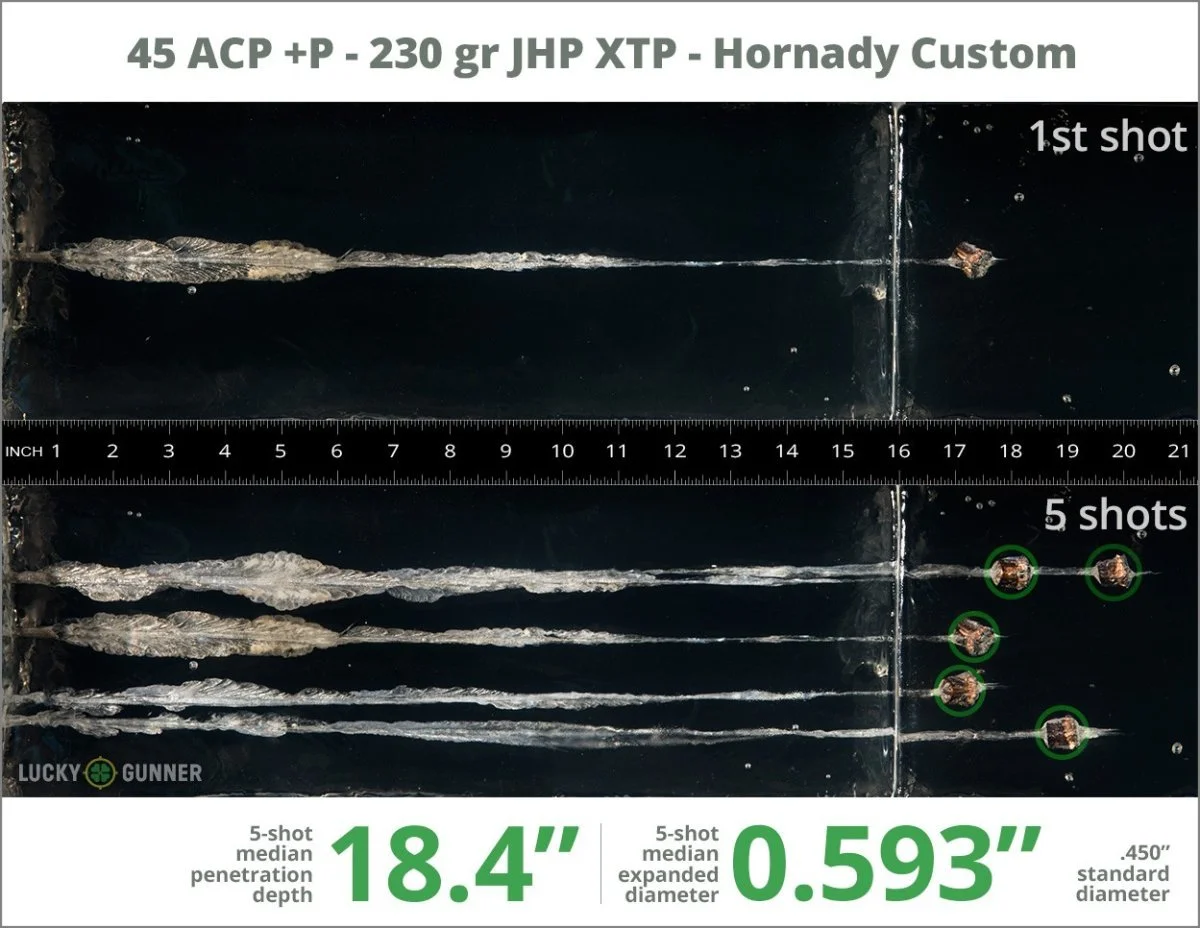
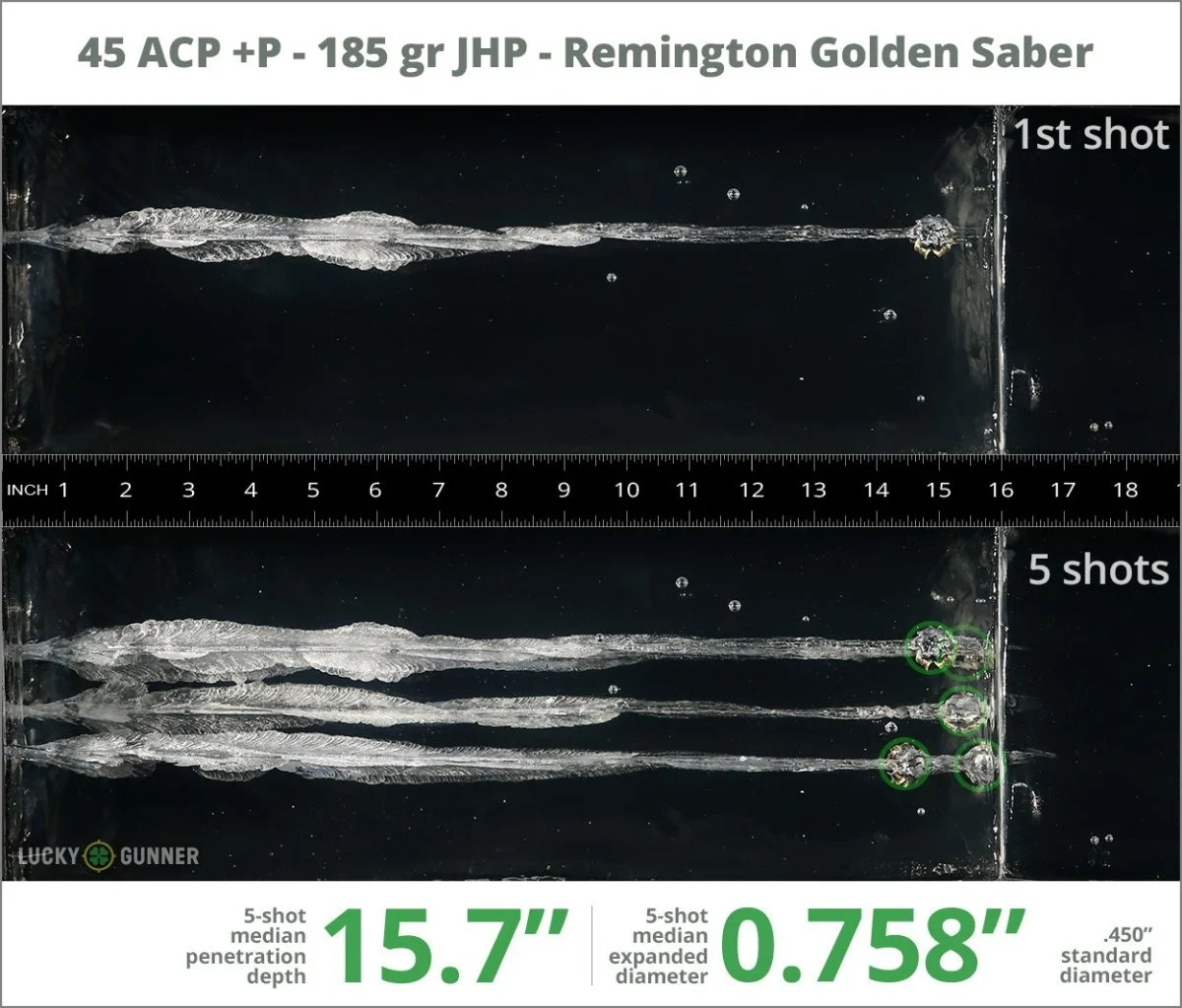
Now keep in mind that each projectile loading is going to have it’s own merits and deficiencies. I generally like a projectile that will penetrate deep, regardless of how well it expands. For myself, I have found that the Golden Saber by Remington is a decent loading that generally penetrates very deep, and also expands exceptionally well. In fact, it is rumored that the FBI Hostage Rescue Team (HRT) prefer the Golden Saber.
EXERCISE CAUTION
When considering terminal performance, be aware that Clear Ballistics gel blocks are not a good representation of bullet performance in human tissue. Generally, you will see the bullets penetrate deeper, but also have a greater difficulty in expanding due to the gel blocks lacking the hydrostatic reaction that other water-based test mediums have. Clear Ballistics gel also seems to show a preference towards lighter and faster bullets in terms of reflecting their expansion potential. Even testing shows that true penetration out of Clear Ballistics gel can only be attained by multiplying the resulting penetration by 0.8 to get what the penetration would be in actual porcine gel.
Be very deliberate and critical of testing standards when you are looking for a good pistol caliber to trust your life to. YouTube is great for a reference, but it hardly is a stand-alone source of honest information. Anyone can buy a block of gel and shoot into it. But pulling out the ruler and making absolute claims of performance is an ignorant approach most people seem to make. Just be aware of this and adjust accordingly. Better yet, get educated on testing standards and then make your own decisions based on your threatscape. For example, many good Police departments now require ammunition to show penetration north of 14” as a minimum in bare porcine gel due to rising BMI’s and an understanding of bone effects on terminal performance. That may be a lead to follow.
WRAPUP
All 3 of the calibers I discussed are considered sufficient for the job of protecting you from a determined attacker. The variables involved that will determine which load is right for you is based on available defensive ammunition, the type of weapons you can use, your budget, and how good of a shooter you are. Many people have tried to claim that 9mm is the only reasonable cartridge for defense and duty usage because of cost, ease of shooting, capacity, and performance.
The issues I have observed with the argument that 9mm is the best overall caliber stem from people placing too much emphasis on price, especially when they hardly ever shoot more than 250 rounds over the course of several months. Additionally, many tend to exaggerate the capacity advantage by acting as if a 2 to 3 round difference is somehow limitless or overwhelmingly significant. This line of reasoning is flawed and inevitably raises further important questions, such as what type of ammunition is being used, where the rounds are hitting, and how effectively the rounds perform in real-world scenarios.
Choosing the largest caliber you can handle while maintaining the greatest accuracy and control is crucial for effective self-defense and combat scenarios. Higher caliber rounds typically offer greater terminal performance, increasing the likelihood of quickly neutralizing threats, but this advantage is only meaningful if the shooter can fire accurately under stress. Recoil management, consistent shot placement, and control during rapid fire are essential to maximize the effectiveness of your chosen caliber. Though proficiency with a slightly smaller caliber that you can shoot precisely often outweighs a larger caliber you cannot control well, training to balance power with precision ensures readiness and reliability when it matters most.
Do not be too quick to dismiss the idea of upgrading to a larger caliber firearm. If you are already skilled and comfortable with a 9mm, consider stepping up to a .40 caliber or even a .45 caliber, and continue to train consistently with your new weapon. The increased terminal performance you gain from a more powerful round, combined with your refined skills, will far exceed any benefits of sticking to a smaller bullet that might simply provide a false sense of confidence.