MY CASE AGAINST LONG DISTANCE RUNNING
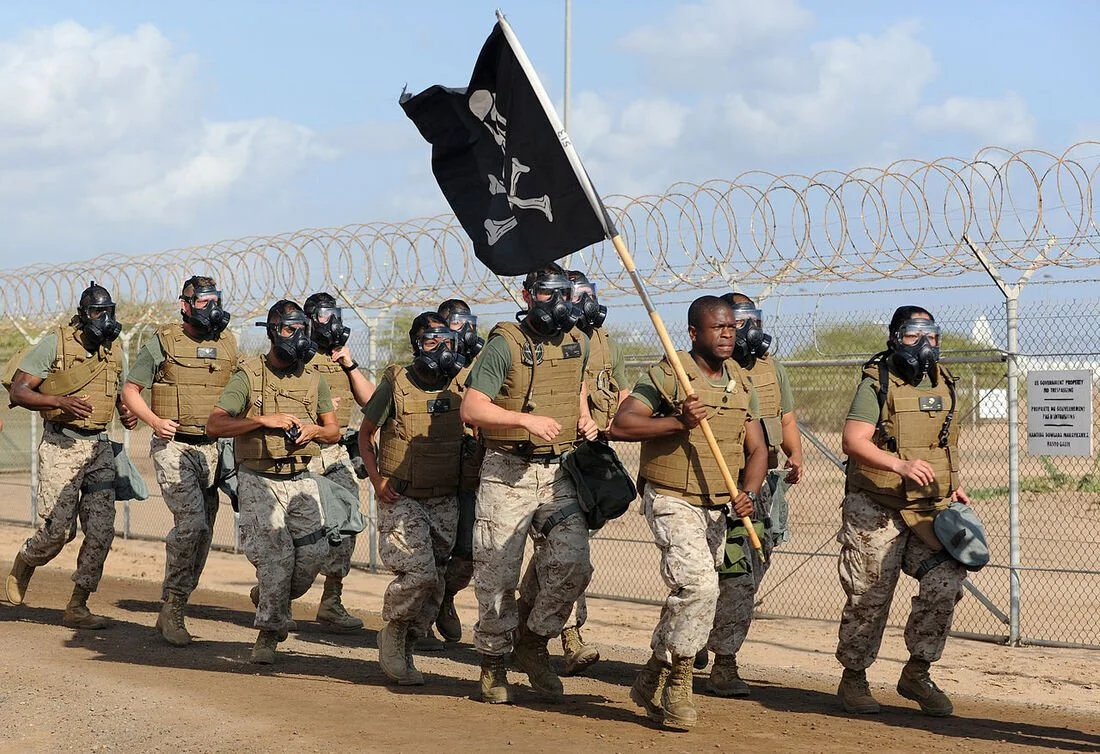
When I joined the Marines, I remember that I was required to run a 1.5-mile time as an entry exam. I was terrible at running, and I always was. The fastest 3 mile run I ever ran while I was in the Marine Infantry was 23 minutes and change. I remember thinking our PT tests and the military obsession with steady state running was absolutely misaligned with the concept of fighting in war while being loaded down in 50-75 pounds of body armor, weapons, ammunition, and water. I watched guys who could run an 18-minute 3-miler and could not handle all the long patrolling we had to do. I did not have a very thorough grasp on the mechanisms of conditioning back then, but I knew for a fact that running in shorts and tennis shoes was called a “fitness test” was a joke.
THE S.A.I.D. PRINCIPLE
SAID stands for ‘Specific Adaptations to Imposed Demand,’ which is a more technical way of explaining that if you want to become proficient at a particular skill, you need to train that skill frequently and consistently. When I served in the Marines, our physical training (PT) was quite different from what many might expect. We rarely engaged in traditional PT sessions like long-distance running or structured workouts. Instead, we spent extended periods in the field wearing full gear, conducting patrols, executing tactical maneuvers, and focusing on mission-specific tasks. Any running we did was always in full combat gear, and it was typically limited to short bursts rather than endurance runs. In fact, the longest distance I can recall running in gear was around 100 meters. Most of the time, our movement involved walking or holding positions in the prone, especially when maintaining security. This approach highlights how training adaptations are closely linked to the actual demands placed on the body in real-world situations.
RUNNING FOR CONDITIONING
I often hear people promote running 3 miles every single day to develop a good cardio “BASE”. I tried this a couple years ago as I was trying to follow Stew Smiths selection prep for Force Recon. I averaged running 20 miles per week near the beginning, and I did notice that I was able to adapt to the rigors of long distance running relatively quickly. After 4 weeks, I was able to run a 21 minute 3-mile run. This made me feel really accomplished at 34 years old.
The problems started when I needed to start rucking and running under load. I realized really fast how pointless all the “conditioning” runs were. The weight was almost crippling and my legs felt very unprepared for the task. On top of this, my lungs seemed to be undeveloped and unconditioned all over again. I tried to train rucking, but I had a tactical course that I took, and it interrupted a lot of my conditioning. I found myself challenged by the light infantry style movement, and returned with an understanding of what I needed to do before my next tactical training course.
I participated at the beginning of the following year in a tactical course in Texas, and found myself much more prepared, but not particularly optimized. I had to navigate rough Texas rolling terrain with 35lb of ammo and belt kit. It was pretty easy to do the individual 3-to-5-meter rushes since I trained religiously daily in gear to do them for hundreds of meters. There were times where we did satellite patrolling and had to run for 100 to 200 meters over rolling terrain before going into IMT (Individual Movement Techniques) and I was a little winded, but I was able to recover fast and have my breath back, thanks to doing stress exposure in gear prior to going. This was a good training opportunity and I brought the lessons home and started training only in loaded running or sprints, along with circuit training to train mastering and controlling my recovery.
HOW IT WORKS
I wanted to know whether it was better to run steady state cardio for miles at a time to get conditioned, and I should just suck it up, or if doing shorter bursts was a better way to go. Stew Smith often had you do 400-to-800-meter bursts to train running, and I figured that was a clever thing, but some people claimed that the only way is long distance running and they will cite that if it didn’t work, SF and Rangers wouldn’t do it. The problem with this reasoning is that it is hollow in facts and logic.
In WW2, the greatest generation developed their cardio capability through calisthenics and guerilla drills (Basically 1944 bodyweight Crossfit). They only really used long distance running to train for reinforcing and maneuvering, and it was all done in gear, roughly at an 11-minute mile pace. But they also trained to march 25 miles at a time in 8 hours. EXCERPT FROM War Department Pamphlet 21-9:
MARCHING
The following standards are to be met by marching with full field
equipment:
1. March 4 miles in 45 minutes.
2. March 5 miles in 1 hour.
3. March 9 miles in 2 hours.
4. March 16 miles in 4 hours.
5. March 25 miles in 8 hours.
6. March and double time for 7 miles without halt.
In my own experimentation, after all the training courses, I tried running 3 miles every day for a month. I alternated between running 3 miles all in one go, 1 mile three times per day, 1.5 miles twice a day, or running 800 meters 6 times. I personally found that the 3 miles all in one go was the hardest one. Doing 1.5 miles in the morning and afternoon was a bit tedious, but it was sustainable. Doing 1 mile three times a day was doable and felt really quick. However, the 800-meter running was the best for me. I could run faster, recover faster, and felt like I could do more rounds with relative ease. I was very curious about why this was how I felt and whether
Here’s the actual science (2025 consensus from military performance labs, NSCA, and the big meta-analyses), broken down plainly, comparing a straight 3-mile run to six 800 meter runs:
Aerobic base (VO₂ max)
Daily 3-mile steady run: Good, but plateaus fast
6 × 800 m: Significantly better (20–30 % greater VO₂ max gains in same weekly volume)
Winner: 6 × 800 m (Verona et al., Seiler, Helgerud studies)
Anaerobic capacity / lactate threshold
Daily 3-mile steady run: Minimal improvement
6 × 800 m: Huge improvement
Winner: 6 × 800 m (Billat, Laursen meta-analyses)
Combat-specific repeated sprint ability
Daily 3-mile steady run: Very little carry-over
6 × 800 m: Direct carry-over
Winner: 6 × 800 m (CFT “Movement to Contact” is basically an 880 yd sprint)
Preservation of power & muscle mass
Daily 3-mile steady run: Chronic interference effect (especially >4–5 days/week)
6 × 800 m: Much lower interference (preserves fast-twitch fibers)
Winner: 6 × 800 m (Wilson 2012, Hickson concurrent training interference)
Joint/tendon stress & overuse injury risk
Daily 3-mile steady run: High (same repetitive load daily)
6 × 800 m: Lower (more recovery between bouts, less total eccentric damage)
Winner: 6 × 800 m (military studies show 30–50 % drop in shin splints/stress fractures when volume is broken up)
Time efficiency
Daily 3-mile steady run: 21–30 minutes straight
6 × 800 m: Same total running time, but can be spread across the day (you already eat 3× anyway)
Winner: Tie, but 6 × 800 m wins on recovery
Mental toughness / “suck” factor
Daily 3-mile steady run: Decent (long grind)
6 × 800 m: Arguably higher (repeated hard efforts hurt more)
Winner: Personal preference
MILITARY PERFORMANCE LABS (2024–2025 DATA)
USMC Force Fitness Division (2023–2025 studies): Units that replaced 60–70 % of their steady-state runs with 4–8 × 800–1000 m intervals saw +8–12 % higher CFT scores and ~40 % fewer lower-leg injuries.
Army Research Institute of Environmental Medicine (2022 meta): Daily moderate continuous running >30 min produces diminishing returns after ~6–8 weeks and increases overuse injury odds ratio to 3.2× compared to polarized/high-intensity plans.
Norwegian/Danish military models (the gold standard right now): 80/20 rule — 80 % low intensity, 20 % high. When the “high” 20 % is intervals (e.g., 4–6 × 4–5 min hard), soldiers get fitter, faster, and with half the shin-splint rate.
THE ONLY REASON TO KEEP THE THREE MILE RUN
Unit cohesion & tradition – Formation runs are a leadership/communication tool.
Logistical simplicity – Easier to schedule one 25-minute run than six 4-minute efforts spread across the day.
Very low-fitness populations – Brand-new recruits sometimes need the pure aerobic volume before they can handle intensity.
For anyone who already has a decent base (which is 95 % of active Marines), 6×800 m approach (or 4–6 × 800–1000 m 2–3× per week + easy days) is objectively superior for performance, resilience, and body composition.
WRAPUP
As I have continued on my fitness journey, I have found long distance running to be less than optimal for producing good transferable cardio endurance needed for fighting. I know that most of us are surrounded by military tradition that has taken the marathon ideology and ran with it. The dick measuring has to stop somewhere when your true focus is functional performance. Even if your goal is to get a good cardio base, you can still achieve that through cycling, walking fast with weight, or running short distances. Long distance running has few applications in the tactical or practical world. If you for some reason had to keep running, the shorter bursts would help your body train for that kind of performance anyways. Other than that, the science and experiences of countless athletes and military personnel shows that several sets of short distance bursts is better for you all around.