BRITISH BELT KIT: COMBAT STANDARD
As a grunt, you carry what you need for the mission, which may be a lot. Past that, you have to make sure you are taken care of, which adds more gear. In this case, you will want a system like this sewn on British PLCE belt webbing, shown above, to give you ample storage space for 18 hrs. worth of fighting gear. This system is designed to allow you and your team to be completely self-sufficient for about 18 hours without logistical support.
The British military, along with other European based countries such as Australia, still use some version of belt kit like the set displayed above. The reason this type of gear has stuck around for so long is because of its true load carrying capability. Soldiers in the UK military generally do not appreciate their old school belt kit due to how it rubs them raw at times. However, it would seem that the troops do appreciate how well belt kit can distribute a 24hr fighting load. It has been a great piece of gear for light infantry in the past, and I do not think that has changed much, if any.
CONTENTS
The contents of the belt webbing kit shown are not exactly what I would bring with me in the case of what is in my IFAK or my canteens. However, it represents how much I am able to bring and shove in my pouches. In reality, most of the food in the pouches that don't make much noise would probably already me on my person, which makes more room for other stuff like a radio and batteries. This is a loadout used for training, which means I did my best to balance the webbing system but still have some gear I might use.
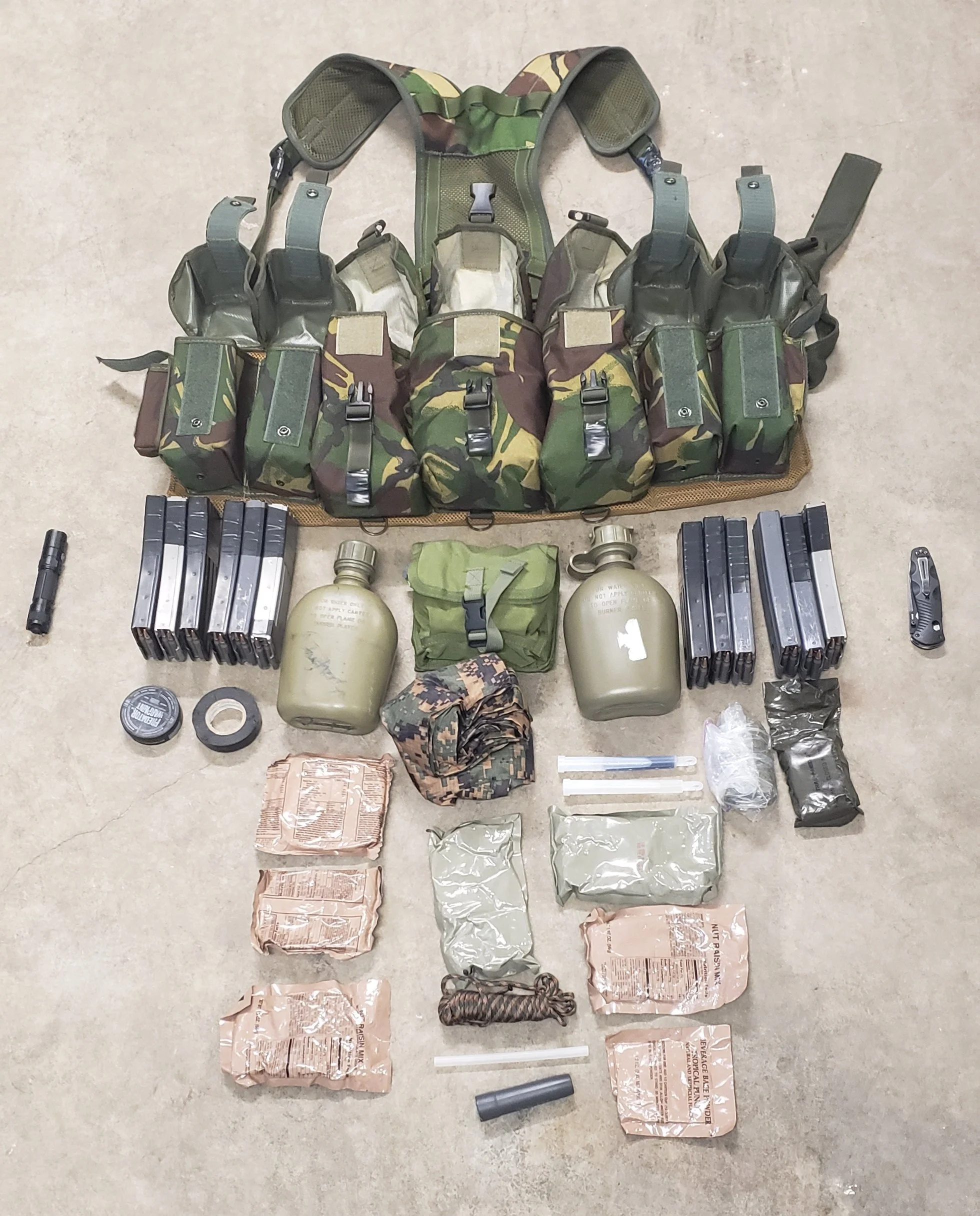
Just remember that the loadout shown is for about 18 hours of patrolling with some emergency equipment. In this loadout you can see that I have a lot of ammo on my belt kit, and little equipment, which means that I am not expecting much more than just having to find the enemy and fight during daytime. There are no grenades, radios, breaching gear, NVGs, etc. What you put on your rig can say a lot about what you are planning for, if you have experience in the realm of military planning and operations.
POSSIBLE USES
Many people would look at this webbing set and think that it has very little application. However, in my experience, this set has many applications. If you are gearing up to go into combat, you will find that this setup has the potential to work across a vast array of applications from security patrols to raids. The storage space on this rig doesn't need to be topped off, but it can still be used to keep stuff on you at all times if needed. Of course, if you didn't need a lot of weight on you, you could transition some of the gear into a pack that you could leave behind. Regardless, I find this webbing system to be handy and comfortable. If you need to add body armor, all that you need to do is throw the plate carrier or armor system over the top of the webbing. This is a bit reverse from what people typically think about, but I assure you, the belt webbing system will not interfere with it in any way if it is properly fitted and adjusted.
The British webbing system is a piece of gear that was designed to give the infantry greater capability on their belts without needing to rely on a pack for storage. It is still being used today in many units, but it is being transitioned out due to a change in fighting and logistical advancement in which self-sufficiency is not as vital or necessary. However, for a militiaman, this kind of gear would be invaluable due to the fact that they would be limited on logistical support and would be highly likely to have to pack for emergencies since they will have to remain self-sufficient.
SIZING AND FITTING
Belt kit rides a bit lower than typical belt-based load carrying equipment. The belt kit seems to be designed to ride just below the waist line but above the pivoting point of the legs. This allows the wearer to maintain range of motion and also keep the weight balanced right on the hips no matter how they are moving Fitting the belt kit is pretty much just getting the belt tight enough to prevent it from rotating around your hips. It can be a bit of a pain to adjust the straps on actual belt kit, but it pays to have 6 points of contact on the yoke. The ALICE gear is easier to adjust since there is only 3 straps to adjust. Just make sure to adjust it the same way that you would for actual belt kit. Have it ride in the same area, but see about investing in a hip pad for the belt or use a cut up iso-mat for cushioning.
When setting up your pouches, make sure that there is minimal space between each pouch. The goal is to make sure that the mag pouches on the front are not forward of the 2:30/9:30 positions. This makes it so that you have the ability to make full belly contact with the ground when in the prone position. Not to worry though, since the 3'o'clock position is absolutely sufficient for performing hasty reloads. Just do your due diligence in practicing with your gear and work on good technique.
BODY ARMOR INTEGRATION
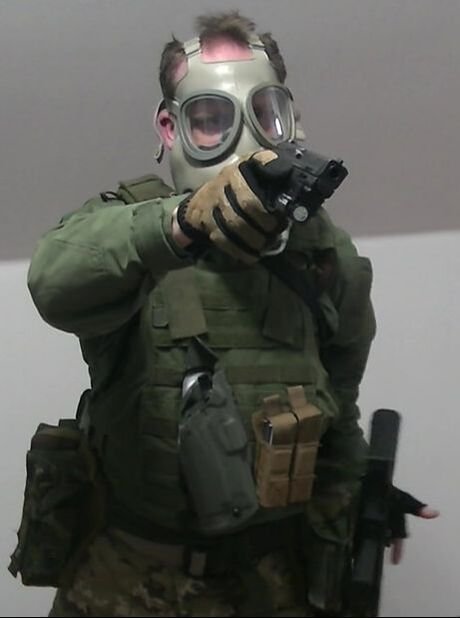
One of the really cool things that I like about belt kit is the fact that you can comfortably put your plate carrier or body armor OVER your belt kit because of how low it sits. Personally, I would say that one must be cautious about going into gear queer mode due to having a lot of real estate on your body armor. I would limit the amount of gear on your chest to absolute essentials. Depending on your position in a team, you may want to carry more rifle mags if you are in a support or base of fire role. Also, you may want to use your plate carrier for mounting a pistol and pistol mags. However, make sure that it is placed in a low-profile manner that will not interfere with your prone position or rifle manipulations. Also, make sure that you are not putting too much weight on your chest, which will eventually inhibit your mobility and range of motion.
PACK INTEGRATION
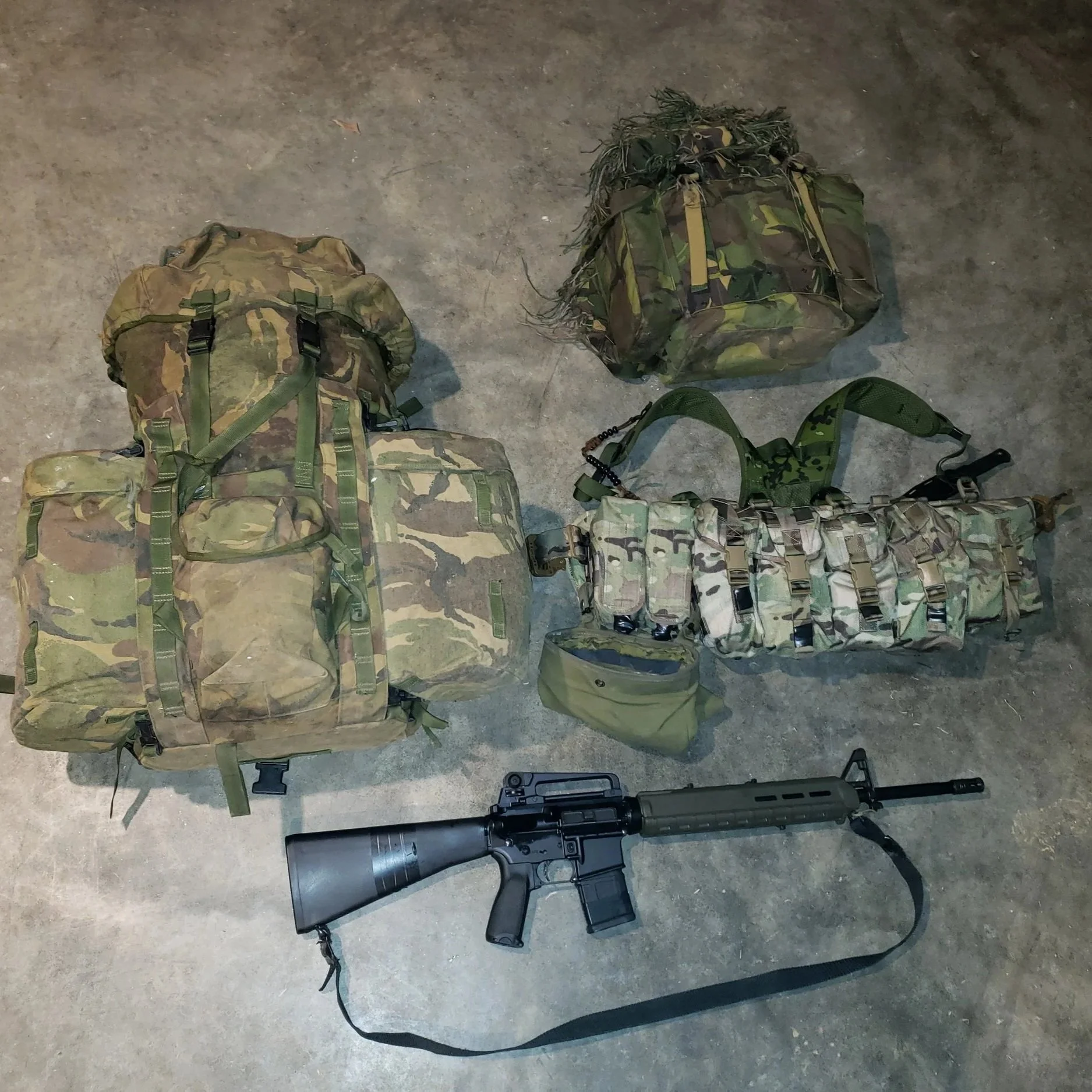
Some people may think that belt kit will inhibit someone’s ability to put on a backpack or ruck comfortably. However, I have found this to not be the case. A day pack will definitely fit quite well and something like an ALICE pack may actually rest slightly above the belt kit. However, keep in mind that a pack slightly resting ON the belt kit is not a bad thing unless the shoulder straps are not fit tight and the ruck is smacking you in the back of the head. In that case, you would probably have issues with this regardless when going prone, whether or not there was gear interference. Carrying an assault pack with your belt kit is absolutely sufficient in my opinion. You can have a low-profile pack that can stretch your sustainment to 48 hours if packed correctly whilst still being capable of fighting without dismounting it. In my experience, having nothing on your body armor will prevent you from struggling to fight with a pack on. Being light infantry, you are typically responsible for taking all your support and sustainment provisions, depending on the mission. It is best if you don't have to take off your packs just to react to contact. Being on the assault is a bit different however.
WRAPUP
Belt kit, when used as designed, is a very effective way for light infantry to carry their sustainment load in a way that does not require them to take off a pack for mobility and agility. You may still need a day or assault pack for your mission, but having most of your vital equipment on your belt can make your pack lighter and easier to take with you even when moving fast is necessary. This is a big difference from the typical fetish that people have for putting everything on their torso to the point that they are hurting their back and core. This system of carrying a fighting load has proven benefits and I am looking forward to testing this gear as a concept and giving specific feedback for those looking for a better system for carrying lots of gear in a manner that does not affect one’s agility and mobility in a combat scenario.