I know that some people may consider this an odd comparison, but for the civilian market, the last few years have been rough for MRE sales. It led to a lot of us having to look for alternatives elsewhere. For myself, this came in the form of humanitarian rations. When MREs were well over $100 per case, Humanitarian ration cases were $40. Recently, MRE cases have fallen in price to the point that they are almost comparable to the Humanitarian rations. However, does a case of MREs have the same value as a case of humanitarian rations?
HUMANITARIAN RATIONS
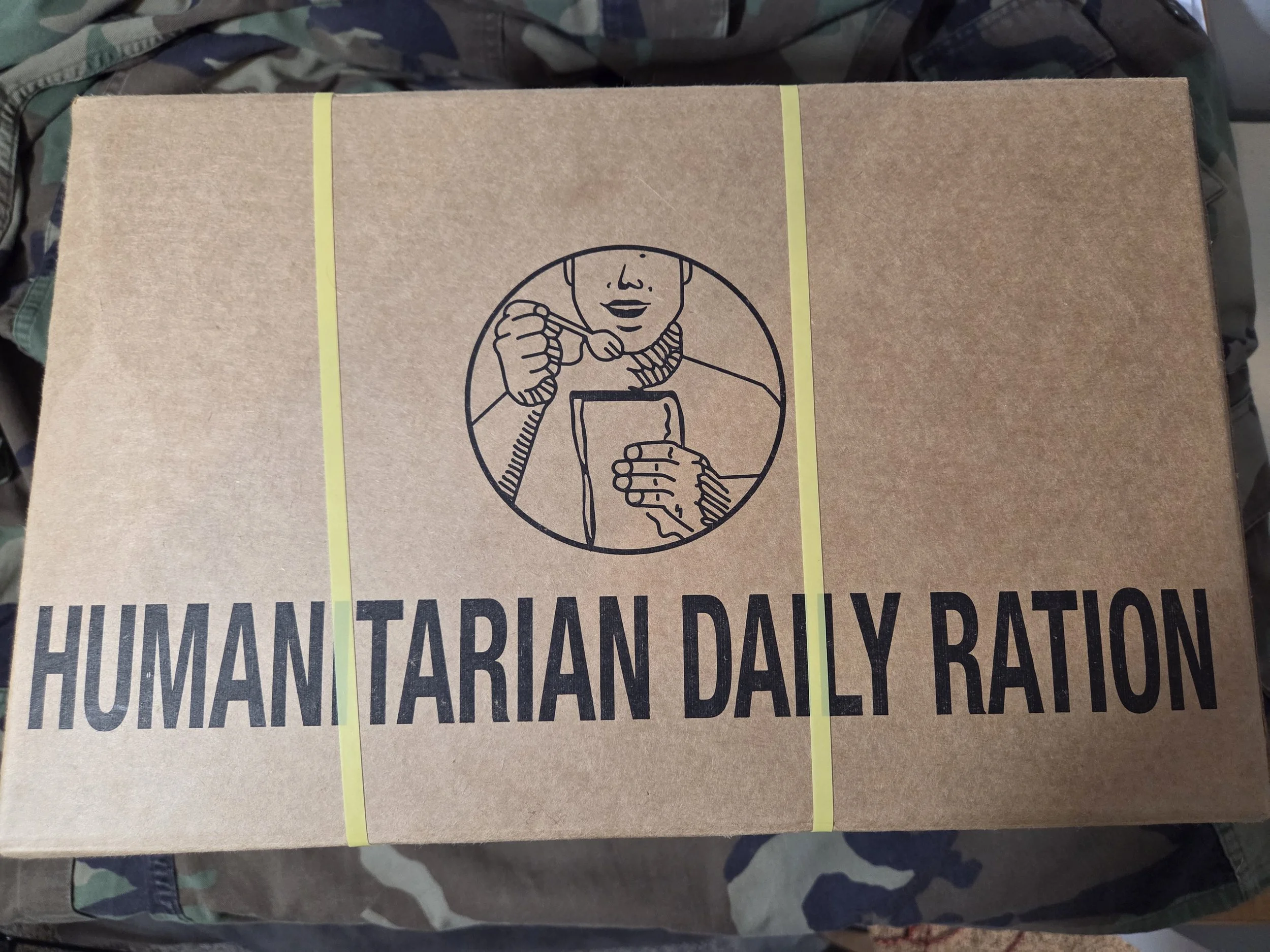
A case of Humanitarian rations holds 10 24-hour rations. Granted, each humanitarian ration is going to give you a caloric value equal to two MREs, but it will not be as vitamin-dense as the two MREs. The Humanitarian rations are slightly heavier than a normal MRE, and it is pretty similar in size. The Humanitarian rations come in that rubbery plastic cover, much like the military MRE, but it is slightly flimsier, which makes opening a bit easier.
The humanitarian rations are pretty much all the same. The only difference is in the main meals. Each ration will come with crackers (vegetable or regular), pop tarts without the frosting, shortbread cookie, oatmeal cookie, peanut butter, strawberry jam, two entrees. Each ration comes with an accessory packet, containing an MRE spoon, crushed red pepper, salt and pepper, sugar, matches, and a napkin. All the food is vegetarian in order to save cost and to give a wider range of acceptance throughout the globe, if used.
Each Humanitarian ration has roughly 2,000 calories, give or take 100 calories. If you are looking for meals that are really good for somewhat sedentary living, such as disaster preparation, these rations should do it for you. They are not going to please the taste buds, and it is easy to get menu fatigue. But if the idea is to have something that requires little to no preparation, this is your product.
MILITARY MRES
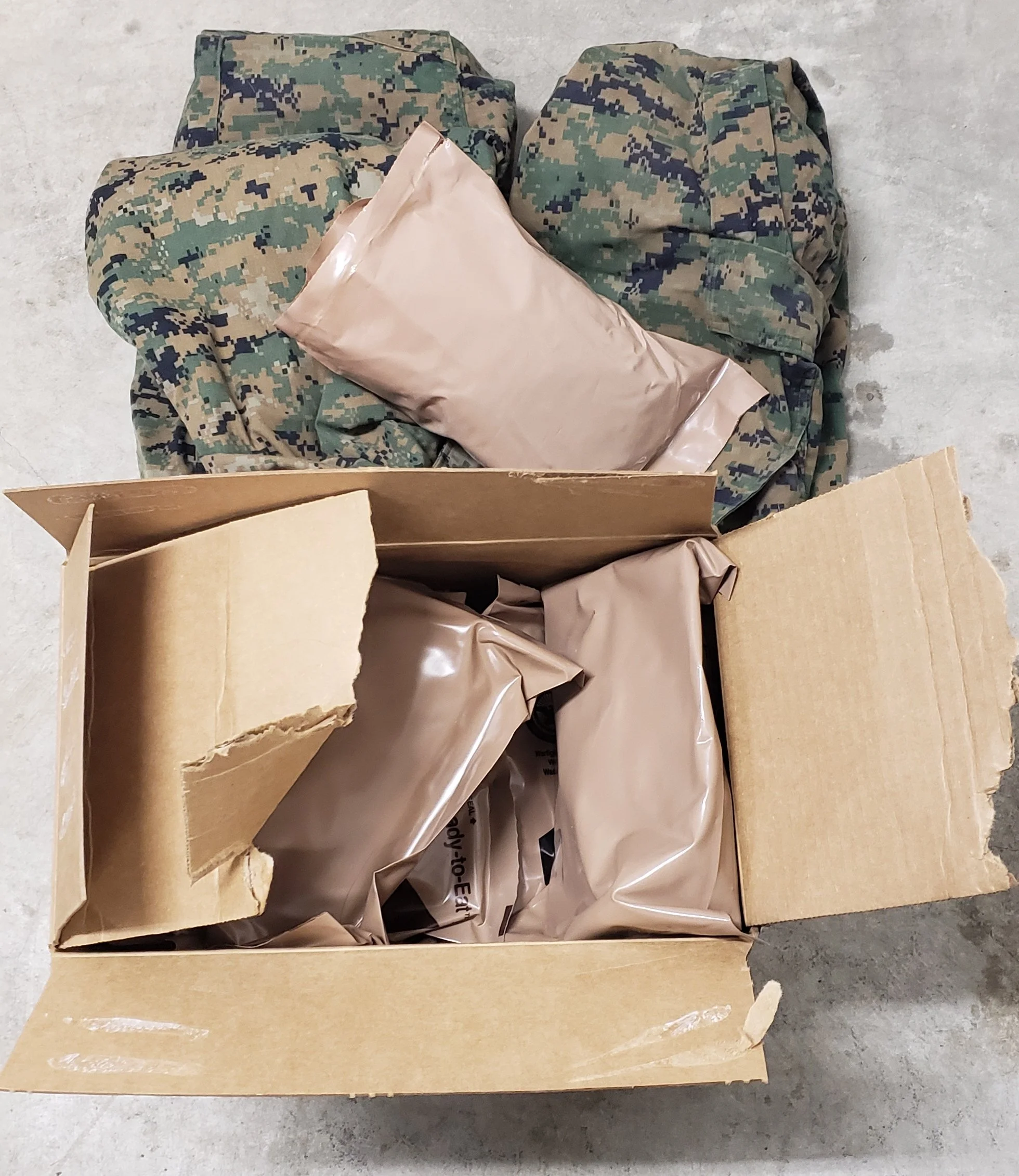
There are several types of MREs out there, but I am going to focus on military surplus MREs. Military MREs are ever-evolving and changing in menu, contents, ingredients, etc. You are unlikely to experience menu fatigue, or ration fatigue, like the Humanitarian rations. However, remember that MREs are meant for troops in the field who are working in gear and in adverse conditions.
Each MRE will come with a nice variety of items in it. You are going to get a bread component, jelly/peanut butter, drink, entrée, dessert, a flameless heater, and accessory packet. Each accessory packet is going to be slightly different depending on the generation or manufacturer of the MRE. Some accessory packets will have matches and hot sauce or some other condiments, but rarely do you see Tabasco anymore. You will get a drink mix or coffee with cream and sugar, gum, flimsy paper, a moist towelette, and a spoon.
MRE meals will have a great variety, which is perfect for preventing menu fatigue, and boredom. Also, you will get drink mix and ways to flavor water in a way that prevents you from having to rely solely on bland water. I personally hate water on its own, but I had a bad experience with it in Afghanistan. Since that time, I have become reliant on drink mixes to flavor water.
NUTRITIONAL VALUE
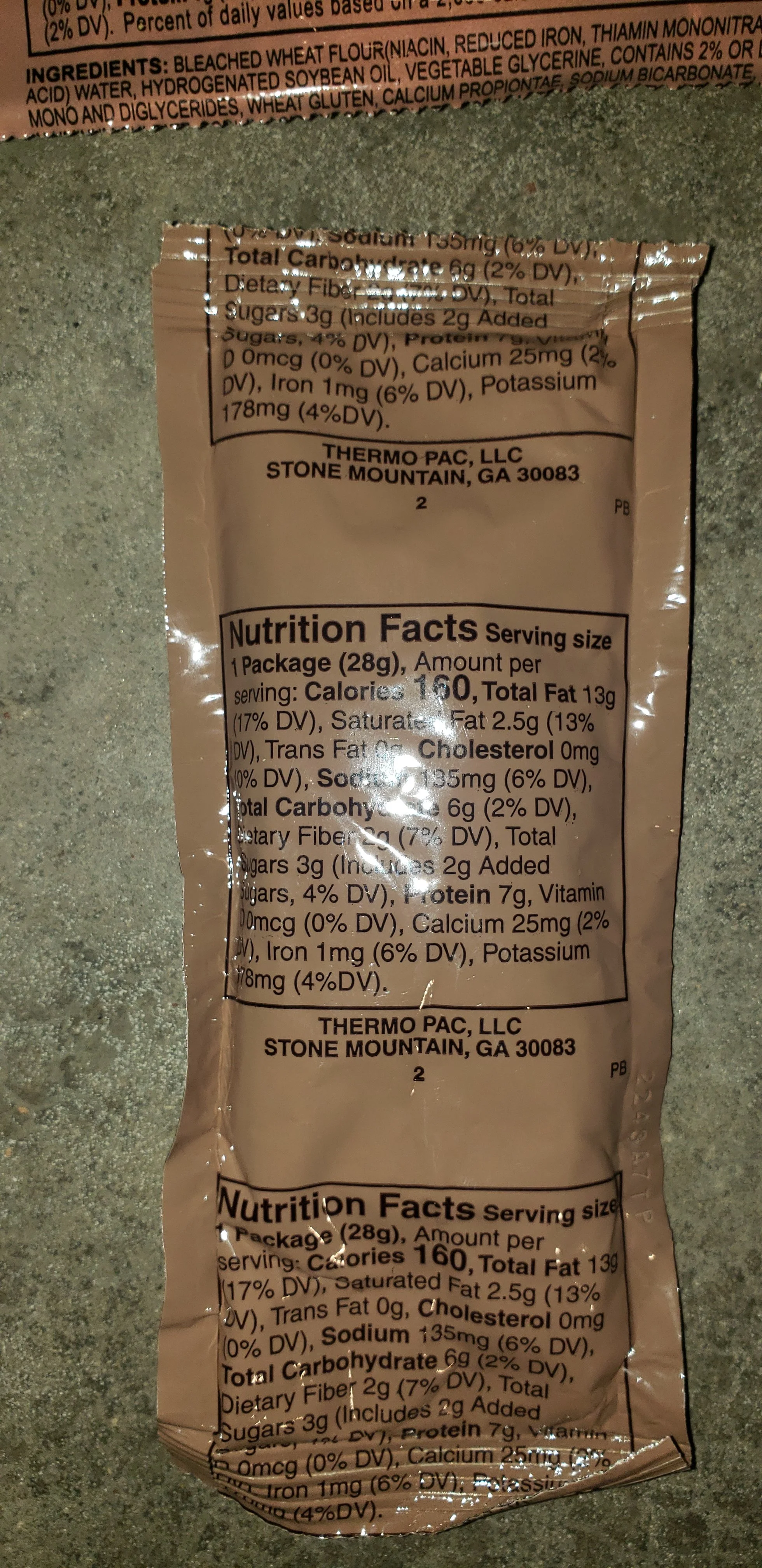
Now let us discuss nutritional values. MRE meals are specifically designed to fulfill the needs of a very active individual with about 1200 calories per MRE, for a period of a week. They were designed with the idea that the individual will eat EVERYTHING in the MRE, including the gum for dental maintenance. You will notice that the vitamin levels are typically over 100%, by order of magnitude. This is particularly true for vitamin C and calcium, which is essential to collagen production and basic healing and energy replenishment.
The humanitarian rations are a bit different in that they are bare minimum. They are relatively minimalistic in calories and vitamins to prevent overloading a potentially starving individual. This also means that the meals are relatively bland and are not going to be as flavorful. However, this does not mean that you will be losing out on a filling meal. The humanitarian ration, with its 2200 calories per 24hr ration, is typically better suited for individuals that are relatively sedentary. This is not a good ration for those who are doing a lot of laborious work.
In both types of meals, you will find that there are going to be considerable blind spots in vitamins and minerals. It would not be a bad idea to also have a multivitamin each day to help balance everything out. Depending on your activity level, other things may go well with these two meal options.
CHOOSE WISELY
Each one of these rations carries a particular strength and purpose. Both options tend to be on the pricier side, yet they offer great convenience for immediate use when time and simplicity matter. You could, in theory, piece together your own MRE-style ration from store-bought ingredients, though that approach deserves its own dedicated discussion. Ultimately, the choice comes down to your personal needs, priorities, and the specific scenarios you anticipate.