🚨 “The One Skill That Saves Lives When Everything Goes Wrong” Why Adaptability Beats Muscle Memory Every Time (Train Like This)
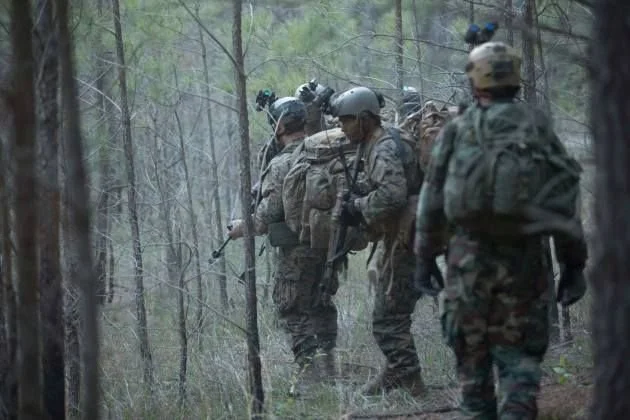
The ability to be adaptable is fundamental to efficacy of your combatives and tactics. For the sake of this article, I am grouping firearms training into the combatives bubble. In many ways, professionals in many fields have to be adaptable. A mechanic is going to adapt based on the specific vehicle they are working on. A surgeon is goin got have to be adaptable and make little changes here and there based on the unique build and needs of their patient. Even a teacher is going to have to be adaptable to change the way they teach in order to illustrate and articulate a lesson for their students. In every field, adaptability is fundamental to effective performance in that field.
BEWARE THE SOP
If we are to look at SOPs (Standard Operating Procedures), these are the handicap of adaptability. These are rigid sets of policies and procedures that will tell you how to do something. In some cases they specifically tell you to do things that are counter to reason, such as telling you to assault an ambush as a standard, despite an enemy force setting up kill zone traps like mines to prevent an assault.
SOPs can be helpful when talking about methods and procedures that are going to remain the same regardless of the battlefield. Things like having an SOP to ensure your weapons are properly cleaned and lubed daily or every other day is a good example. Also a good SOP is to make sure you conduct gear inspections and personal checks of your team members prior to a patrol. Perhaps you have something that is a bit more broad as an SOP such as treating every fallen enemy as if they are still alive and a threat while you are performing a search.
THE ADAPTABILITY OF THE TTP
In the context of adaptive combatives and self-defense, TTPs encompass the strategies, skills, and step-by-step processes that practitioners follow to respond to threats, manage conflict, and apply force appropriately. These are constantly refined and tailored to suit different scenarios, ensuring that training remains relevant and that responses are both efficient and adaptive under varying conditions. Understanding and mastering TTPs is essential for improving readiness and operational success in self-defense situations.
A TTP (Tactic, Technique, Procedure) is inherently adaptable because it is a mere guideline rather than a rigid set of procedures that MUST be followed. TTPs will give you a set of policies that have proven to work in the past. For instance, a camouflage TTP is to make sure that your uniform is in a pattern that actually works well in your environment. Also, it is suggested that if you are going to use natural foliage, use foliage that is consistent with the environment. These are very broad guidelines that allow you a great amount of freedom to adapt to the area you are in. If you want an example of TTPs put into practice, get the ‘Special Reconnaissance and Advanced Patrolling’ by Ed Wolcoff (RET).
INCORPORATE IT INTO YOUR PRACTICE
I believe in training to be adaptable, which means I believe in training and practicing in as many conditions as possible in order to test my ability to adapt and still achieve the mission. One of the ways I like to do this is to perform 5 meter rushes and weapon manipulations. The rushes make you tired and the manipulations demand control and precision. This is a perfect combination that tests your adaptability. Likewise, incorporating low light white light tactics into a moving room clearing scenario is really powerful in the learning process. You quickly learn, by doing these scenarios, how important it is to train and practice in a way that closely mimics reality.
If you are training to fight at night, yet you NEVER do any shooting or manipulations or movements in the dark, you are not actually training or practicing to fight at night. Similarly, if you claim to be training to reload your weapons in a universal manner, yet you stare at your gun while performing any manipulation, you are lying to yourself. The darkness will not grant you visual accountability of your actions. You will have only tactile feedback to default to, necessitating that you discard visual reference if you are truly preparing to fight at night.
CLOSING
Being adaptable means maintaining a high degree of flexibility by keeping multiple options open and staying prepared to shift strategies as situations continuously evolve. At the same time, it involves leveraging past experience alongside proven tactics, techniques, and procedures (TTPs) to offer informed guidance when necessary. Standard operating procedures (SOPs) that are genuinely universal—such as those governing weapons manipulation and basic safety protocols—provide a sensible and reliable foundation that can be broadly applied and easily adapted to a variety of contexts. Conversely, rigid adherence to overly specific or overly detailed SOPs can significantly hinder responsiveness and limit creative problem-solving. On the other hand, adaptable frameworks empower operators with the freedom to make effective decisions and carry out precise execution under dynamic, fast-changing conditions.