1911 VS BERETTA 92FS
The 1911 and Beretta 92FS are now widely recognized as certified classics in the world of firearms. While the 1911 is the older design, it continues to possess distinctive features that remain highly influential and sought after by gun makers looking to replicate its success. Meanwhile, the durability and reliability of the Beretta 92FS have set a benchmark that many manufacturers of modern polymer pistols still find challenging to meet. Both pistols have earned their places in history due to their performance and enduring design qualities. Let’s take a look at these two military veterans a little closer.
APPLES TO APPLES COMPARISON
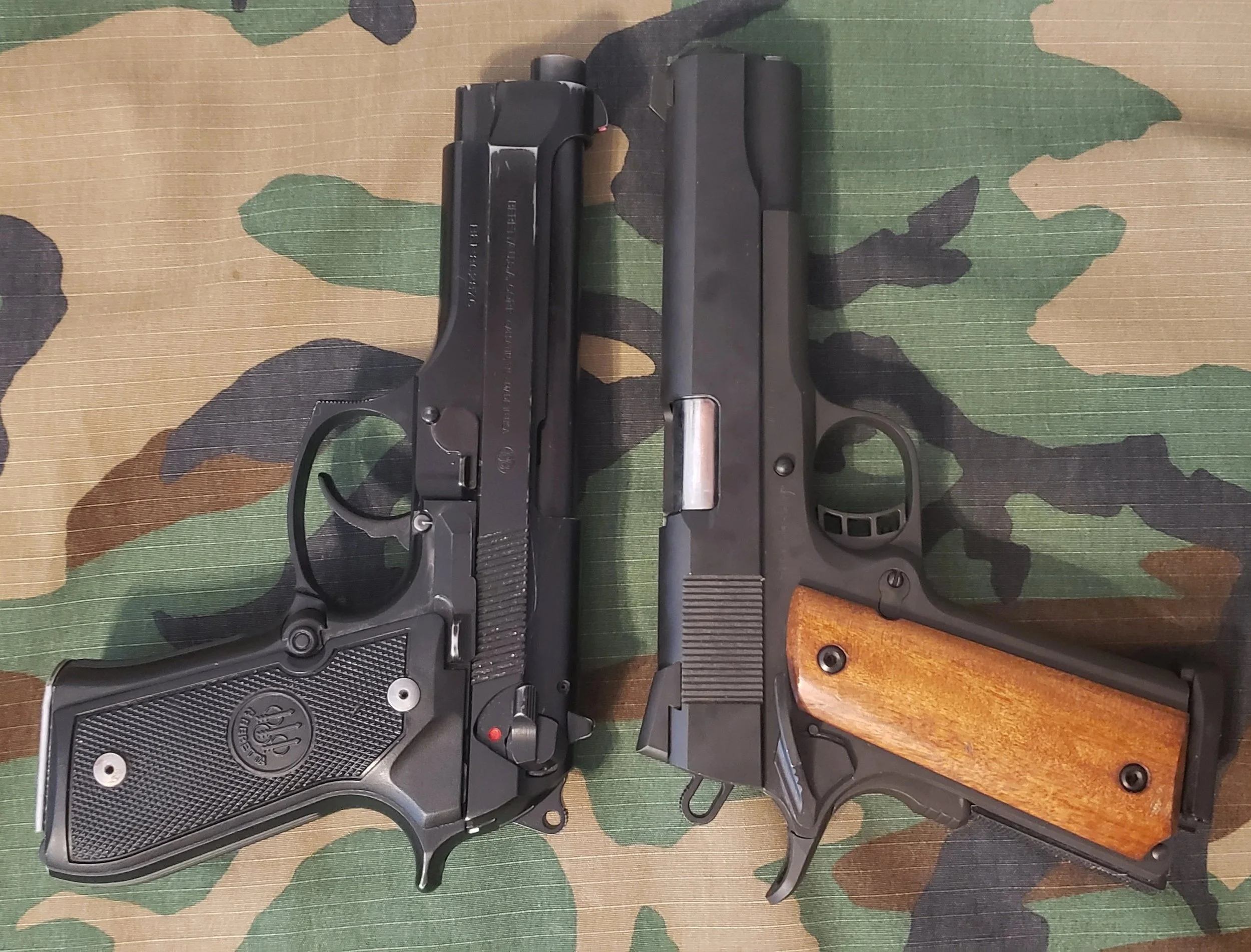
Before I get into a comparison of these two military titans, I want to talk about the type of pistols I am comparing. The pistol in the comparison photos will be the RIA (Rock Island Armory) M1911A1 Rock Standard FS (Full Size) I got for testing years ago. It is not a very well fit pistol, but the barrel to slide fit is nice and tight, which is good enough to make it just right for using it as a modern take on the military 1911A1, at a bare minimum. I am not deviating from the 1911 being in .45 ACP or having a 5 inch barrel. Also, I am only considering the classic single stack designs in a steel frame, just like the military version. Functionally, this RIA 1911 is going to be a good representation of what a basic 1911 is today. Here are the features it has that are different from the original M1911A1-
Blacked out Novak sights
Straight mainspring housing with texturing
Vertical stippling and depression channel on front strap of grip
Beavertail grip safety with memory notch
Skeletonized Hammer
Skeletonized trigger with overtravel adjustment
Full length guide rod
Lowered and flared ejection port
Smooth wood grips with hex screws
For the Beretta pistol, I am using the Beretta 92FS Police Special I have. This is a pistol that is made and fitted tightly, just as the M9 was when it was sent to the military. I have over 2,000 rounds through the pistol and it is running like a Swiss watch. I have dry fired it to death and done tons of manipulations with it dry and with a laser trainer. I actually broke the stock firing pin on the pistol. I also changed out the stock safety/decocker levers on the slide with the drop-in decocker only system. With that said, it is the latest design that is only slightly different from the military M9. The locking block is upgraded and will last a lot longer than the original and the sights are a 3-dot setup. I am not going to consider the M9A4 or other narrow grip designs.
The idea here was to provide a relatively direct, apples-to-apples comparison between the two firearms. I feel that a slightly modernized yet still bare-bones 1911, such as the RIA 1911, serves as an excellent point of comparison to the Beretta 92FS. Both pistols notably lack a rail or any dedicated cutout designed for mounting a red dot optic. Additionally, neither firearm deviates too far from their original military counterparts in terms of overall design and function. While the 1911 does exhibit some differences in controls compared to its original model, the fundamental spirit of the 1911 is still very much present in its internal mechanics and the way it operates, at least in my opinion.
CALIBER DIFFERENCE
The 1911A1 was chambered in the traditional and widely regarded .45 ACP cartridge, reflecting its old-school American heritage. Meanwhile, the newer Beretta 92FS utilized the classic and highly popular 9mm Parabellum round, favored by many militaries around the world. The .45 Auto earned the nickname ‘America’s Caliber’ due to its strong stopping power and historical significance, whereas the 9mm was often referred to as ‘the warrior’s caliber’ because of its widespread adoption and balanced performance in combat situations. The Browning Hi-Power was chambered in the 9mm Parabellum, which makes the difference between the two calibers quite controversial.
In my opinion, the difference between the two calibers is not only in size, but in performance. The .45 ACP will never be as versatile as the 9mm, but it does not need to try too hard to perform well against barriers and in suppressed pistols. The 9mm on the other hand has to be carefully engineered and loaded to exacting standards in order to keep up with the performance of the .45 ACP. Granted, no one is going to volunteer to be shot by either of these calibers, the .45 ACP has better performance through barriers.
ERGONOMICS
Ergonomics are a subjective thing for people, due to them having different hand and finger sizes. Keep in mind that I am judging these pistols based on wearing a small glove size.
BERETTA 92FS ERGONOMICS
The Beretta is a double stack pistol, which automatically is going to give it a thicker grip profile compared to the single stack 1911. With that said, I find that the old school Beretta 92FS grip profile fits perfectly in my smaller hand. When gripped right (High centered on the backstrap with the V of the hand), the Beretta 92FS fills my hand nicely.
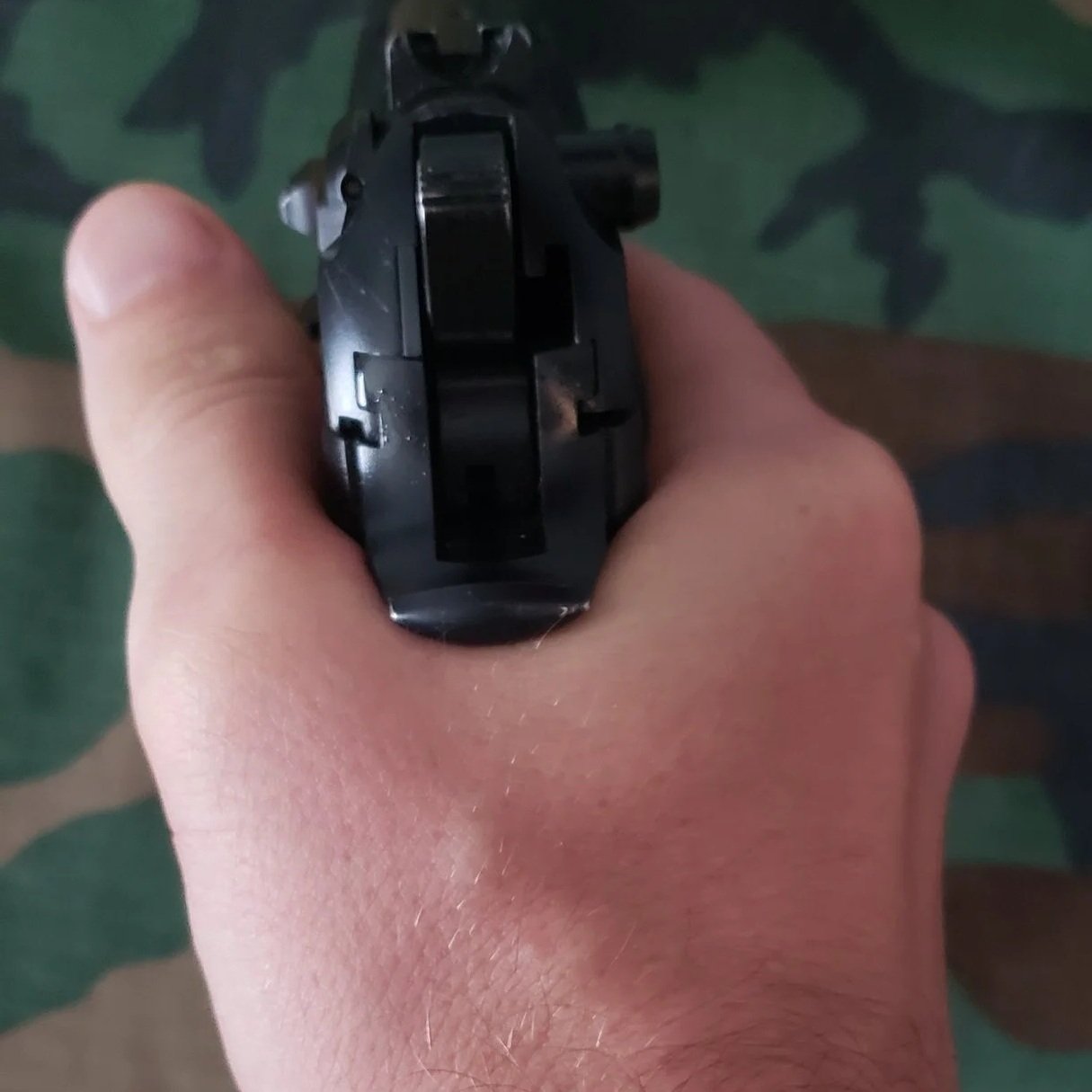
You can see that with this high and centered grip, my palm fits comfortably around the palm swell. The palm swell is placed exactly below my thumb Metacarpal Adductor muscle, flowing well into the empty space in that area. Notice how my middle phalanges are making a right turn and are completely perpendicular to the trigger guard.
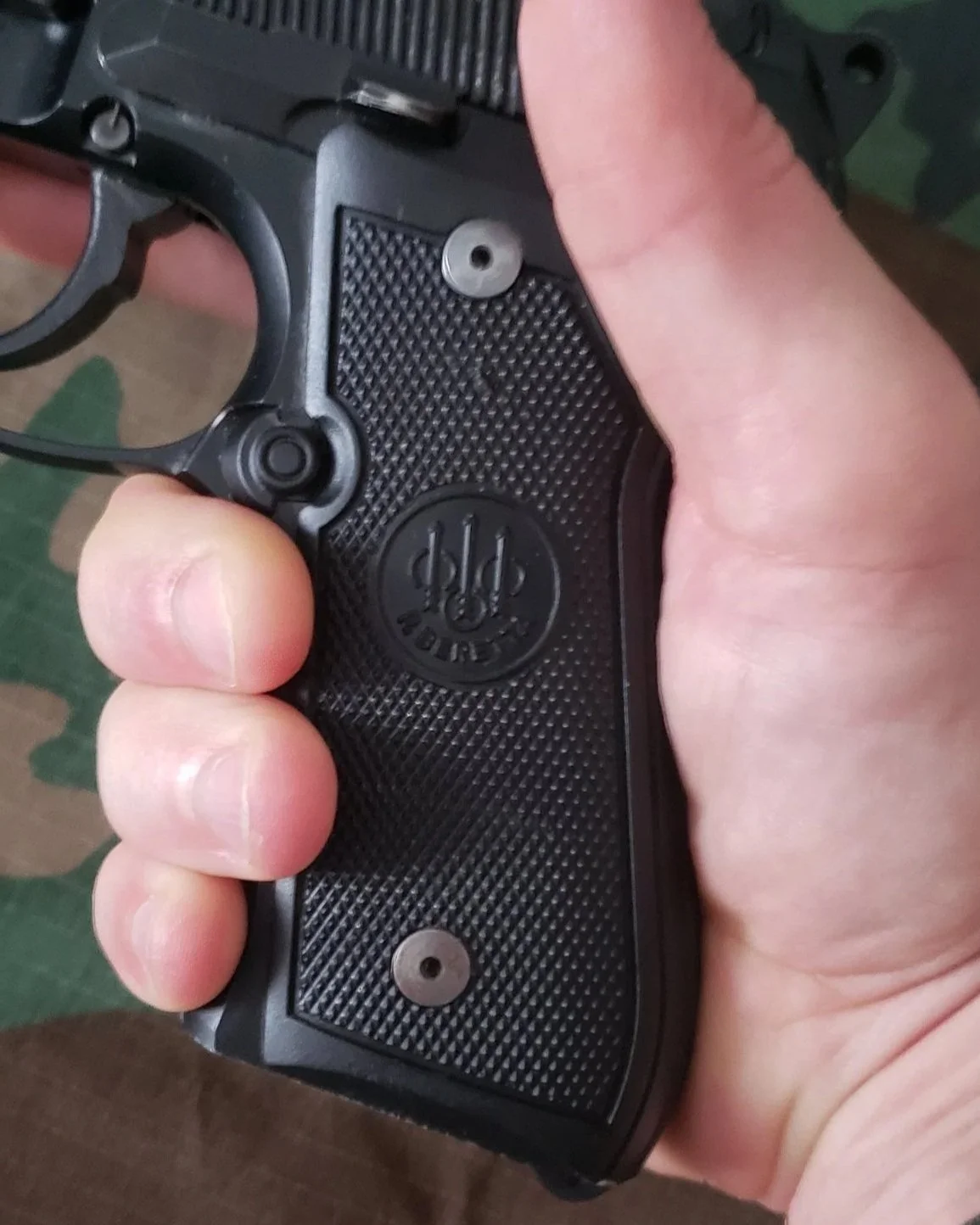
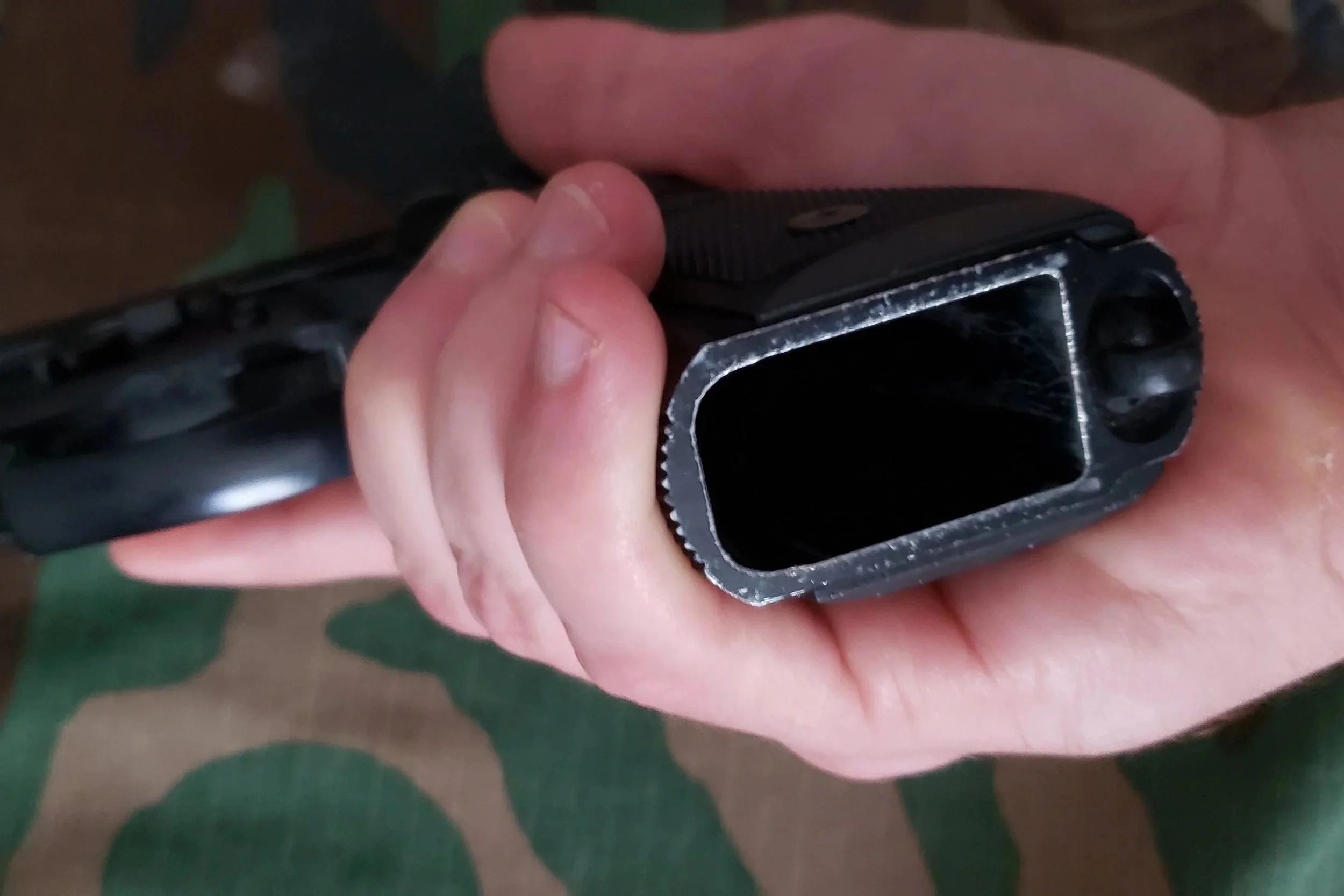
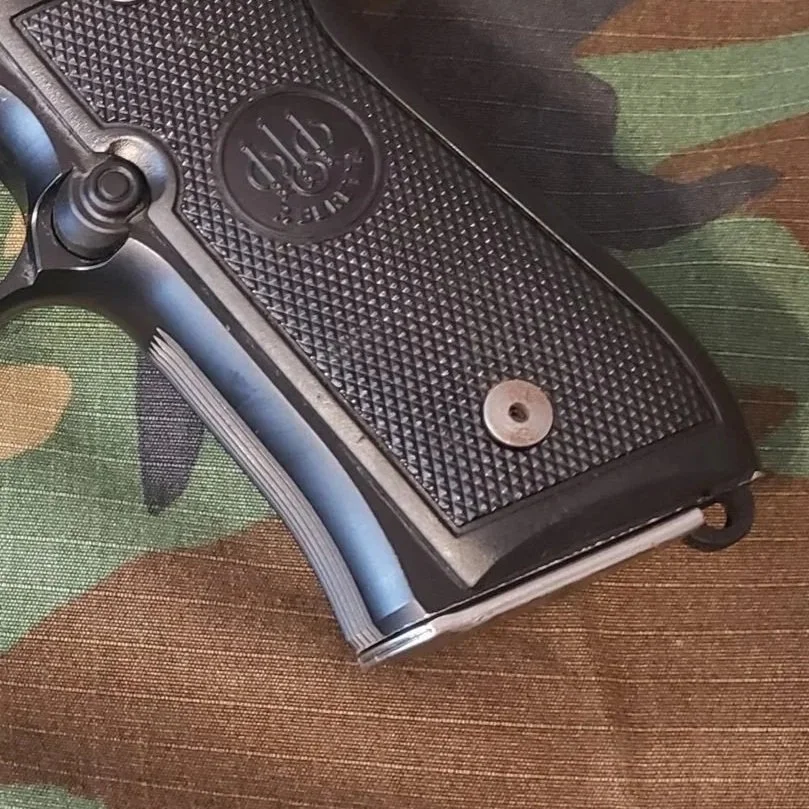
One thing of note is the fact that the grip profile on the Beretta 92FS has a forward swoop at the very bottom of the grip where the pinky would go. This slightly tilts my pinky forward, but I believe this design was absolutely intended. It is possible that this is there to help lower anticipation issues where the pinky flexes and throws the pistol off target right before the shot is broken.
THE 1911 ERGONOMICS
The 1911 is legendary for being an ergonomic masterclass. All pistols seem to want to be LIKE the 1911. The 1911's 18-degree grip angle has been adopted by the Smith & Wesson M&P series, Walther PDP, HK VP9, Springfield Echelon, and the SIG P320 family. All of these pistols still fall short because half of the problem they face is the thickness of the grip. Grip angles of 18 degrees is not going to translate to intuitive pointing of a pistol. The 1911 grip profile saw changes in design many times between 1900 and 1945. They optimized the grip profile based on the grip thickness, along with the profile of the average male hand at the time.
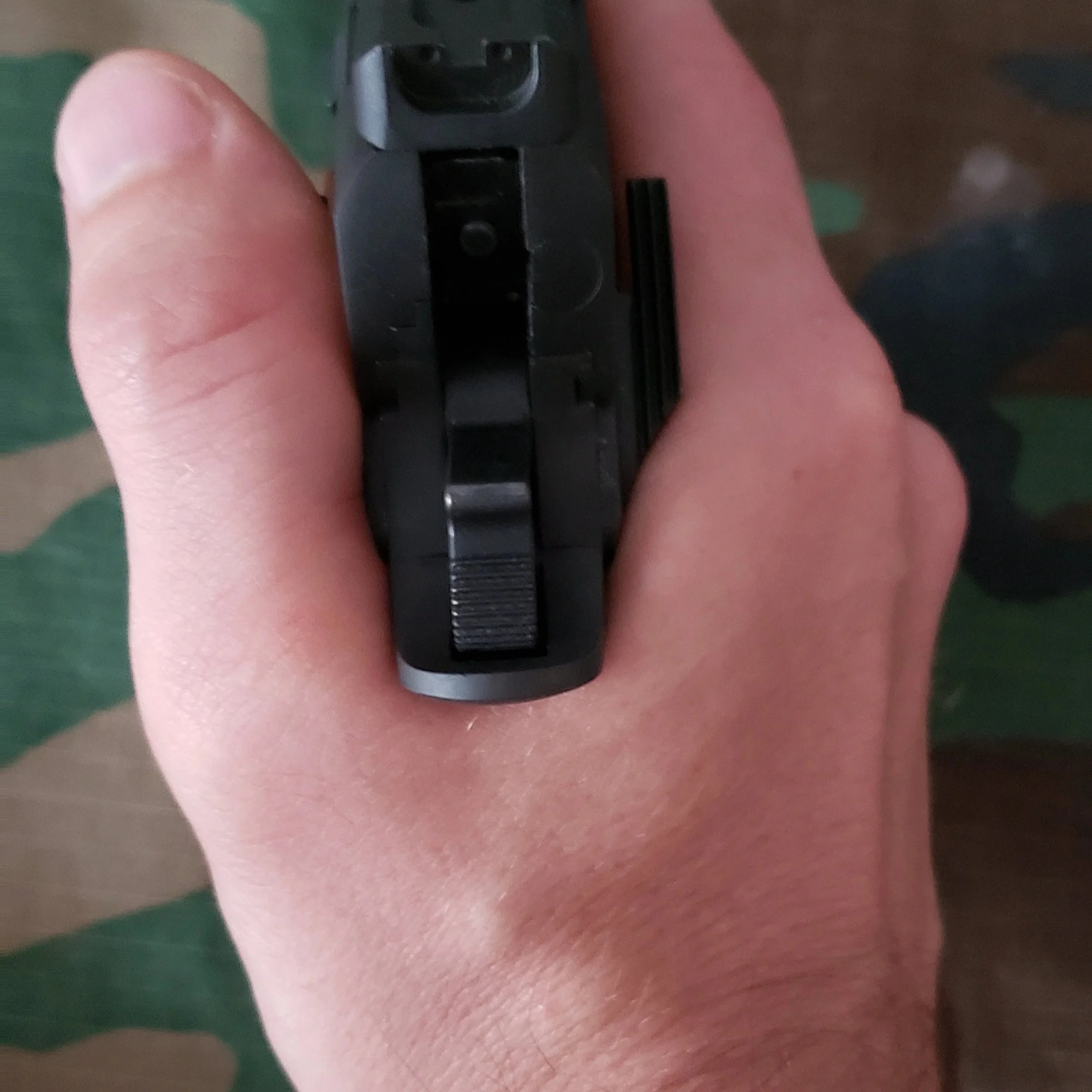
As you can see, the 1911 fits high and centered in my hand, the same as the Beretta. The difference here is that the pistol is narrow enough to allow the pistol to sit between my forefinger and thumb Metacarpal Adductors. Also you will note that my middle Phalanges are perfectly perpendicular to the trigger guard.
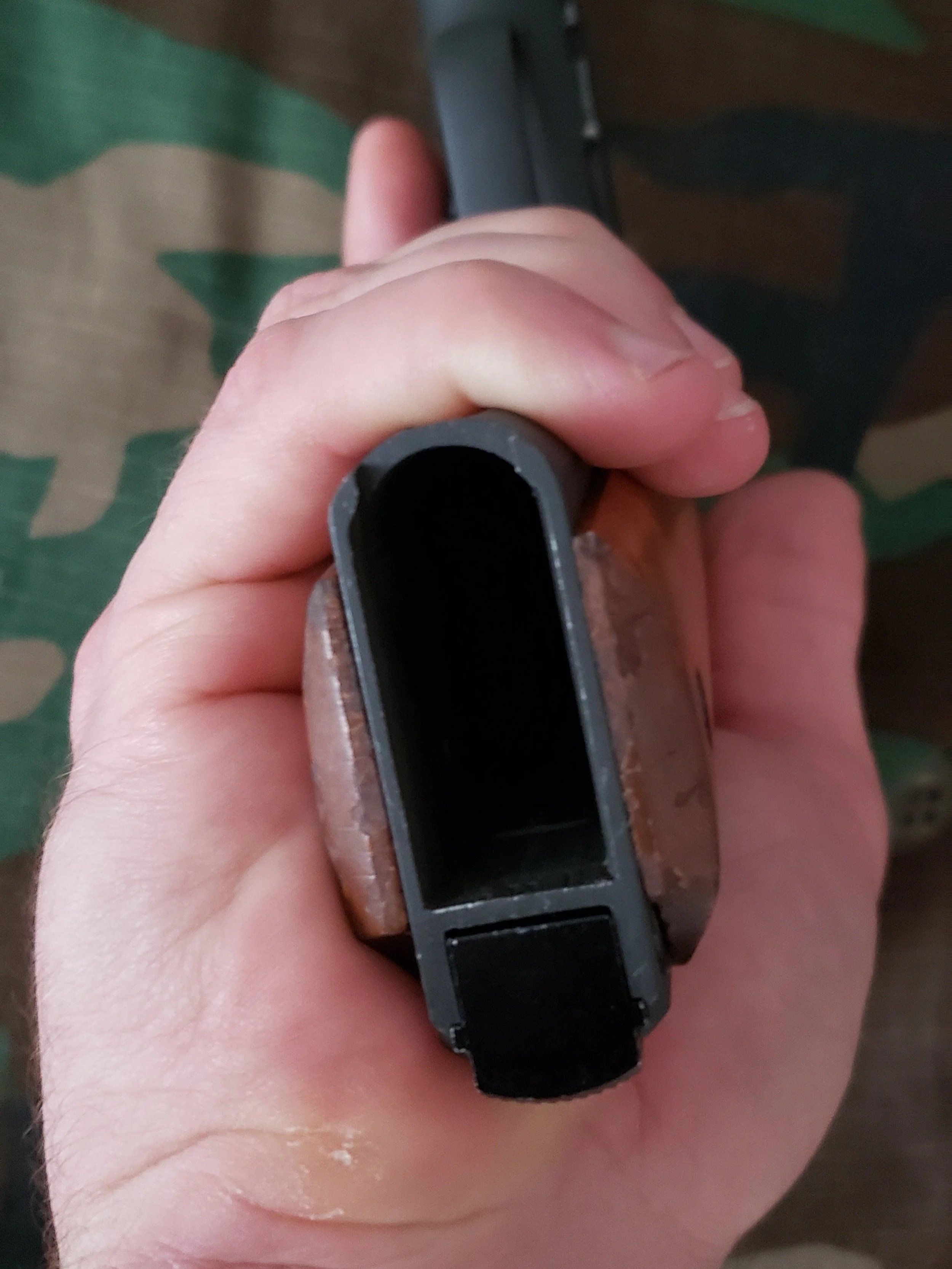
The 1911 I have is not like the WW2 M1911A1 because it is lacking the palm swell on the mainspring housing. This means that it is flat, and somewhat allows my hand to fully swallow up the grip with the extra meat of my thumbs Metacarpal Adductor. This is the favored style for most 1911 enthusiasts because the flat back gives that extra illusion of a more secure grip.
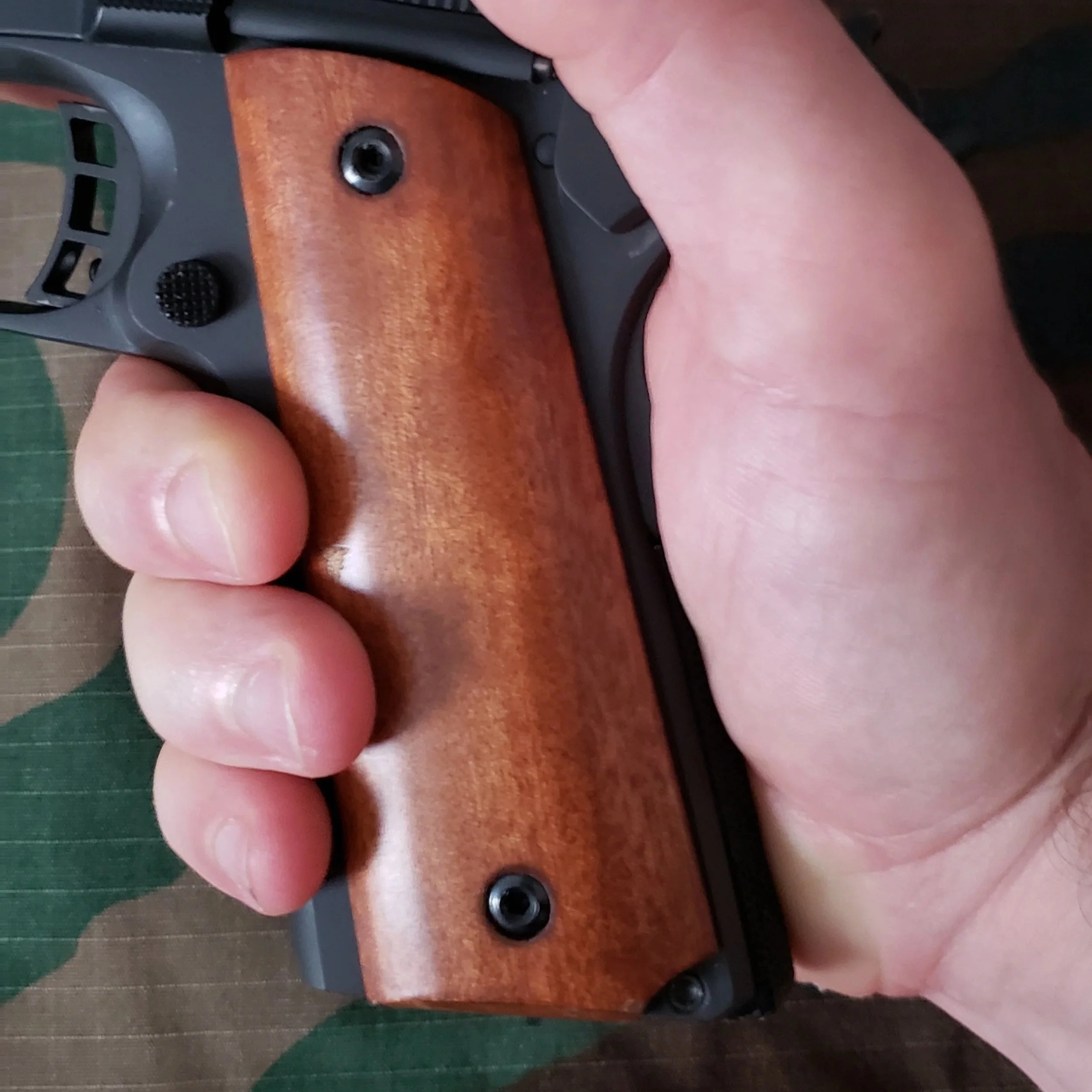
In my opinion, both pistols are equally ergonomic for their size. I do not feel like the 1911 is objectively better, but it is smaller, which gives me the illusion of having a slightly better amount of control. But this is how it works when you are comparing a double stack and single stack pistol against each other.
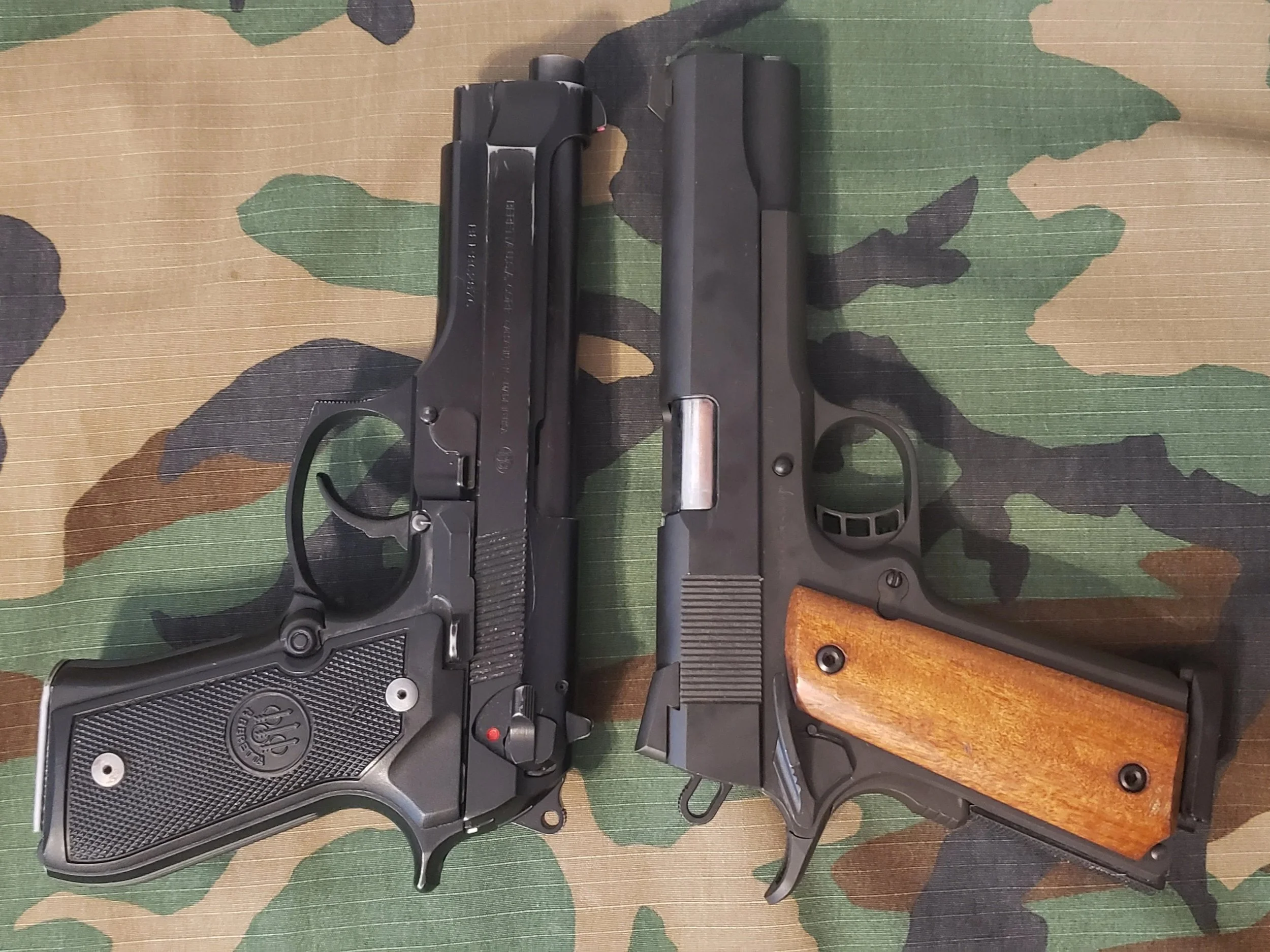
The Beretta 92 and the 1911 are pretty much the same size overall. The Beretta is a bit thicker in the grip area, but despite that, it sports a barrel length just under 5 inches, which gives it a good sight radius, making distance and precision shooting relatively easy. The 1911 has a 5 inch barrel and is relatively narrow for the large cartridge it is firing. The sight radius also makes it ideal for long range shooting or just precise shooting, especially with the Novak sights. However, I am not a fan of the Novak sights for combat usage since it robs me of being able to use my sight as a charge support. Both pistols sport relatively small front and rear sights that allow for good precision by an experienced and careful user.
WEIGHT DIFFERENCE
I am not a weight stickler, because I have noticed that too many focus on specifications like the ounces of weight, yet they do not look at the actual real world use of those specifications. With that said, the 1911 typically weighs somewhere in the neighborhood of 38 ounces while the Beretta 92FS will typically weigh 34 ounces. I do not believe that either pistol is too heavy to carry inside the waistband (IWB) or even on a duty belt, despite the current Nancie’s in the gun community whining about the weight of everything. I cannot even feel a significant difference in the weight of the two pistols.
WEIGHT DISTRIBUTION
In my experience, weight distribution seems to be much more important than just raw weight. If the pistol is very well balanced for the size, it will be relatively easy to handle during extended use. Not to mention, weight distribution, done correctly, can influence other factors such as reduced felt recoil and reduced muzzle rise. Also, like we have seen in .40 caliber pistols, heavier slides typically helps delay the unlocking and cycling of the action, making the firearm more reliable and the recoil lower. Amazing how a little weight management can change the entire function and experience of a pistol/caliber, huh?
I feel like the open slide design of the Beretta allows the weight of the slide to sit low and generally right in front of the shooters hand. I found that the slide itself balances perfectly when balanced in the locking block region. Even with a barrel and recoil spring inserted, the weight balances right in the locking block region, making the axis of weight forward and relatively low to the shooters hand. It is not all about bore axis and how low the slide sits, but rather about weight balance and where that weight goes under recoil.
The 1911 slide balances right at the front of the ejection port, on this 1911, when it is assembled. The full assembled balance point is directly above the trigger and on the line of the rear of the ejection port. This balance point may be why many people still ove the design to this day. The weight is located much closer to the hand and there is not much weight, by comparison, towards the muzzle. This may also explain the greater recoil felt in the 1911, along with the greater muzzle flip experienced. I have seen a correlation between weight distribution and balance and how guns behave during recoil.
MANUAL OF ARMS
The 1911 and the Beretta 92FS have a similar manual of arms, but are different enough to distinguish the two of them. The 1911 was originally intended to be carried with a round in the chamber and with the hammer forward, in the holster. The user would be required to draw the pistol and cock the hammer with their thumb before delivering shots on target. Also, the small sights on the pistol are not minimal, but rather PRECISE sights for aimed fire. In the time that the pistol was designed, point shooting was a big thing and aimed fire was done with precise sighting systems. In general, the modern 1911 is expected to be carried with a round in the chamber and the hammer cocked, with the pistol on safe. This is the most common way to see the 1911 carried, and it is the only sensible way for someone to carry this pistol, in my opinion.
The Beretta 92FS was designed to be carried with a round in the chamber and the hammer de-cocked and forward, on double action. The first shot will be long and heavy, but smooth. After the first shot is rowed to the rear, the rest of the shots will be a comfortable and perfectly crisp 5 pounds in a short single action trigger pull that breaks like glass. And yes, we are talking about a stock Beretta 92FS. The trigger system is smooth and very controllable, and safe for the beginner or the advanced user.
RELOADING
Both pistols are reloaded the same way. When the pistol is empty, the last shot will drive the slide to the rear and lock it to the rear. You will simply exchange the empty magazine with a full one via a button just behind the bottom of the trigger guard. once the magazine is securely inserted with a firm tap on the heel of the magazine, you will use your support hand thumb to release the slide via the slide release lever.
The Beretta 92FS had issues with manual manipulations of the slide causing the user to put the weapon on safe and decock the pistol. This was seen as a major issue, but can be corrected relatively easily. You will need to replace the stock decocker safety levers with the decocker only levers. This is a simple fix that will take up to 15 minutes to complete, if you are taking your time.
COST COMPARISON
Now I want to discuss the difference in cost between a bare bones basic 1911 and the Beretta 92FS. I will be considering the price of a case of range and defensive ammunition, replacement parts for each pistol, and the price of magazines.
BERETTA 92FS
OWB HOLSTER (SURPLUS) LEVEL 3 $45
RANGE AMMUNITION 1000 ROUNDS WINCHESTER 115GR FLAT NOSE $265 (DELIVERED)
DEFENSIVE AMMUNITION 500 ROUNDS HORNADY AMERICAN GUNNER 124GR +P XTP $415 (DELIVERED)
4 18-ROUND MAGAZINES BERETTA 92X MAGAZINES (TO FILL 3 MAGAZINE POUCHES ON A TACTICAL VEST AND ONE IN THE PISTOL) $115
5000 ROUND MAINTENANCE PARTS $15 (DELIVERED)
TOTAL STARTUP COST $1455
M1911A1
OWB HOLSTER LEVEL 3 $140
RANGE AMMUNITION 1000 ROUNDS WINCHESTER 230 FMJ $385 (DELIVERED)
DEFENSIVE AMMUNITION 500 ROUNDS REMINGTON 230GR ULTIMATE DEFENSE $350 (DELIVERED)
7 8-ROUND MAGAZINES WILSON COMBAT 920 SERIES BLACK MAGAZINES (TO FILL THREE DOUBLESTACK MAG POUCHES ON A TACTICAL VEST AND HAVE ONE IN THE GUN) $205
5000 ROUND MAINTENANCE PARTS $20 (DELIVERED)
TOTAL STARTUP COST $1500
You can clearly see that the two pistols Break even in terms of cost. I usually hear people judge buying a 1911 in 45 as costing more, and it is showing here that the snap judgement is not necessarily justified. My cost analysis is obviously based on the idea that you are using this pistol for self defense or in a duty role. Obviously, prices will change slightly to adjust for your favorite IWB holster, and other gadgets you may want. Even if you were to ‘respring’ the 1911 to bring all the springs to spec, right out of the box, it still would only be $20 to do that.
AMMUNITION COST DIFFERENCE
The usual arguments that you can shoot more with the 9mm over the .45 is not showing to be much of a valid argument, at least in the initial startup. guns are expensive, and getting started is a big expense. With that said, if we were to base the cost difference solely on ammunition, to purchase 5 cases of 9mm all at once would cost $1325 to get it delivered while .45 would cost $1925. That is a generous difference in price, and maybe it can be lowered by shopping around or selling brass back to certain companies and taking reloads instead of factory new ammunition all the time.
PRICE SHOPPING
I know of a good online ammunition company, 2awarehouse.com, I order a lot of ammo from that buys brass from the consumer and applies it to online credits at a rate of $1.8/pound of brass you send them. That and their low price for well loaded .45 at $300 per case is a screaming deal that bridges the cost gap significantly. I use this same company to buy my .40 caliber ammunition at a rate lower than my preferred 9mm loading, the Winchester 115 high pressure flat nosed ammunition.
All in all, I would say that .45 and 9mm ammunition costs are not a big deal. Even with defensive ammunition, the cost of .45 hollow points are almost the exact same cost per round, if not lower, than the 9mm. And the cool thing is that you do not need to be too incredibly picky to find a GOOD loading in .45 compared to 9mm. You will find that you need to really go out of your own way to hunt down a quality JHP design that will be reliable and offer optimal terminal performance in your gun and barrel length.
LONGEVITY
When discussing longevity, we are actually discussing durability and reliability over time This is looking at things like mean rounds between failure, how often parts need to be replaced, the maintenance needs of each pistol, etc. This kind of discussion should be devoid of egos and be more biased towards utility and proper service intervals.
REALISTIC ROUND COUNTS
Let us be realistic about the amount of rounds that can be expected to be put through a pistol in a year. Most people are lucky to get 500 rounds through their pistol in a year. For some of you, the 1000 rounds that I listed above is nearly insane to comprehend, but I have the idea that buying in bulk is the way to go and buying in a store is not a good idea if you want fair pricing.
MAINTENANCE CONSIDERATIONS
In terms of objective comparison between the maintenance requirements of each pistol, they are pretty much exactly the same. If you dry fire the Beretta a lot, you may want to have a firing pin on tap, just in case. Also, stock up on trigger return springs since a lot of dry fire can be hard on that particular spring. If you stock up on spare parts, make sure you have spring kits available, and perhaps even a locking block. Now, if maintained properly, the current generation locking blocks will last well over 35,000 rounds. That means you will typically only have to do spring changes on the Beretta for 35,000 rounds. That is pretty awesome.
For the 1911, you can dry fire the piss out of it and as long as you protect the firing pin, you should be good, but you may consider keeping a firing pin spring or two around to keep the tension on your firing pin and prevent it from having a slam fire (like shotguns, rifles, and other systems with loose firing pins) if dropped. I mentioned earlier about ‘respringing’ the 1911 to spec with a spring kit. This is because stock 1911s are often under-sprung because springs are a point that manufacturers usually cut corners. This can effect the entire system, and this issue can also plague the Beretta and any other pistol as well.
As far as parts to keep on hand, springs are pretty much all you will need to keep on hand, other than maybe a new barrel bushing that can be fitted to the barrel. 1911 pistols rely completely on the barrel to slide lockup, and you need to ensure that your barrel and slide are meshing well together. With modern forging practices and metallurgy, I doubt we will see sheering of barrel lugs or anything crazy, but you will want to inspect your pistol every 5000 rounds to make sure it is still good to go and that the barrel is still fitted to the slide snuggly.
Both pistols like to run wet and I recommend keeping them wet with a quality CLP like Breakfree or SLIP 2000. These do it all and should not be combined with grease or any other product. CLP is a one-stop answer for all your needs in lubrication, cleaning, and corrosion protection. I highly recommend you stay away from the idea of using motor oil because it is not far from the idea of using water/silicon-based lubricant for the same purpose. It is not designed for firearms usage, so don’t be a goober.
GROWTH POTENTIAL
When I say growth potential, I am strictly talking about the shooter/pistol interaction. The real question is where the ceiling of performance capability is for each pistol. This is partly dependent on how versatile the pistol is and how much you can change the way you operate it. Neither of these pistols have a versatile trigger system that can be changed like the variant 1 of the USP where it can be carried cocked and locked, decocked on safe, or decocked off safe. The Beretta 92 can be carried in two different ways (safety on or off) while the 1911 is almost always carried cocked and locked. For the purposes of this article, lets keep in mind that the Beretta 92 I have has a decocker only system on it. This means that there is no way this pistol will be swept on safe during manipulations.
DRAW PROCESS
For the 1911, I will need to sweep the pistol off safe and be very careful not to touch the trigger until I am on target and ready to shoot. The trigger will be pretty light and will be easy to set off once the wall is defeated by rearward pressure of my trigger finger. You will want to be sure that you are going to hit your target, either by correct orientation of the pistol or by referencing the sights. The trigger is very light and seems to go off very easily under pressure. The pistol, when fitted well, will be a terrific tack driver. As long as you are doing your job by not moving the pistol during the the trigger pull, your shot should impact where you placed your aligned front sight. For many people, the biggest issue is going to be staying perfectly still during the first shot, despite knowing the recoil is right around the corner. Also, learning to manipulate the safety intuitively when not using the firearm or when drawing will be essential.
The Beretta will just require me to draw and start putting pressure on the trigger once it is generally oriented toward the target. I can get more aggressive on the DA/SA design since the first trigger pull is about 10 pounds. The pull is long and my trigger finger has to ‘ROW’ through the distance and tension. The Beretta is well known for having a smooth double action trigger, albeit heavy and long compared to a single action or striker fired option. However, I find that the ability to be aggressive on the trigger during the draw makes the trigger row of the first shot feel a lot less of a burden. After the initial trigger pull, the remaining shots will be a light and crisp single action trigger pull. But this is something you have to train on and practice diligently.
Both pistol platforms will come with their own unique learning curves and challenges. As I stated, each system has a unique benefit you can really squeeze out and exploit with just a little concentrated practice. The 1911 can be shot with ultra precision while the Beretta can be deployed faster and more accurately, in some cases. Follow people like Ernest Langdon for double action shooting tips that have won him many competitions and made him incredibly fast, along with other top-tier shooters.
WRAPUP
We talked in detail about the size and ergonomic differences between the two platforms, noting how they share similarities but remain distinct in their own unique ways. We carefully discussed weight variations and how those differences can influence perceived recoil as well as the overall balance during practical usage. Additionally, we covered the caliber distinctions and even touched on the initial cost involved to get started with each option. Finally, we talked about the longevity and durability of both platforms, including what kind of training and practice challenges you will face when trying to master each weapon effectively.
This was a fun Apples to Apples comparison that I tried real hard to be OBJECTIVE on. Both have served the military with fidelity, and both are still popular to this day with loyal cult followings. I do not want to make any bold dictations on which pistol I think is better, because it is all about the mission, your training, and your willingness to practice. In the end, if you do not practice, both of these titans are going to be nothing more than 35-40 ounce, really cool looking, paper weights.