COMBAT PISTOL STANDARDS
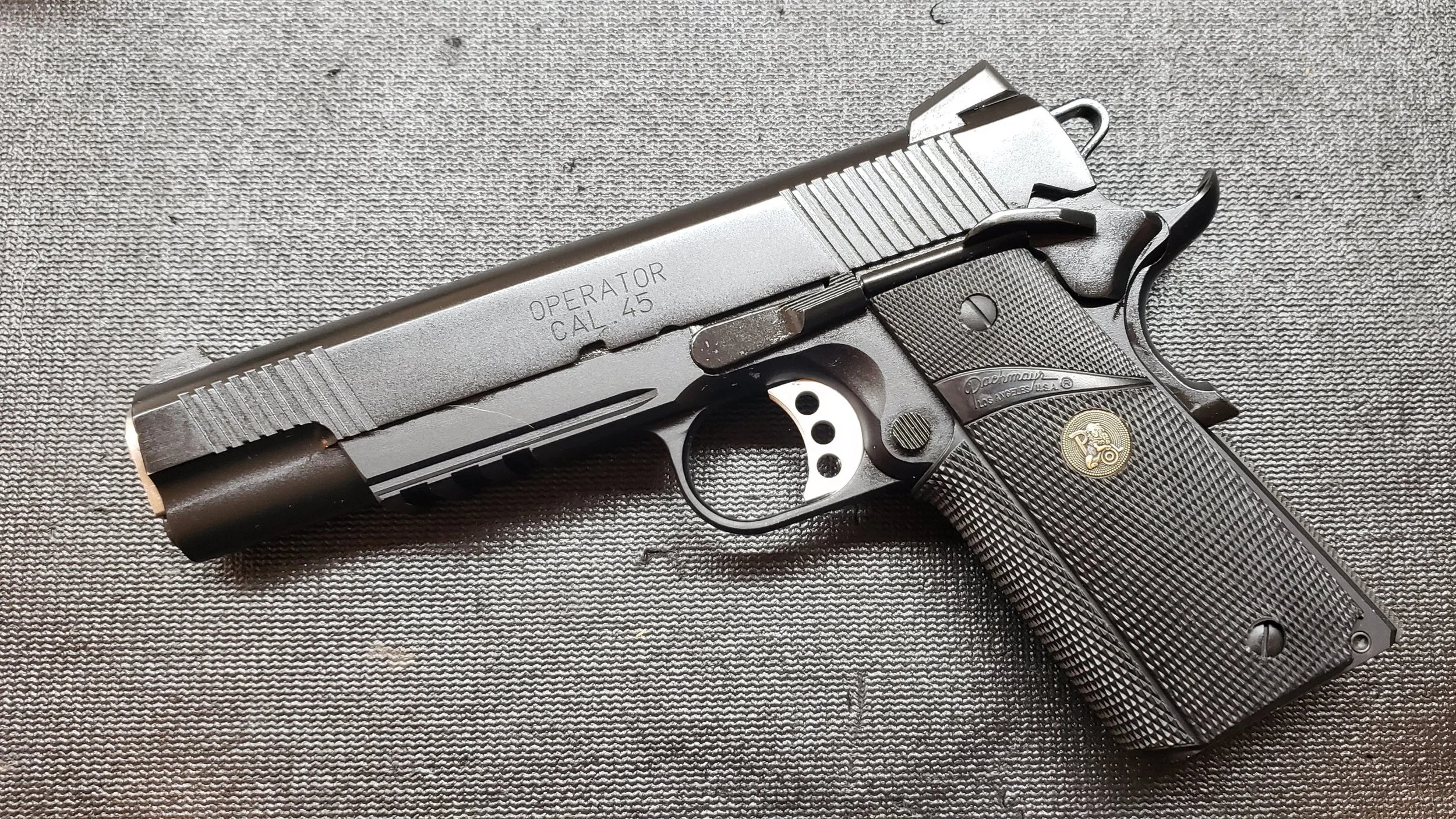
Combat pistols have been the focus of intense debate and discussion among gun store commandos and enthusiasts for many decades. People often enjoy lecturing others about the specific features to look for and which pistols are regarded as “proven” through real-world use, whether in battlefields or on urban streets. We’ve all heard the endless conversations comparing different pistols and arguing about which one outperforms the rest. But when it comes down to selecting a pistol that is truly suited for a combat role, what key qualities should you prioritize and carefully consider?
COMBAT PISTOL DEFINITION
A combat pistol is a pistol that you would be using in combat to protect yourself and pop some caps into the bad dudes on the other side. However, I think people get too wrapped up around the idea of needing a pistol on them at all times. Depending on the mission, some people decide that having a pistol is not even worth it, even if it is lighter. In Vietnam, MACV SOG operators rarely carried pistols unless they were in the rear.
Typically, experienced individuals will slim down their gear to the bare essentials, just to simplify their loadout and lighten the load. That was very common for us in the infantry. At first you are a gear queer outside the wire, but eventually you become a minimalist just to spare room and drop the extra crap that will never get used.
Now let me clarify combat for those that may have a different definition. We are talking about light infantry combat. Not police and civilian skirmishes that are limited and defense-based in nature. Think going out for days in the field in hostile territory with the risk of being killed or captured by an armed enemy, whether regular military or irregular insurgents. This is the type of combat we are talking about, so keep that in mind, shall we?
THE CLASSIC 1911 EXAMPLE
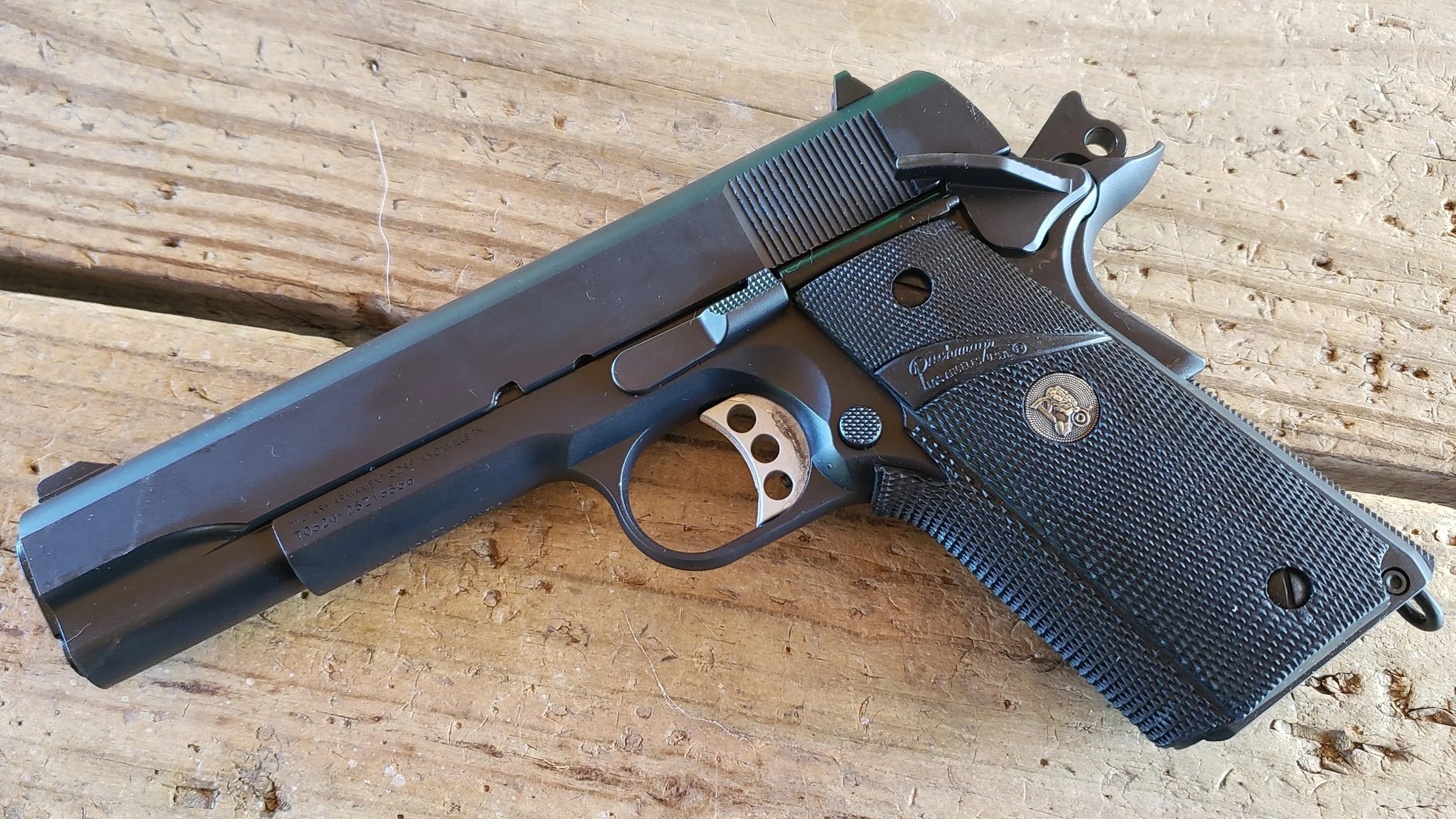
The 1911 is, without a doubt, one of the most iconic combat pistols out there. People currently debate its usefulness in the world of striker fired pistols. I personally think that it at least represents a solid baseline for what you should look for in a combat pistol. Yes, the design is old, but the function it provides is far from dead, just like revolvers. If the 1911 is no longer a good choice for combat in the hands of someone who knows how to shoot it well, then the revolver and the .357 Magnum is worth nothing more than an antiquated collectors’ piece, even on the street.
Let us look over a list of things we can take from the 1911 that show what a good combat pistol should have, and some things you may not want. First let's start off with looking at the good things that the 1911 provides to us as a combat pistol.
The 1911 has a great reputation for being ergonomic and easy to naturally aim. Not only that, but the trigger on the pistol is legendary and allows new and experienced shooters to screw up less, as long as they don't dip or twitch before the BANG. The last part is that once the pistols have been verified to feed and function properly with good springs that are in spec (16lb recoil spring, 23lb mainspring), you can rest assured that the pistol will give you some of the best reliability out of the all the .45 ACP semi-autos on the market. This may be a short list of pros, but they are very important.
Now it is time to look at some of the things that are critiqued about the 1911 often. First thing people dislike about the pistol is the relatively low capacity. People these days seem to think they need a pistol with 20rd magazines minimum in order to have any utility. This is a ‘smack my head’ critique, personally. The next thing people don't like about the 1911 is the fact that it weighs almost 3lb. This mostly comes from people that have a weight obsession but little experience in carrying any weight. Last thing on the list would be the fact that there is a thumb and grip safety. Personally, I see little issue with these features as they tend to be disengaged intuitively by those who actually care enough to practice to a level of instinctive handling.
The things people complain about were not issues in the wars that the 1911 saw action in. The soldiers never died from having too little ammo in their pistol or because the pistol weighed so much that it hurt their feelings. They put the rounds to good use and hit their targets instead of using their hi-capacity magazines to spray the target area. But then again, it was a different time and weapons were used to hit people instead of spray an area. If a pistol is used for suppression, then the user needs training in how to use a pistol.
NEW STANDARDS
The new standards people have for a combat pistol are often dramatized beyond practical necessity. Modern users tend to demand ultra-lightweight materials, extreme modularity, and accessories that may appeal more to enthusiasts than to actual combat effectiveness. While advancements in technology and ergonomics are valuable, the core requirements of durability, reliability, and ease of maintenance remain paramount. Overemphasizing features like over-the-top optics or flashy finishes can detract from the pistol’s fundamental purpose: to function flawlessly under stress and in critical self-defense situations.
CAPACITY
Many people prefer the 9mm because it allows them to carry a higher number of rounds, accepting a trade-off in terminal performance for greater capacity. I believe Hollywood has a significant influence on these perceptions, as the reasons people often cite tend to be based on unlikely "what if" scenarios they may have seen in a movie rather than practical, real-world situations. Additionally, it is important to consider the specific role your pistol is intended to fulfill—is it primarily a backup weapon for moments when you cannot reload your rifle, or is it your final line of defense during a retreat? While having many rounds available is certainly advantageous, we need to be realistic and thoughtful about how we actually employ the pistol in a self-defense context.
LIGHTWEIGHT
Many people often believe that simply reducing the weight by a few ounces will make carrying a pistol more comfortable and manageable throughout the day. However, in my experience, it’s not the weight that usually poses the biggest challenge, but rather the overall bulk and size of the firearm. For example, I find that I can carry a 1911, which weighs close to three pounds, much more comfortably and with less inconvenience than a Glock 21, even though the Glock weighs only about half as much. The slimmer profile and reduced bulk of the 1911 make it much easier to carry discreetly and with minimal discomfort.
ACCESSORY RAIL
Having an accessory rail for mounting lights on your combat pistol can be quite useful, depending largely on the specific role or situation in which the pistol is being used. However, I don't know of many cases where such a rail is necessary or essential for all combat scenarios. For hundreds of years, pistols have performed effectively and accomplished critical tasks in combat without the need for lights attached to them. Even in recent conflicts like the one in Ukraine, most pistol usage occurs without the aid or reliance on weapon-mounted lights, demonstrating that while helpful, they are not always a required feature for effective self-defense in combat.
RELIABILITY
The new standard for a combat pistol is ultimate and extreme reliability, ensuring flawless performance under the most demanding conditions. Every component must function seamlessly, regardless of environmental stressors such as dust, mud, moisture, or extreme temperatures. This level of dependability is crucial for operators who rely on their sidearm as a last line of defense. Combining robust materials, precision engineering, and rigorous testing protocols, modern combat pistols rise above traditional standards to deliver consistent, rapid firing without jams or malfunctions, instilling unwavering confidence in high-stress engagements.
TRIGGER FEEL
A decent number of people seem to think that triggers are all the rage and consistently rank high on the priority list of modifications to make. Usually, I see this attitude as being indicative of inexperience and a corresponding lack of practical skill. Focusing too much on trigger upgrades can overlook the importance of mastering fundamentals first.
The 1911 trigger continues to be widely revered as one of the best combat triggers available on the market today. However, finding another trigger that matches its quality and ease of use can be quite challenging. In my opinion, the stock Glock trigger serves as an excellent substitute for the 1911 trigger and may even be more effective in helping shooters make accurate shots under stressful conditions. This trigger features minimal travel, a relatively light wall, and delivers a clean, satisfying break, making it a reliable choice for self-defense and tactical use.
MY PRIORITIES
I have my own distinct set of priorities when it comes to what I expect from a combat pistol. I tend to mix and match my standards based on the specific factors I am focusing on at any given time, adjusting my preferences according to the particular requirements or scenarios I anticipate.
The first thing that I typically decide on is the caliber I am going to use. My favorite caliber is the .40 for reasons of terminal ballistics and capacity capability. I know there are typically few pistols that can handle the high pressure of the .40 for higher round counts, but I find that pistols like the H&K P30 and the S&W M&P stand up to the caliber with ease. The PX4 has the lowest recoil I have ever experienced in a .40 caliber pistol. Personally, I like the P30 for the longevity I know it will have, despite the two rounds it falls short on. I like the M&P because I can shoot it well and I am very familiar with the platform.
The top priority I maintain for every pistol, no matter its handling characteristics, is unwavering and absolute reliability. Beyond that, another important standard I adhere to is that the pistol must be easy to operate and manipulate while wearing gloves. The 1911 safety, in particular, is simple to locate and handle even with gloves on, and its trigger is nearly perfect for shooting under those conditions. As a close runners-up in this regard, the M&P also performs very well and comes quite close to meeting these criteria.
I think these standards are simple and reasonable. I need to be able to reach all the controls and the trigger with gloves on. Then I need to be able to shoot it in practice and combat without worrying about if it will give out, even with fresh parts. I have spent a lot of time with pistols and I have narrowed down the important characteristics I need them to have. I will take care of the rest through competent and committed training and constant repetition.
WRAPUP
Anyone can have an opinion on what truly matters when selecting a combat pistol. Some individuals might even question the necessity of carrying a pistol in combat situations, especially if they believe having sufficient ammunition for their rifle is enough. I believe it’s valuable to carefully evaluate these standards to ensure we remain grounded and keep our thinking aligned with real-world conditions. It’s crucial not to let fear or endless ‘what-ifs’ dictate our criteria, but at the same time, we must be cautious not to overlook the potential consequences of being underprepared when we actually need that sidearm. Striking this balance is key to maintaining both practical readiness and sound judgment.