The 1911 Pistol: Why It Still Dominates in 2026 – Tuning Tips
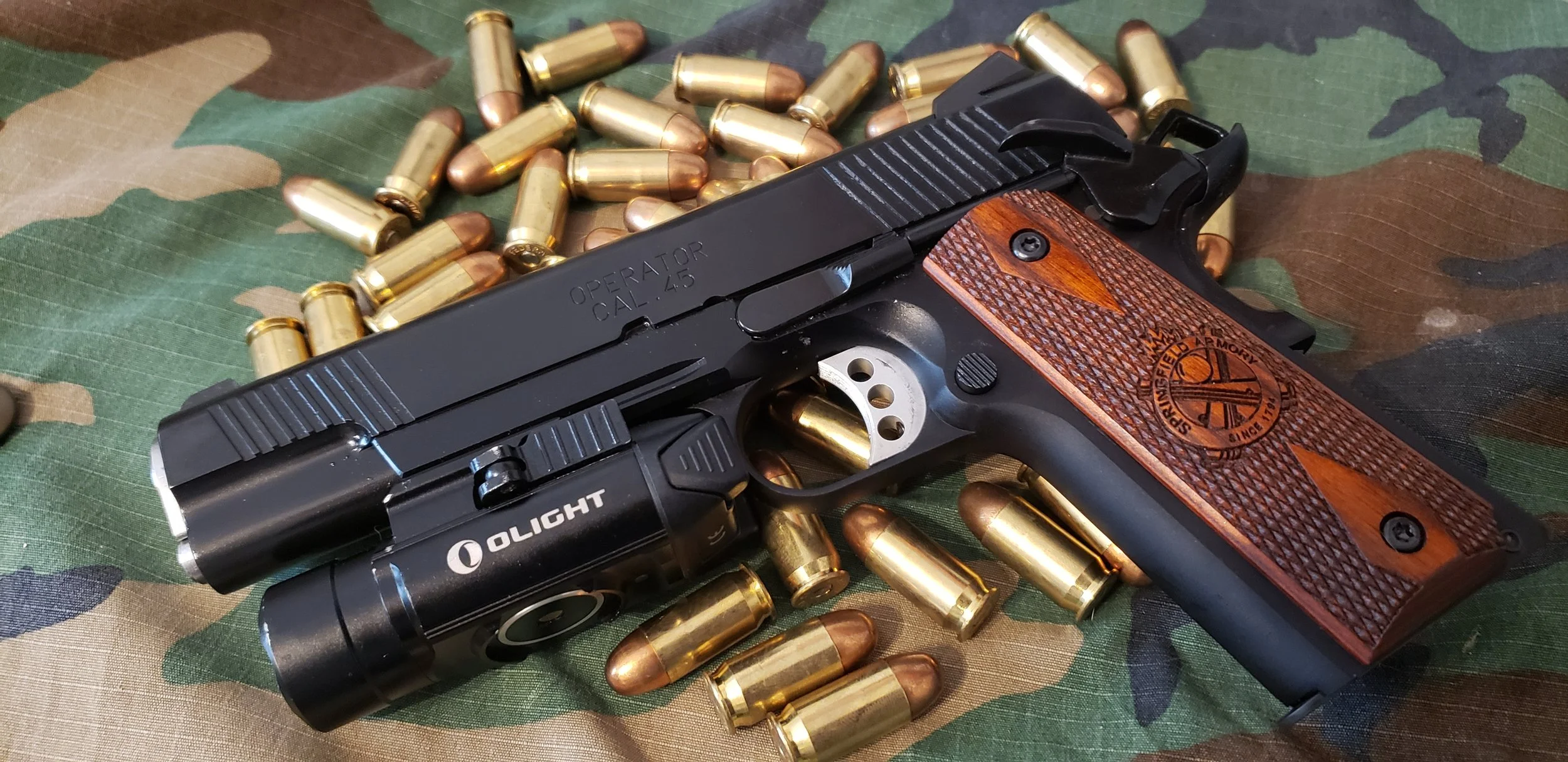
The 1911 is a pistol that is not for the faint of heart or people not willing to put in the work. Each 1911 is different, but it is also very similar in how it functions. The manual safety, the grip, the ergonomics, and the recoil impulse are all very similar. The full size, heavy feel of the pistol speaks of ruggedness that gives a user confidence. The pistol is still popular today, and is becoming more widely produced and affordable, even for the most frugal gun owners.
MY HISTORY WITH THE 1911
When I got out of the military in 2012, I got the newly released Remington R1. It was the most basic 1911 I could get without buying into a colt. I was enamored by the 1911 after watching actors portraying Delta operators use them in the movie Blackhawk down. The pistol just seemed like a tool used by the best and those serious about combat and protection. I took my 1911 through a lot of training and had to replace springs often due to shooting almost a case per week.
I probably put 30,000 rounds of .45 ACP through that R1 before I finally sold it to a friend. I would do drill after drill in dry fire, all night and then sleep 6 hours before going to public land and unloading a few hundred rounds at around noon. I learned to shoot really well with my 1911. I would stay up for hours and hours just watching shows on Yoube and dry firing at tiny targets like a light switch and practicing reloads. As I said, I am no stranger to the 1911 and it’s quirks.
I also owned many different sizes and manufactures 1911s:
- Remington R1 X3
- Kimber Custom II
- Para Ordnance (double stack)
- Citadel 3.5” 1911
- Sig 4.25 Nightmare Carry
- Springfield Range Officer
- Auto Ordnance GI spec
- Rock Island .22 TCM
- Ruger SR1911
- Rock Island FS .45 ACP Rock Standard
- Springfield Lightweight Operator
I learned to carry and conceal thanks to the 1911. I explored all different types of holsters and cut my teeth in EDC on full size 1911’s. While everyone else was obsessing over the new M&P Shield, I was mastering the full size 1911. It took a year or two for me to start looking at other pistols. But it seems that I have come full circle now. Check out my article on how to master the 1911 in the SKILLS section of the blog.
WILL REQUIRE TUNING FROM THE FACTORY
Factory 1911s are inexpensive these days, and depending on the brand you go with, the pistol can be tuned up and customized to your liking. At a minimum, you can expect that the factory 1911s, even those that fall in the ‘semi-custom’ category, will have weak springs or perhaps be just barely within weight specification. Heck, even manufacturers like Glock and Sig have spring issues. There are professional shooters who will always replace triggers and springs right out of the box to tune the pistol to their liking right away.
For myself, I like to run 18lb recoil springs on my .45 ACP 1911s, a 23lb+ mainspring, and an extra power firing pin spring. Flat wire recoil springs are a newer option that come in a variety of weights and are advertised to offer a longer service life to the user. I even use the Wilson Combat Shok-Buff on my Lightweight operator and MEUSOC.
WHY DO 1911 PISTOLS SUCK OUT OF THE BOX?
Think of it this way, no matter how much money you spend on a 1911, or any other pistol, you can be sure of one thing; the springs will be the weakest link and the most likely to fail. Springs are pretty complicated to make right and have absolutely perfect all the time. Typically, manufacturers will contract a company to make all their springs in bulk. When quantity goes up, detail and tolerances must loosen.
It would be too expensive and time-consuming to make every single spring and heat treat them all by hand and take calipers and compression gauges to them. This is how you get this wide range of performance out of the box in pistols, particularly like 1911s. Every manufacturer will have a different build quality and design, and that goes for their investment in springs and components. Manufacturers aim to make money, and that is only done through being more and more efficient. This may be by reducing the spring weights a pound or two to save 2 cents per spring. This could also mean using MIM parts instead of forged and CNC components. Regardless, the idea is to make weapons for a price that will give them a good return on investment.
The 1911 pistol's storied reputation swings wildly from "unmatched classic" to "high-maintenance headache," largely due to manufacturing shortcuts that prioritize cost over consistency—especially in the humble recoil spring. While the design's blueprints allow for wide tolerances to ease mass production, factories often skimp on springs by bulk-sourcing them with looser specs, using cheaper materials like basic music wire instead of durable chrome silicon, or dialing back weights by a pound or two to shave pennies per unit. This results in out-of-box quirks like weak hammer strikes, inconsistent feeding, or premature failures after just a few thousand rounds, as seen in budget clones from Tisas or Rock Island that shine only after $20 in upgrades. Premium models fare better but aren't immune, explaining why enthusiasts swear by tuning with heavier 18-23lb springs for reliability, while casual shooters dismiss the platform as outdated compared to plug-and-play Glocks. It's a practitioner’s gun: rewarding for those who tinker, frustrating for everyone else.
THE AR15 IRONY
It's ironic how firearm enthusiasts often embrace the AR-15 platform as a tinkerer's dream, willingly accepting initial "sketchy" performance or troubleshooting hiccups as an inherent part of the home-build process—where reliability hinges on the builder's skill, quality parts, and proper assembly, potentially matching or exceeding factory rifles after some trial and error. Yet, the same community frequently dubs the 1911 an "archaic" or "picky" design simply because many models require out-of-box tuning, like spring swaps or ammo tweaks, to achieve consistent function, overlooking how its vast aftermarket ecosystem mirrors the AR's mod-friendly appeal but gets blamed for enabling "Frankenguns" when modifications go awry. This double standard highlights a cultural bias toward modern modular rifles over century-old classics, even though both reward hands-on involvement for peak performance.
What do you think fuels this irony—nostalgia for the AR's military roots, or just the sheer volume of affordable 1911 clones flooding the market with variable quality? Have you built ARs or tuned 1911s yourself, and did initial issues change your view on either platform? If details like specific models or experiences are unclear, I'd appreciate more context to dive deeper honestly—after all, not every "archaic" gun deserves the shade without acknowledging the tinkering hypocrisy.
MODERN MERITS: WHY THE 1911 THRIVES IN 2025
Fast-forward to today, and the 1911 isn't just surviving—it's thriving. With innovations like 9mm conversions for lower recoil and higher capacity, or lightweight aluminum frames for easier carry, this pistol adapts without losing its soul. I've carried my tuned Springfield Lightweight Operator daily, and it conceals better than you'd think for a full-size .45. In competitions, 1911s still dominate divisions like USPSA Single Stack, where that crisp trigger pull gives an edge over striker-fired guns. And for self-defense? The .45 ACP's terminal performance is legendary, backed by real-world data from law enforcement encounters. Sure, 9mm is king for volume, but when power per shot matters, the 1911 delivers.
Critics say it's unreliable, but that's lazy talk. With proper tuning—think Wilson Combat or Ed Brown parts—I've seen 1911s run 50,000 rounds flawlessly. Compare that to ARs, which get a pass for gas system tweaks or buffer swaps. The aftermarket for 1911s is massive: night sights, extended mag releases, even threaded barrels for suppressors. It's not high-maintenance; it's customizable. If you're new to it, start with a reliable entry-level like the Rock Island Armory TAC Ultra—affordable, solid, and ready for upgrades.
WRAPUP
In the end, the 1911 isn't for everyone, but for those willing to put in the work, it's unmatched. It's taught me patience, precision, and a deeper appreciation for firearms craftsmanship. If you've dismissed it as outdated, grab one, tune those springs, and hit the range—you might just come full circle like I did.